If your stomach reacts to new supplements, giant CFU numbers, or prebiotic blends, the best probiotic is not always the strongest one. It is the one you can actually tolerate long enough to judge fairly.
For this guide, I prioritized named strains, simple dosing, shelf stability, and formulas that make sense for common sensitive-stomach situations: IBS patterns, travel, antibiotic use, and cautious first-time trials.
Let’s delve into some of the best probiotics for a sensitive stomach you can trust.
Medical note: Probiotics are generally safe for healthy adults, but people who are immunocompromised, critically ill, pregnant, using immunosuppressive medicine, or living with a central venous catheter should ask a clinician first. If you have severe pain, blood in stool, fever, unexplained weight loss, or persistent symptoms, do not self-treat with supplements.
Quick Picks
Best overallAlign 24/7 Digestive Support
Best for diagnosed IBSKlaire Labs Ther-Biotic Pro IBS Relief
Best for travel and occasional upsetCulturelle Digestive Daily
Best during antibiotic useFlorastor Probiotic
Gentlest spore-based startJust Thrive Probiotic
Best budget multi-strainPhysician’s Choice 60 Billion Probiotic
Comparison Table
| # | Product | Best for | Key formula point |
|---|
| 1 | Align 24/7 Digestive Support | Best overall | B. longum 35624, single strain |
| 2 | Klaire Labs Ther-Biotic Pro IBS Relief | Best for diagnosed IBS | 20B CFU, 3 strains |
| 3 | Culturelle Digestive Daily | Best for travel and occasional upset | LGG, 10B CFU |
| 4 | Florastor Probiotic | Best during antibiotic use | S. boulardii, 250 mg |
| 5 | Just Thrive Probiotic | Gentlest spore-based start | spore-based, Bacillus strains |
| 6 | Physician’s Choice 60 Billion Probiotic | Best budget multi-strain | 60B CFU, 10 strains |
How I Ranked These Probiotics
For a sensitive stomach, I give more weight to tolerability than maximum CFU. A clean 1-strain formula can be better than a 15-strain blend if it helps the reader isolate what works. I also looked for named strains, practical dosing, shelf stability, and whether the product’s positioning matches the reader’s likely problem.
The research is mixed enough that this should not be framed as a cure. The NCCIH overview of probiotic usefulness and safety is a good reminder that effects are strain-specific and not all products do the same thing. For IBS, gastroenterology guidance is cautious, so I treated IBS picks as supportive options rather than guaranteed solutions.
The 6 Best Probiotics for a Sensitive Stomach
Best overall
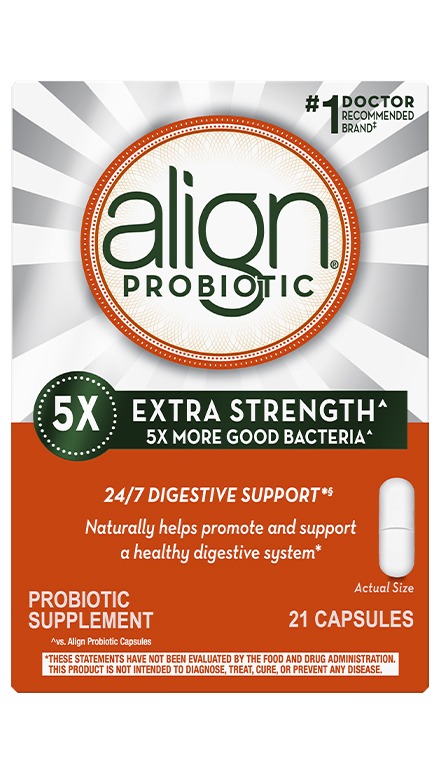
1. Align 24/7 Digestive Support
The calmest first pick for a reactive gut.
B. longum 35624single strain1 capsule daily
Why it fits a sensitive stomach
- Single-strain formulas are easier to judge when your stomach reacts to everything.
- The Bifidobacterium longum 35624 strain has been studied in IBS-focused research, but the right response still varies person to person.
- No refrigeration is needed, which makes it easier to take consistently.
Best for
- First-time probiotic users
- Readers who want fewer ingredients and fewer surprises
- Occasional bloating, gas, or digestive discomfort
Watch-outs
- Costs more per serving than broad multi-strain blends
- Benefits are gradual; judge it over weeks, not days
Bottom line: Start here if you want the simplest, most controlled trial before moving into stronger blends.
View on Amazon
Best for diagnosed IBS
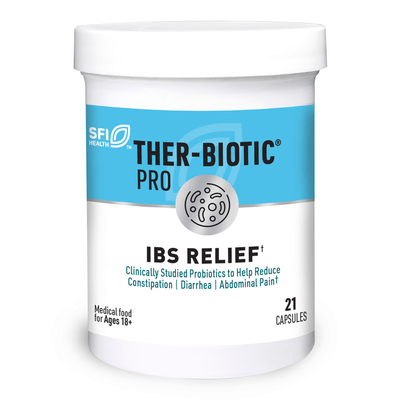
2. Klaire Labs Ther-Biotic Pro IBS Relief
A more targeted option for people managing IBS patterns.
20B CFU3 strainsSunfiber
Why it fits a sensitive stomach
- This is built around IBS support rather than a broad wellness claim.
- The formula uses Sunfiber, a partially hydrolyzed guar gum, instead of common high-FODMAP prebiotics such as inulin.
- It is the most specialized pick in this list, so it makes sense when symptoms are already part of an IBS discussion with a clinician.
Best for
- Adults with diagnosed IBS
- Readers who already know prebiotics can trigger bloating
- People who want a more clinical, narrow-purpose formula
Watch-outs
- More expensive than general probiotics
- Better used with professional guidance if IBS symptoms are significant
Bottom line: Choose this if your sensitive stomach is not vague discomfort but an IBS pattern you are actively managing.
View on Amazon
Best for travel and occasional upset
3. Culturelle Digestive Daily
A dependable LGG option for occasional disruption.
LGG10B CFUshelf-stable
Why it fits a sensitive stomach
- Lactobacillus rhamnosus GG is one of the better-known probiotic strains and is commonly used for digestive support.
- Culturelle keeps the formula simple and shelf-stable, which is useful for travel or routine changes.
- It is easier to understand than formulas with long, unnamed proprietary blends.
Best for
- Travel-related digestive disruption
- Occasional stomach upset
- People who want a familiar, widely available brand
Watch-outs
- Contains inulin, which can bother some FODMAP-sensitive readers
- Not the first pick for strict low-FODMAP routines
Bottom line: A sensible travel and everyday option, but skip it if inulin reliably bloats you.
View on Amazon
Best during antibiotic use
4. Florastor Probiotic
A yeast-based probiotic that is not wiped out by antibiotics.
S. boulardii250 mgyeast-based
Why it fits a sensitive stomach
- Florastor uses Saccharomyces boulardii CNCM I-745, a beneficial yeast rather than a bacterial strain.
- That matters during antibiotics because antibiotics target bacteria, not yeast.
- It can be paired with a bacterial probiotic for broader coverage, as long as your clinician is comfortable with that plan.
Best for
- Antibiotic courses
- Travel routines
- People who want a non-bacterial probiotic option
Watch-outs
- Avoid without medical guidance if immunocompromised or using a central venous catheter
- Not ideal for anyone told to avoid yeast-based products
Bottom line: Keep this one for antibiotic or travel situations rather than treating it as a generic daily probiotic.
View on Amazon
Gentlest spore-based start
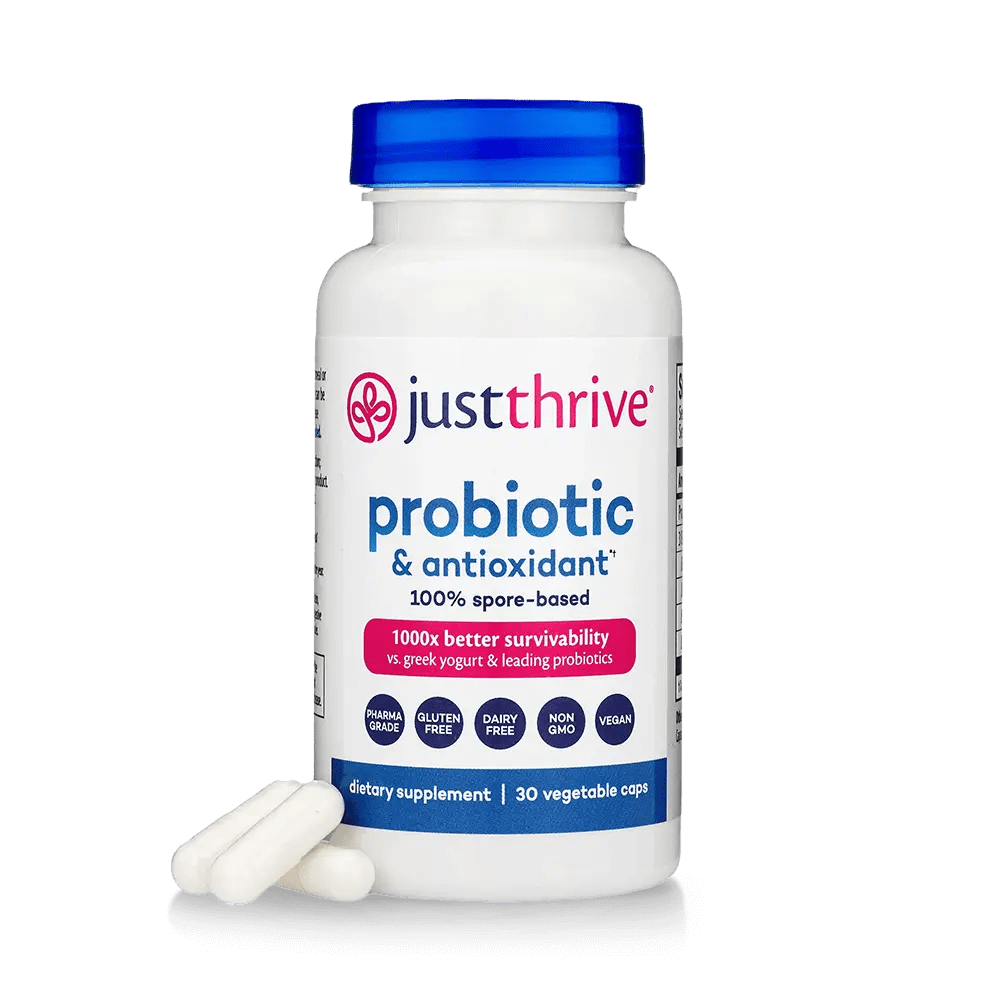
5. Just Thrive Probiotic
A spore-based alternative for people who react to regular capsules.
spore-basedBacillus strainswith meal
Why it fits a sensitive stomach
- Spore-based probiotics are designed to stay dormant through the stomach and activate farther down the digestive tract.
- Some sensitive users find that easier to start with than traditional Lactobacillus-heavy formulas.
- It is shelf-stable and simple to dose, which helps compliance.
Best for
- People who bloated badly from standard probiotics
- Readers who want a slow, cautious trial
- Those who prefer shelf-stable capsules
Watch-outs
- Independent long-term evidence is thinner than for older Lactobacillus and Bifidobacterium strains
- Start every other day if your stomach is very reactive
Bottom line: Worth considering when standard probiotics have felt too aggressive, but start low and pay attention.
View on Amazon
Best budget multi-strain
6. Physician’s Choice 60 Billion Probiotic
Broad coverage at a friendlier cost per serving.
60B CFU10 strainsprebiotic blend
Why it fits a sensitive stomach
- This gives broad strain diversity without a premium price tag.
- The delayed-release capsule is designed to protect the probiotic through stomach acid.
- It makes sense when you want a general daily probiotic, not a narrow IBS or antibiotic-specific pick.
Best for
- Budget-conscious shoppers
- People who tolerate multi-strain formulas
- Daily digestive support routines
Watch-outs
- Higher CFU and more strains can be too much for very sensitive stomachs at first
- The prebiotic blend may not suit every FODMAP-sensitive reader
Bottom line: A strong value pick, but very reactive users should begin slowly or choose a single-strain option first.
View on Amazon
What Makes a Probiotic Gentler?
Fewer strains can mean fewer surprises. If you are sensitive, a single-strain product makes it easier to know what your body is reacting to.
Prebiotics matter. Inulin, chicory root, and FOS can increase gas for some IBS or FODMAP-sensitive readers. The Monash FODMAP IBS guide is a useful primer on why fermentable carbohydrates can trigger bloating in some people.
Delivery matters, but it is not magic. Delayed-release capsules, yeast-based strains, and spore-based products can all make sense in different situations. The right match still depends on your symptoms and tolerance.
Start low and go slow. If a label says one capsule daily, very sensitive users often do better starting every other day for the first week, then increasing if tolerated.
Who Should Choose Which?
If you are nervous about side effectsStart with Align. A single-strain product is easier to test.
If IBS is the main issueConsider Klaire Labs, but treat it as part of an IBS plan, not a replacement for care.
If you are taking antibioticsFlorastor is the most logical pick because it is yeast-based.
If you want broad daily supportPhysician’s Choice gives stronger value, but ease in slowly.
FAQ
Can probiotics make a sensitive stomach worse at first?
Yes. Mild gas or bloating can happen during the first several days. If symptoms are strong, persistent, or worsening, stop and ask a clinician.
Is single-strain or multi-strain better?
For very sensitive people, single-strain is usually the cleaner starting point. Multi-strain products can be useful, but they make it harder to know which ingredient helped or bothered you.
Should I avoid prebiotics?
Not always. But if inulin, chicory root, or FOS reliably causes gas, choose a formula without those ingredients or use a low-FODMAP-friendly option.
How long should I try one probiotic?
A fair trial is usually 3 to 4 weeks if side effects are mild and tolerable. Do not keep pushing through severe symptoms just to finish a bottle.
Can I take Florastor with a bacterial probiotic?
Many people do because Florastor is yeast-based. If you are immunocompromised, have a central line, or have complex medical conditions, ask your doctor first.
Final Verdict
For most sensitive-stomach readers, Align is the cleanest first choice because it is simple and controlled. Klaire Labs is the more targeted IBS option, Florastor is the antibiotic/travel specialist, and Physician’s Choice is the best value if you already tolerate broader formulas.
The main rule: do not chase the highest CFU count. Match the formula to your actual trigger pattern, start slowly, and use the product long enough to judge it fairly.
Sources and further reading:
Disclaimer: This article is for informational purposes only and is not medical advice. Supplements can interact with health conditions and medications. Always consult a qualified healthcare professional before starting a new probiotic if you have medical concerns.