
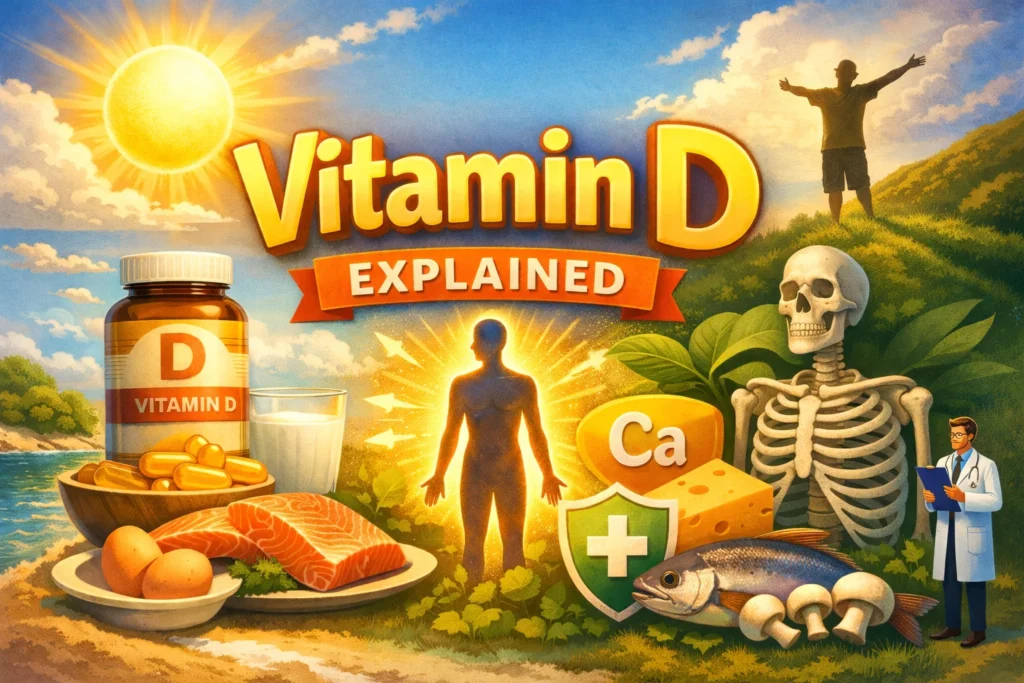
Vitamin D is often discussed in relation to bone health, but its role in the human body extends far beyond calcium absorption. It functions more like a hormone than a traditional vitamin, influencing immune regulation, muscle function, inflammation, and even gene expression.
Despite regular exposure to sunlight in many parts of the world, vitamin D deficiency is remarkably common. Many people have low levels without obvious symptoms, while others experience vague issues that are not immediately linked to vitamin D status.
This article explains what vitamin D is, how it works in the body, why deficiency is so prevalent, and what happens when levels are low, without focusing on supplementation products or treatment claims.
Best Vitamin D & K Supplements
What Is Vitamin D?
Vitamin D is a fat-soluble compound that plays a regulatory role in multiple physiological systems. Unlike most vitamins, it can be synthesized by the body when the skin is exposed to ultraviolet B (UVB) radiation from sunlight.
There are two main forms relevant to human health:
- Vitamin D₂ (ergocalciferol) – derived from plant sources
- Vitamin D₃ (cholecalciferol) – produced in the skin and found in some animal foods
Regardless of source, vitamin D must undergo metabolic activation before it becomes biologically functional.
Vitamin D as a Hormone, Not Just a Vitamin
Vitamin D behaves differently from many nutrients.
After entering the body, it undergoes two key conversion steps:
- Conversion in the liver
- Conversion in the kidneys
The final active form interacts with vitamin D receptors (VDRs), which are present in many tissues throughout the body. This widespread receptor distribution explains why vitamin D influences multiple systems, not just bones.
What Does Vitamin D Do in the Body?
Vitamin D helps regulate the expression of hundreds of genes. Its effects are broad and interconnected.
Vitamin D and Calcium Balance
One of vitamin D’s best-known roles is maintaining calcium balance by:
- Enhancing calcium absorption from the intestine
- Supporting normal blood calcium levels
- Assisting bone mineralization
Without adequate vitamin D, calcium absorption becomes inefficient, even if dietary intake is sufficient.
Vitamin D and Bone Health
Vitamin D supports:
- Bone mineral density
- Normal bone remodeling
- Skeletal strength
Low vitamin D levels can impair bone mineralization, which over time may affect skeletal integrity.
Vitamin D and Muscle Function
Vitamin D receptors are present in muscle tissue. Adequate levels support:
- Muscle strength
- Coordination
- Balance
Low vitamin D status has been associated with muscle weakness and increased risk of falls, particularly in older adults.
Vitamin D and Immune Regulation
Vitamin D plays a role in modulating immune responses.
It helps:
- Regulate innate immune activity
- Support balanced inflammatory responses
- Influence immune cell signaling
Rather than “boosting” immunity, vitamin D supports immune regulation, helping the system respond appropriately.
Vitamin D and the Nervous System
Vitamin D receptors are also found in the brain.
Research suggests vitamin D may be involved in:
- Neurotransmitter synthesis
- Neuroprotection
- Regulation of inflammatory signaling in the nervous system
This has led to interest in vitamin D’s role in mood and cognitive health, although research in these areas continues to evolve.
How Vitamin D Is Produced and Activated
Skin Synthesis
When UVB rays reach the skin:
- A cholesterol-derived compound is converted into vitamin D₃
- This process depends on sun angle, skin exposure, and UV intensity
This initial form is inactive and must be metabolized.
Liver and Kidney Activation
Vitamin D undergoes:
- Liver conversion to 25-hydroxyvitamin D (the main circulating form)
- Kidney conversion to the active hormone form
Kidney function is therefore essential for proper vitamin D activity.
Why Vitamin D Deficiency Is So Common
Despite sunlight being a natural source, several factors contribute to widespread deficiency.
Limited Sun Exposure
Modern lifestyles often involve:
- Indoor work
- Limited midday sun exposure
- Sunscreen use
While sun protection is important, it can reduce vitamin D synthesis.
Geographic and Seasonal Factors
Latitude and season affect UVB availability.
- In higher latitudes, winter sunlight may be insufficient
- Short daylight hours reduce synthesis
This makes seasonal deficiency more common.
Skin Pigmentation
Melanin reduces UVB penetration.
People with darker skin may require:
- Longer sun exposure
- Higher UV intensity
to produce the same amount of vitamin D as lighter-skinned individuals.
Age-Related Changes
As skin ages, its ability to synthesize vitamin D decreases. Older adults may therefore produce less vitamin D from the same sun exposure.
Dietary Limitations
Few foods naturally contain significant vitamin D. Diet alone often provides limited amounts unless fortified foods are regularly consumed.
Signs and Symptoms of Low Vitamin D
Vitamin D deficiency may be silent or present with non-specific symptoms.
Possible Symptoms
- Fatigue
- Muscle weakness
- Bone or joint discomfort
- Increased susceptibility to illness
Because these symptoms overlap with many conditions, deficiency often goes unnoticed.
Vitamin D Absorption and Utilization
Vitamin D absorption depends on:
- Fat digestion
- Bile production
- Intestinal health
As a fat-soluble compound, it is best absorbed when dietary fat is present.
After absorption, proper liver and kidney function are required for activation.
Vitamin D and Kidney Health
The kidneys play a crucial role in converting vitamin D to its active form.
Impaired kidney function can:
- Reduce vitamin D activation
- Alter calcium balance
This connection highlights why vitamin D status is often evaluated in kidney-related conditions.
Blood Levels vs Functional Status
Blood tests typically measure circulating vitamin D levels, but:
- These levels do not always reflect tissue activity
- Individual sensitivity to vitamin D may vary
Interpretation of vitamin D status requires clinical context.
Common Misconceptions About Vitamin D
“Living in a sunny country prevents deficiency”
Sun exposure does not guarantee adequate vitamin D synthesis.
“Vitamin D only matters for bones”
Vitamin D receptors exist in many tissues.
“More vitamin D is always better”
Excess intake can disrupt calcium balance and may be harmful in certain situations.
When Vitamin D Status Becomes Clinically Important
Evaluation may be relevant when:
- Bone or muscle symptoms persist
- Fatigue remains unexplained
- Kidney or digestive conditions are present
Healthcare professionals assess vitamin D in the context of overall health.
Key Takeaways
- Vitamin D functions like a hormone
- It affects bones, muscles, immune regulation, and more
- Deficiency is common due to lifestyle and environmental factors
- Sun exposure alone may be insufficient
- Proper activation depends on liver and kidney function
- Balance is essential—both low and excessive levels matter
Conclusion
Vitamin D is a central regulator of multiple physiological systems, not merely a bone-support nutrient. Its hormone-like activity, reliance on sunlight, and complex activation process help explain why deficiency is so widespread and often overlooked.
Understanding how vitamin D works—and why low levels are common—provides a clearer framework for interpreting symptoms, lifestyle factors, and health discussions related to this essential nutrient.