
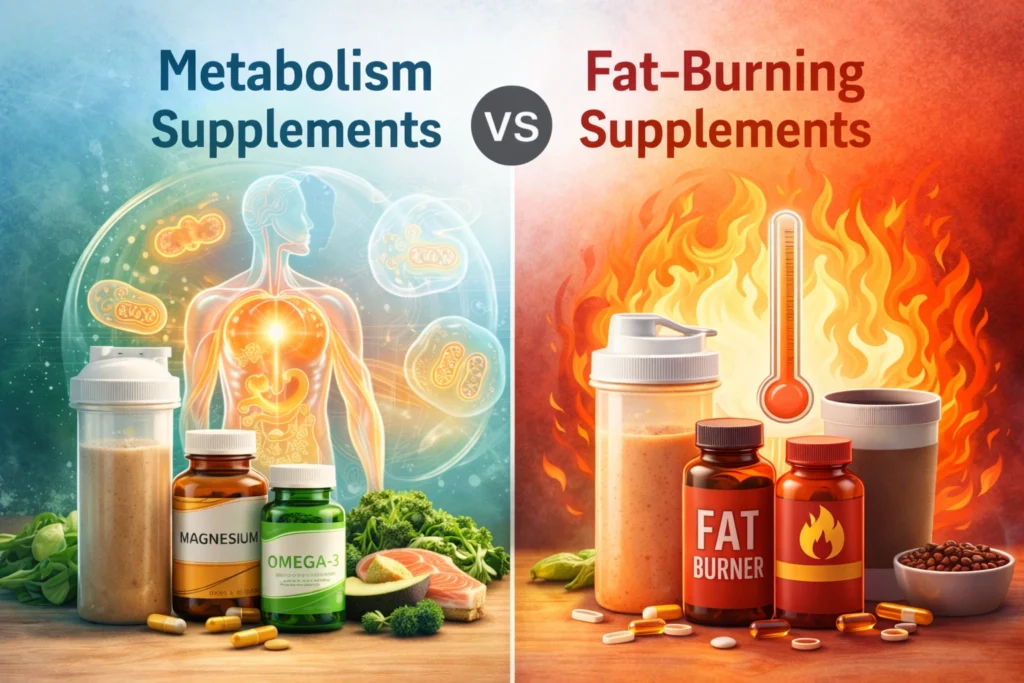
Many people searching for weight loss support eventually face the same confusion:
“Should I take something that boosts metabolism… or something that burns fat?”
The supplement industry rarely explains the difference clearly—because confusion sells. But biologically, metabolism support and fat-burning stimulation are not the same thing, and choosing the wrong approach often leads to frustration, rebound weight gain, or burnout.
This article will walk you through:
- What metabolism supplements actually do
- What fat-burning supplements really are
- How each affects your body
- Who should use which—and who shouldn’t
- Why most people benefit more from one than the other
No hype. No moral pressure. Just physiology, explained carefully.
What “Metabolism” Really Means (And Why It’s Misused)
Metabolism is not how fast your heart beats after caffeine.
It’s not how sweaty you feel after a supplement.
Metabolism is the total of all chemical processes that keep you alive.
That includes:
- How efficiently you convert food into energy
- How well your cells use glucose and fat
- How much muscle mass you maintain
- How your hormones communicate
- How your mitochondria produce ATP
A healthy metabolism is stable, adaptable, and resilient.
When metabolism is compromised, people experience:
- Fatigue despite eating enough
- Easy fat gain
- Difficulty losing weight
- Blood sugar swings
- Poor recovery from dieting
Metabolism supplements aim to support these systems, not force them.
Nagano Lean Body Tonic for Rapid Weight Loss
What Fat-Burning Supplements Actually Do
Fat-burning supplements—often called thermogenics—are designed to increase calorie expenditure temporarily, usually through stimulation.
Most fat burners rely on:
- Caffeine
- Stimulant plant extracts
- Compounds that raise heart rate
- Nervous system activation
They do not improve metabolism in the long term. They increase energy output briefly.
This distinction is critical.
How Metabolism-Support Supplements Work (Quietly but Meaningfully)
Metabolism supplements work by improving efficiency, not urgency.
They may support:
- Mitochondrial energy production
- Insulin sensitivity
- Muscle preservation
- Hormonal balance
- Nutrient utilization
You usually don’t feel metabolism supplements immediately. And that’s a good thing.
Typical metabolism-support ingredients include:
- Protein and amino acids
- Magnesium and B-complex vitamins
- Omega-3 fatty acids
- Compounds that support glucose handling
- Adaptogens that reduce metabolic stress
Their goal is to make your body better at using energy, not burning more energy at all costs.
How Fat-Burning Supplements Work (Fast, Loud, and Temporary)
Fat burners act primarily on the nervous system.
They typically:
- Increase heart rate
- Increase alertness
- Suppress appetite short-term
- Increase heat production
This leads to:
- Slight increase in calorie burn
- Reduced perceived fatigue
- Temporary appetite suppression
But the effects are time-limited and often come with trade-offs.
Short-Term Results vs Long-Term Outcomes
This is where the two approaches diverge sharply.
Metabolism-support supplements tend to:
- Improve energy stability
- Reduce dieting fatigue
- Preserve lean muscle
- Lower rebound weight gain risk
Fat-burning supplements tend to:
- Work quickly
- Lose effectiveness with tolerance
- Disrupt sleep and recovery
- Increase stress hormones if overused
Short-term weight loss is not the same as sustainable fat loss.
Appetite: Support vs Suppression
One of the biggest differences lies in how hunger is handled.
Metabolism supplements
- Support natural satiety hormones
- Improve blood sugar control
- Reduce cravings indirectly
Fat burners
- Suppress appetite through stimulation
- Often lead to rebound hunger
- Can increase emotional eating when effects wear off
If hunger is your primary challenge, supporting appetite regulation beats suppressing it.
Stress, Cortisol, and the Metabolic Cost of Stimulants
Stress hormones play a massive role in fat storage—especially abdominal fat.
Metabolism-focused approach
- Reduces metabolic stress
- Supports cortisol balance
- Improves sleep quality
Fat-burner approach
- Often increases cortisol
- Can worsen anxiety
- Disrupts sleep architecture
When cortisol stays elevated, fat loss becomes harder—even if calories are low.
This is why many people lose weight initially on fat burners, then stall or regain.
Muscle Mass: The Overlooked Factor
Muscle is metabolically active tissue.
Metabolism supplements often:
- Support muscle preservation
- Improve protein utilization
- Protect resting metabolic rate
Fat burners:
- Do not preserve muscle
- May increase muscle breakdown if calories are low
- Often accelerate metabolic slowdown over time
Losing muscle makes future fat loss harder. Preserving it makes everything easier.
Who Metabolism Supplements Are Best For
A metabolism-support approach is usually better for:
- Adults over 30–35
- People with dieting history
- Those experiencing fatigue during weight loss
- Individuals with blood sugar instability
- Long-term weight management goals
This approach prioritizes health first, fat loss second—and that order matters.
Who Fat-Burning Supplements May Be Appropriate For (With Caution)
Fat burners may have limited use for:
- Short-term athletic goals
- Experienced users with high caffeine tolerance
- Individuals with excellent sleep and low stress
- Situations requiring brief energy boosts
They should not be a foundational strategy.
And they should never compensate for:
- Poor sleep
- Extreme stress
- Inadequate nutrition
Why Combining Both Often Backfires
Many people attempt to “cover all bases” by stacking metabolism supplements with fat burners.
This often leads to:
- Nervous system overload
- Sleep disruption
- Increased hunger rebounds
- Burnout
If both are used, timing and dosage must be thoughtful. More is rarely better.
The Psychological Difference: Support vs Pressure
This part is rarely discussed—but it matters.
Metabolism-support supplements send a message of support and patience.
Fat-burning supplements often reinforce:
- Urgency
- Self-punishment
- “Faster is better” thinking
Weight loss rooted in pressure rarely lasts.
A Clear Professional Verdict
Here is the most honest, experience-based conclusion:
- Metabolism supplements support lasting fat loss
- Fat-burning supplements chase short-term results
If you are:
- Rebuilding health
- Trying to lose weight sustainably
- Recovering from repeated dieting
- Managing stress, sleep, or hormones
👉 Metabolism support is the smarter foundation
Fat burners may play a small, optional role—but they should never be the core strategy.
Final Takeaway (Read This Slowly)
Your body is not resistant because it’s broken.
It’s resistant because it’s protecting itself.
When you support metabolism, you work with that protection.
When you force fat burning, you fight it.
Long-term success almost always comes from support first, stimulation last.