
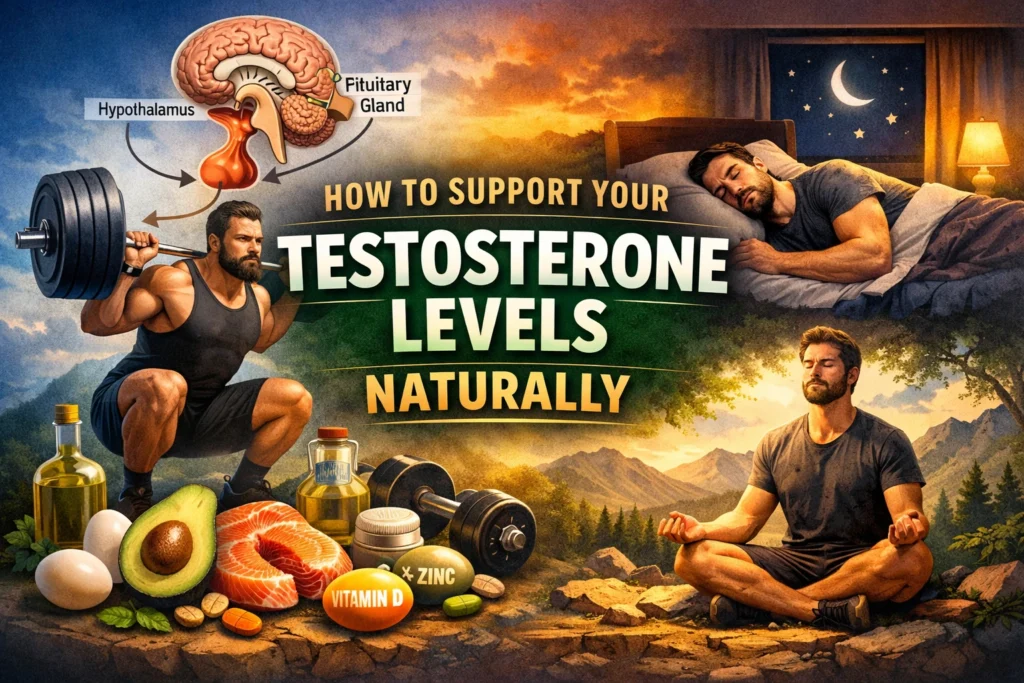
Testosterone is often discussed in loud, exaggerated tones—usually tied to muscle, masculinity, or performance. In reality, testosterone is a foundational hormone that quietly supports many systems in the body, including muscle and bone health, red blood cell production, mood stability, energy levels, and sexual development.
What’s often missed is this:
👉 Testosterone production is highly sensitive to daily habits.
👉 There is no single switch to flip.
👉 Small, consistent lifestyle choices matter far more than aggressive shortcuts.
This article breaks down how to support healthy testosterone levels in a clear, practical, and honest way—without hype, over-promising, or unverified claims.
Understanding Testosterone at a Basic Level
Testosterone is produced primarily in the testes, regulated by signals from the brain through the hypothalamic-pituitary-gonadal (HPG) axis. This system responds continuously to sleep, nutrition, stress, physical activity, illness, and overall energy availability.
When the body perceives stress, under-recovery, or energy shortage, testosterone production is often one of the first processes to downshift. This is not a flaw—it’s a survival mechanism.
Supporting testosterone, therefore, is really about supporting the body’s perception of safety and balance.
Sleep: The Most Underrated Testosterone Support Tool
If there is one factor that consistently shows up in testosterone research, it’s sleep quality and duration.
Testosterone follows a daily rhythm, with the highest levels typically measured in the morning. Most of this hormone is produced during deep sleep phases.
What helps:
- 7–9 hours of sleep on most nights
- A consistent sleep–wake schedule
- Sleeping in a dark, quiet, cool environment
- Limiting screens and bright light late at night
What the evidence suggests:
Short sleep duration and fragmented sleep are associated with lower morning testosterone levels, even in young, otherwise healthy individuals. This doesn’t mean one bad night causes harm—but chronic sleep debt can.
If lifestyle support had a hierarchy, sleep sits at the top.
Strength Training: Stimulate, Don’t Punish
Physical activity is essential for hormonal health, but how you train matters.
Resistance training—especially movements that involve large muscle groups—creates short-term hormonal responses that support anabolic signaling.
Training approaches that help:
- Compound movements (squats, presses, pulls, hinges)
- Moderate to heavy resistance
- Adequate rest between sessions
- Progression over time, not exhaustion every workout
A common mistake:
Excessive volume, minimal recovery, or combining intense training with very low calorie intake can push the body into a stress state. In that context, testosterone support may decline rather than improve.
The goal is stimulus + recovery, not constant strain.
Nutrition: Testosterone Is Built From What You Eat
Hormones are not created in isolation. Testosterone synthesis depends on adequate energy, macronutrients, and micronutrients.
Energy availability matters
Very low-calorie diets—especially for long periods—are associated with reduced testosterone levels. The body interprets prolonged energy shortage as a signal to conserve resources.
Macronutrients that matter:
- Protein: supports muscle tissue and recovery
- Carbohydrates: help regulate training stress and cortisol
- Dietary fats: provide raw materials for steroid hormone production
Healthy fat sources include eggs, dairy, olive oil, avocados, nuts, seeds, and fatty fish.
This is not an argument for extreme diets in either direction. Balance matters more than trends.
Key Micronutrients (Deficiency vs. Excess)
Certain vitamins and minerals are necessary for normal testosterone production—but more is not always better.
Commonly discussed nutrients:
- Vitamin D: Low levels are associated with lower testosterone in observational studies. Sun exposure and fortified foods help.
- Zinc: Essential for testicular function. Deficiency can impair testosterone synthesis.
- Magnesium: Plays a role in metabolic and enzymatic processes related to hormone regulation.
Important clarification:
Correcting a deficiency can support hormonal health.
Taking large doses without a deficiency does not reliably increase testosterone and may cause other issues.
Food-first approaches are usually safer unless a deficiency is confirmed.
Stress, Cortisol, and Hormonal Balance
Testosterone does not operate alone. It exists in balance with other hormones—especially cortisol, the primary stress hormone.
Chronic psychological stress, under-recovery, illness, and emotional strain can raise cortisol levels. Elevated cortisol can interfere with testosterone signaling and production.
Practical stress-support strategies:
- Regular, non-exhaustive exercise
- Time outdoors and sunlight exposure
- Breathing practices or quiet downtime
- Social connection and routine
Stress management isn’t about perfection. It’s about reducing constant pressure signals sent to the nervous system.
Body Composition and Hormonal Environment
Higher levels of body fat are associated with increased activity of aromatase, an enzyme that converts testosterone into estrogen.
This doesn’t mean body fat is “bad.” It means that maintaining a healthy body composition can support a more favorable hormonal environment.
Slow, sustainable fat loss—combined with strength training and adequate protein—tends to be more supportive than aggressive dieting.
Alcohol: Dose Matters
Alcohol has a clear relationship with testosterone when intake becomes excessive.
Heavy or frequent drinking can:
- Impair testicular hormone production
- Increase estrogenic effects
- Disrupt sleep quality
Keeping alcohol intake low to moderate is a simple, evidence-aligned step for hormonal support.
Supplements: Set Expectations Realistically
Many products are marketed as “testosterone boosters.” The scientific reality is far less dramatic.
What supplements can do:
- Help correct nutrient deficiencies
- Support general health and recovery
What they usually don’t do:
- Significantly raise testosterone in healthy individuals
- Override poor sleep, stress, or nutrition
Lifestyle fundamentals consistently outperform supplement stacks.
Environmental Factors: Reasonable Caution
Some environmental chemicals are described as endocrine disruptors. Human evidence varies, but reducing unnecessary exposure is reasonable.
Simple steps include:
- Avoiding heating food in plastic
- Using glass or stainless steel containers
- Washing produce thoroughly
These steps won’t transform hormone levels—but they reduce avoidable strain.
When Medical Evaluation Makes Sense
If someone experiences persistent symptoms such as low energy, reduced libido, mood changes, or delayed development, professional evaluation is appropriate.
A clinician can assess:
- Morning testosterone levels
- Sleep, nutrition, stress, and overall health context
- Whether symptoms align with hormonal imbalance or another cause
Self-diagnosis is unreliable. Context matters.
Final Thoughts
Supporting testosterone is not about dominance, extremes, or shortcuts. It’s about alignment with basic human physiology.
Sleep deeply.
Train with intention.
Eat enough—and eat well.
Manage stress realistically.
Recover consistently.
When the body feels supported, hormonal systems tend to follow.