

Medically reviewed by Dr. A.S.M. Masum Billah, MBBS
If you’ve been lying awake staring at the ceiling, waking up at 3 a.m. for no clear reason, or dragging yourself through the day on broken sleep, you’re not alone. Sleep problems are one of the most common complaints among adults in their 30s, 40s, 50s, and beyond — and the supplement aisle has never been more crowded with options claiming to fix them. The challenge isn’t finding a sleep supplement; it’s figuring out which ones are actually worth your money, which ingredients have real research behind them, and which formula fits your specific situation. That’s exactly what this guide is built to help you do.
This roundup covers the best supplements for better sleep across a range of formulas, delivery formats, and use cases — from a time-release melatonin tablet for people who can’t stay asleep, to a simple amino acid capsule for those whose main problem is a racing mind at bedtime. Every product here is ranked with a clear reason, so you can match the right option to your actual sleep pattern rather than just grabbing whatever has the most reviews. Let’s get into it.
Our Top Picks at a Glance
- #1 — Nature Made Wellblends Sleep Longer: Best overall for staying asleep with time-release melatonin
- #2 — Natrol Sleep Restore Capsules: Best multi-pathway formula with magnesium glycinate and botanicals
- #3 — Nested Naturals Luna Sleep Supplement: Best broad herbal-plus-amino blend
- #4 — Nature Made Wellblends Back to Sleep: Best for middle-of-the-night waking
- #5 — Jarrow Formulas Theanine 200: Best melatonin-free option for racing thoughts
- #6 — Jarrow Formulas MagMind: Best magnesium-only option for brain calm and tension
- #7 — Nature Made Melatonin + Magnesium Gummies: Best gummy format for capsule-averse buyers
- #8 — Natrol Ultra Sleep 3-in-1 Fast Dissolve: Best compact fast-dissolve blend
What Supplements May Actually Help with Sleep
It’s worth being direct here: no supplement replaces good sleep habits, and none of them work the same way for every person. That said, several ingredients have a meaningful body of research behind them, and they work through different mechanisms — which is why the “best” sleep supplement really depends on what’s disrupting your sleep in the first place.
Melatonin is the most studied sleep supplement in the world. Your body produces it naturally in response to darkness, and taking it as a supplement can help signal to your brain that it’s time to wind down. It’s particularly useful for sleep onset — falling asleep faster — and for situations like jet lag or shift work where your internal clock is off. The dose matters more than most people realize. Higher doses (5–10 mg) are not automatically better, and many sleep researchers suggest that lower doses (0.5–3 mg) are often just as effective with fewer side effects.
Magnesium plays a role in hundreds of enzymatic reactions in the body, including those that regulate the nervous system and support GABA activity. Many adults don’t get enough magnesium from diet alone, and low magnesium has been associated with poor sleep quality. If you want to explore magnesium forms in more depth, our guide to the best magnesium glycinate supplements covers the most bioavailable options in detail.
L-theanine is an amino acid found naturally in green tea. It promotes alpha brain wave activity — the kind associated with calm, relaxed alertness — without making you feel sedated. It’s one of the more useful options if your sleep problem is mental overactivation rather than an inability to stay asleep.
GABA is your brain’s primary inhibitory neurotransmitter. Whether supplemental GABA crosses the blood-brain barrier effectively is still debated in the research, but many users report a calming effect, and it appears in a wide range of sleep formulas for that reason.
Herbal extracts like valerian root, lemon balm, chamomile, and hops have long histories of traditional use for relaxation and sleep. The research on these is less robust than for melatonin or magnesium, but they are generally well-tolerated and may contribute to a calming bedtime environment, especially in combination formulas.
What Ingredients Matter Most for Better Sleep
When you’re comparing labels, here’s what to actually pay attention to:
- Melatonin dose and delivery: A time-release tablet works differently than a fast-dissolve. Time-release is better for staying asleep; fast-dissolve is better for falling asleep quickly or for middle-of-the-night use.
- Magnesium form: Magnesium glycinate is generally better tolerated and more bioavailable for sleep purposes than magnesium oxide. Magnesium L-threonate is specifically researched for brain penetration. Both are different from cheap filler forms.
- L-theanine dose: Most research uses 100–200 mg. Products using less than 100 mg are likely underdosed for a meaningful effect.
- Botanical transparency: Some products list a “botanical blend” with a total weight but don’t break out individual herb doses. That makes it harder to evaluate what you’re actually getting.
- Formula complexity vs. your sensitivity: More ingredients can mean more support — or more variables if you’re sensitive to herbs, already taking other supplements, or on medications.
Sleep is also deeply connected to stress and cortisol patterns. If stress is a major driver of your sleep problems, it may be worth reading our guide to the best supplements for stress support alongside this one, since some adaptogens and calming nutrients overlap with sleep support.
The 8 Best Supplements for Better Sleep
1. Nature Made Wellblends Sleep Longer

Key Ingredients & Dosage
- Melatonin 10 mg
- L-Theanine 100 mg
- GABA 100 mg
Serving size: 1 tablet | Servings per container: 30
What Makes It Stand Out
Nature Made built this as a tri-layer, time-release tablet — meaning the melatonin isn’t all released at once. That’s a meaningful design choice if your main problem is waking up in the middle of the night or too early in the morning. Most melatonin products are immediate-release, which helps you fall asleep but doesn’t do much for the 3 a.m. wake-up. The time-release format is what earns this the top spot in this roundup, combined with the addition of L-theanine and GABA for calming support alongside the melatonin signal.
How It Supports Your Goal
The 10 mg melatonin dose is on the higher end, which makes this a stronger option for people who have tried lower doses without success. The time-release delivery means you’re getting a sustained signal to stay asleep, not just a spike at bedtime. L-theanine at 100 mg adds a layer of mental calm, and GABA at 100 mg rounds out the formula with inhibitory neurotransmitter support. If staying asleep is your primary complaint, this formula is built specifically for that use case.
Safety & Side Effects
The 10 mg dose is not ideal for everyone. If you’re sensitive to melatonin, you may experience morning grogginess, vivid dreams, or a heavy feeling the next day. Use extra caution if you take sedative medications, consume alcohol in the evening, drive early in the morning, are pregnant, or have a complex medication routine. Start with the lowest effective dose that works for you — this product is better suited to people who have already tried lower-dose options.
How to Take It
Take one tablet 30 minutes before your target bedtime. Because it’s time-release, don’t crush or split the tablet. Make sure you have a full night of sleep ahead of you — at least 7 to 8 hours — before taking a higher-dose melatonin product like this one.
Pros & Cons
- Pro: Time-release format specifically designed for staying asleep longer
- Pro: Three-ingredient formula is relatively clean for a combination product
- Pro: Nature Made is a well-established, widely trusted brand
- Con: 10 mg melatonin is too strong for sensitive users
- Con: Not appropriate for middle-of-the-night use due to dose level
- Con: No magnesium or botanical support in the formula
Customer Feedback
Buyers who struggle specifically with staying asleep — rather than falling asleep — tend to respond most positively to this product. Sentiment around the time-release format is generally favorable among people who’ve tried standard melatonin tablets without lasting results. Some users report a heavier-than-expected morning feeling, particularly those who are newer to higher-dose melatonin. Overall reception on Amazon leans positive among adults who have already experimented with lower-dose options.
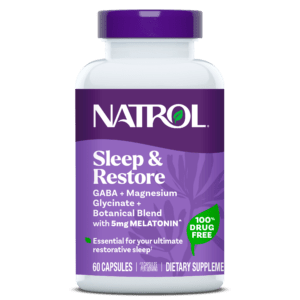
2. Natrol Sleep Restore Capsules
Key Ingredients & Dosage
- Melatonin 5 mg
- GABA 100 mg
- Magnesium glycinate 100 mg
- Vitamin B6 10 mg
- Botanical blend 25 mg (tart cherry, lemon balm, chamomile)
Serving size: 2 capsules | Servings per container: 30
What Makes It Stand Out
This is the most complete multi-pathway formula in the roundup. Where most sleep supplements pick one or two mechanisms — melatonin plus something calming — Natrol Sleep Restore stacks melatonin with GABA, magnesium glycinate, vitamin B6, and a botanical blend in a single serving. Magnesium glycinate is one of the better-absorbed forms of magnesium for sleep support, and its inclusion here at 100 mg is meaningful rather than token. The botanical blend adds tart cherry (a natural source of melatonin), lemon balm, and chamomile for additional calming support.
How It Supports Your Goal
If you want to cover multiple sleep-related pathways without buying four separate products, this formula does a lot of the work in two capsules. The 5 mg melatonin is a moderate, widely tolerated dose. GABA and magnesium glycinate support nervous system calm. Vitamin B6 plays a role in neurotransmitter synthesis. The botanical blend adds a light herbal layer. For someone who’s been taking plain melatonin without great results, this kind of formula upgrade often makes a noticeable difference. If you want to understand more about magnesium glycinate specifically, our magnesium glycinate guide goes deeper on forms, doses, and what to look for.
Safety & Side Effects
More ingredients means more variables. If you’re already taking a magnesium supplement, a calming herb blend, or any sedating medication, you’ll want to account for overlap before adding this product. The combination of melatonin, GABA, magnesium, and botanicals can increase grogginess risk in sensitive individuals. As always, check with your healthcare provider if you’re on prescription sleep aids or other medications.
How to Take It
Take 2 capsules about 30 minutes before bed. Because this is a capsule format, it’s easy to start with one capsule to assess your tolerance before moving to the full serving — a reasonable approach if you’re sensitive to sleep supplements or new to multi-ingredient formulas.
Pros & Cons
- Pro: Most complete multi-pathway formula in this roundup
- Pro: Includes magnesium glycinate, one of the better forms for sleep
- Pro: Moderate 5 mg melatonin dose is broadly tolerated
- Con: More ingredients means more potential interactions
- Con: Botanical blend dose (25 mg total) is relatively small
- Con: Two-capsule serving is more to manage than a single tablet
Customer Feedback
People who’ve tried single-ingredient sleep supplements without satisfying results tend to report the most positive experiences with this product. Sentiment around the magnesium glycinate inclusion is notably favorable among buyers who are already aware of magnesium’s role in sleep. Some users who are sensitive to herbs or multiple active ingredients note that the combination feels stronger than expected. Overall Amazon ratings trend positive, particularly among adults looking for a more comprehensive bedtime formula.
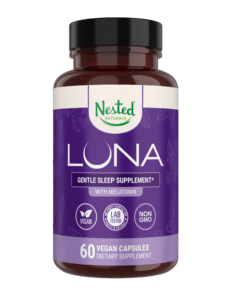
3. Nested Naturals Luna Sleep Supplement
Key Ingredients & Dosage
- Melatonin 6 mg
- L-Theanine 200 mg
- Valerian root 150 mg
- Chamomile extract 150 mg
- Lemon balm extract 100 mg
- Hops extract 100 mg
Serving size: 2 vegan capsules | Servings per container: 30
What Makes It Stand Out
Luna is the most herb-forward formula in this roundup, and it earns its spot because of the depth and transparency of its botanical stack. Where many sleep blends include a small “botanical blend” with a combined weight and no individual doses, Luna breaks out each herb separately — valerian, chamomile, lemon balm, and hops — at doses that are actually meaningful. The L-theanine dose here is 200 mg, which is at the higher end of what research typically uses, and the melatonin sits at a moderate 6 mg. This is a vegan capsule formula, which matters to some buyers.
How It Supports Your Goal
If your sleep problem has a strong anxiety or tension component — you feel wound up at bedtime, your mind won’t stop, or you feel physically restless — the herbal depth of this formula may be more useful than a simpler melatonin-plus-one product. Valerian root has the most research behind it among sleep herbs. Lemon balm and chamomile are well-established calming botanicals. Hops is less commonly discussed but has a history of traditional use for relaxation. Combined with melatonin and a solid L-theanine dose, this is a genuinely comprehensive bedtime formula.
Safety & Side Effects
The combination of valerian, hops, and melatonin can feel quite sedating for some users, particularly those who are sensitive to herbs or who haven’t used herbal sleep products before. Don’t casually stack this with other nighttime herb blends, prescription sleep aids, or alcohol. If you’re on any medications that affect the central nervous system, check with your doctor before using a formula this herb-heavy.
How to Take It
Take 2 vegan capsules 30 to 60 minutes before bed. If you’re new to herbal sleep formulas, consider starting with one capsule to gauge your response before using the full serving. Give this product at least a week of consistent use before evaluating whether it’s working — herbal formulas sometimes take a few nights to settle in.
Pros & Cons
- Pro: Most transparent and complete herbal formula in this roundup
- Pro: 200 mg L-theanine is a well-dosed, research-relevant amount
- Pro: Vegan capsule format
- Con: Not ideal if you prefer minimal ingredients
- Con: Herb-heavy formulas are harder to troubleshoot if something doesn’t agree with you
- Con: Can feel too sedating for lighter sleepers or those sensitive to valerian
Customer Feedback
Luna has a strong following among buyers who specifically want a botanical-forward sleep supplement rather than a melatonin-first product. Sentiment around the L-theanine and valerian combination is frequently positive among people who describe stress or anxiety as part of their sleep difficulty. A smaller subset of reviewers notes that the formula feels too heavy for them, particularly those who are sensitive to valerian or hops. The vegan formulation is a consistent positive mention among buyers who prioritize that.
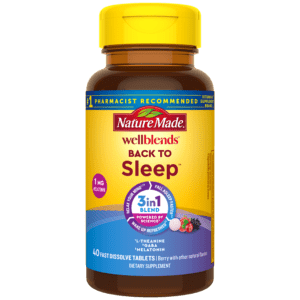
4. Nature Made Wellblends Back to Sleep
Key Ingredients & Dosage
- Melatonin 1 mg
- L-Theanine 100 mg
- GABA 100 mg
Serving size: 1 fast-dissolve tablet | Servings per container: 28
What Makes It Stand Out
This product fills a specific gap that most sleep supplements ignore entirely: the middle-of-the-night wake-up. If you fall asleep fine but find yourself wide awake at 2 or 3 a.m., taking a standard 5 or 10 mg melatonin tablet at that point would leave you groggy well into the next morning. Nature Made designed Back to Sleep with a 1 mg melatonin dose in a fast-dissolve format — meaning it absorbs quickly without water, and the lower dose is calibrated to help you drift back to sleep without a heavy next-day hangover. The formula is otherwise the same calming trio as Sleep Longer, just at a much lighter melatonin level.
How It Supports Your Goal
The fast-dissolve delivery is key here. When you wake up at 2 a.m., you don’t want to get up, find water, and swallow a capsule — that process alone can wake you up further. A fast-dissolve tablet you can take while still in bed, with no water needed, is a practical advantage. The 1 mg melatonin is enough to nudge your system back toward sleep without overwhelming it, and the L-theanine and GABA support a calmer mental state to help you actually relax back into sleep.
Safety & Side Effects
Even at 1 mg, melatonin can cause grogginess in some people, particularly if you take it when you don’t have enough sleep time remaining. The label is designed with the expectation that you still have several hours of sleep ahead of you when you take it. Don’t use this product if you need to be up within two to three hours. As with all melatonin products, avoid combining with alcohol or sedating medications.
How to Take It
Place one tablet on your tongue and let it dissolve — no water needed. Use it when you wake up in the middle of the night and have at least a few hours of sleep time remaining. Keep it on your nightstand so you don’t have to get up to find it. This is not designed as a bedtime product; it’s specifically for the middle-of-the-night use case.
Pros & Cons
- Pro: Purpose-built for middle-of-the-night waking — a use case most products ignore
- Pro: Fast-dissolve format works without water, keeping the process minimal
- Pro: Low 1 mg melatonin dose reduces next-morning grogginess risk
- Con: Too light for bedtime use if you need stronger sleep onset support
- Con: 28 servings per container is slightly fewer than most
- Con: No magnesium or botanical support
Customer Feedback
This product has a loyal niche audience among people who specifically describe waking up in the middle of the night as their primary sleep complaint. Sentiment around the fast-dissolve format and the low melatonin dose is consistently positive in that group. Buyers who try it as a standard bedtime supplement sometimes find it underwhelming — which makes sense, since it’s not designed for that use. The convenience of the no-water format is a recurring positive mention.
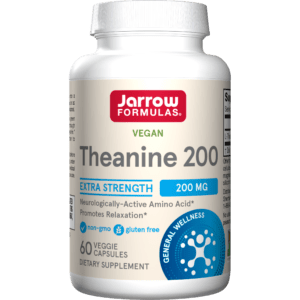
5. Jarrow Formulas Theanine 200
Key Ingredients & Dosage
- L-Theanine 200 mg
Serving size: 1 capsule | Servings per container: 60
What Makes It Stand Out
This is the cleanest, most minimal option in the roundup — one ingredient, one capsule, no melatonin. If your sleep problem is specifically that your mind won’t quiet down at bedtime — racing thoughts, mental replays of the day, difficulty shifting into a relaxed state — L-theanine is one of the most targeted options available. Jarrow’s version delivers 200 mg in a single veggie capsule, which is the dose used in most of the relevant research. There’s nothing else in the formula to account for, which makes it easy to add to an existing routine without worrying about stacking issues.
How It Supports Your Goal
L-theanine promotes alpha brain wave activity — the mental state associated with calm, relaxed focus rather than anxious overactivation. It doesn’t sedate you; it helps your brain shift gears. For people whose sleep problem is the inability to mentally wind down, that’s exactly what you need. It also pairs well with other sleep supplements if you want to build a stack gradually — you can add melatonin or magnesium later without worrying about herb interactions. If stress is a significant driver of your sleep issues, you might also find our guide to the best supplements for stress support useful alongside this one.
Safety & Side Effects
L-theanine is generally considered one of the easier sleep-adjacent supplements to tolerate. It doesn’t cause the sedation or grogginess associated with melatonin or valerian. That said, you should still use care if you’re combining it with other calming supplements or medications. It’s not a stimulant, but it’s also not a sedative — it works best when your sleep problem is mental overactivation rather than a circadian rhythm issue.
How to Take It
Take one capsule 30 to 60 minutes before bed. Because there’s no melatonin, you don’t need to worry as much about precise timing relative to your sleep window. Some people also use L-theanine during the day for stress and focus — the 60-capsule count makes this a practical option for either use.
Pros & Cons
- Pro: Melatonin-free — ideal for people who want to avoid melatonin entirely
- Pro: Single ingredient makes it easy to add to any existing routine
- Pro: 60 capsules per container offers good value
- Con: Won’t address sleep maintenance issues or circadian rhythm disruption
- Con: Too narrow if your sleep problem is staying asleep rather than winding down
- Con: No botanical or magnesium support
Customer Feedback
Buyers who describe their sleep problem in terms of mental overactivation — “can’t turn my brain off,” “too much on my mind” — tend to respond most positively to this product. Sentiment around the single-ingredient simplicity is frequently positive among people who’ve had bad experiences with complex blends or who are cautious about melatonin. Some buyers use it during the day for stress and focus as well as at night. Overall Amazon reception is strong among the minimalist supplement buyer demographic.
6. Jarrow Formulas MagMind
Key Ingredients & Dosage
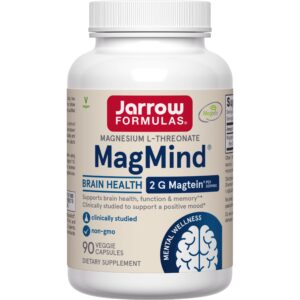
- Magnesium 144 mg (from 2,000 mg magnesium L-threonate)
Serving size: 3 capsules | Servings per container: 30
What Makes It Stand Out
MagMind is the most specialized magnesium option in this roundup. Magnesium L-threonate is a form of magnesium that has been specifically researched for its ability to penetrate the blood-brain barrier more effectively than other forms — making it a brain-targeted magnesium rather than a general-body magnesium supplement. It’s not a classic knock-you-out sleep product, but it earns its place here because some people sleep noticeably better when nighttime brain tension and overstimulation are addressed at the magnesium level. If you’re curious about how different magnesium forms compare for sleep and relaxation, our magnesium glycinate guide covers the broader landscape.
How It Supports Your Goal
Magnesium plays a role in GABA receptor function and nervous system regulation. When magnesium levels are adequate, the nervous system is better equipped to shift into a calm, sleep-ready state. Magnesium L-threonate’s brain-penetrating properties make it particularly relevant for people whose sleep disruption feels more cognitive — brain buzz, difficulty quieting mental activity, or a sense of being neurologically “on” even when physically tired. It’s a more indirect sleep support tool than melatonin, but for the right person, it can be the missing piece.
Safety & Side Effects
Magnesium supplements can cause GI discomfort — loose stools or stomach upset — in some people, though magnesium L-threonate is generally considered gentler than forms like magnesium oxide. More importantly, magnesium can interact with the timing of thyroid medications, certain antibiotics, and other drugs. If you’re on any of these, check with your healthcare provider about spacing. Three capsules per serving is a meaningful commitment, and the cost per serving is higher than most magnesium products.
How to Take It
Take 3 capsules daily. Jarrow suggests taking them in divided doses — for example, one or two in the afternoon and the remainder in the evening — though taking all three in the evening before bed is a common approach for sleep-focused use. Consistency over several weeks tends to produce the most noticeable results with magnesium supplementation.
Pros & Cons
- Pro: Magnesium L-threonate is specifically researched for brain penetration
- Pro: Melatonin-free and herb-free — very clean formula
- Pro: Useful for people whose sleep issue is neurological tension rather than circadian disruption
- Con: Three capsules per serving is a high pill burden
- Con: Higher cost per serving than most magnesium options
- Con: Not a direct sleep aid — results may take longer to notice
Customer Feedback
MagMind attracts a more informed buyer than most sleep supplements — people who have specifically sought out magnesium L-threonate after reading about it or being recommended it. Sentiment in that group tends to be positive, with buyers noting improvements in mental calm and sleep quality over time rather than an immediate sedative effect. Some buyers are surprised by the three-capsule serving size and the price point. Overall reception is favorable among buyers who approach sleep support from a brain health angle.
7. Nature Made Melatonin + Magnesium Gummies
Key Ingredients & Dosage
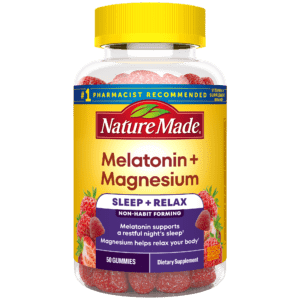
- Melatonin 3 mg
- Magnesium 100 mg
Serving size: 2 gummies | Servings per container: 30
What Makes It Stand Out
This is the most accessible format in the roundup for people who genuinely dislike swallowing capsules or tablets. Gummies aren’t just a gimmick — for some adults, the format is the difference between actually taking a supplement consistently and letting it sit on the shelf. Nature Made pairs a moderate 3 mg melatonin dose with 100 mg of magnesium in a two-gummy serving. The 3 mg melatonin is a gentler middle ground between the 1 mg micro-dose and the 5–10 mg higher-dose products, making this a reasonable starting point for people who haven’t used melatonin before.
How It Supports Your Goal
The combination of melatonin and magnesium covers two of the most evidence-supported sleep supplement ingredients in a single, easy-to-take format. Melatonin helps signal sleep onset; magnesium supports nervous system calm and GABA activity. For someone who wants a simple, mainstream bedtime supplement without a complex formula, this delivers the two most important ingredients without overwhelming the routine. Nature Made is one of the most recognized and trusted supplement brands in the U.S., which matters for buyers who prioritize brand reliability.
Safety & Side Effects
Treat gummies like a real supplement, not a snack. The melatonin content is meaningful, and taking more than the recommended serving because they taste good is a real risk — especially in households with children. Keep them out of reach of kids. Avoid combining with other melatonin products, and don’t layer with other magnesium supplements without accounting for total daily magnesium intake. Gummies also typically contain added sweeteners and flavoring agents, which some buyers prefer to avoid.
How to Take It
Take 2 gummies about 30 minutes before bed. Don’t exceed the recommended serving. Store them somewhere that isn’t easily accessible to children or anyone who might mistake them for candy.
Pros & Cons
- Pro: Gummy format is genuinely easier for capsule-averse buyers
- Pro: Moderate 3 mg melatonin is a good starting dose
- Pro: Nature Made brand reliability and widespread availability
- Con: Contains added sweeteners and flavoring
- Con: Gummy format can encourage overconsumption
- Con: Less formula depth than capsule-based competitors
Customer Feedback
Buyers who specifically mention disliking pills or capsules are the most enthusiastic audience for this product. Sentiment around the taste and ease of use is consistently positive. Some buyers note that the 3 mg melatonin dose feels appropriately gentle — not too heavy, not too light. A smaller group of reviewers notes that gummies feel less “serious” as a supplement format, though most in that group still report positive sleep results. Overall Amazon ratings are strong, particularly among first-time melatonin users.
8. Natrol Ultra Sleep 3-in-1 Fast Dissolve
Key Ingredients & Dosage
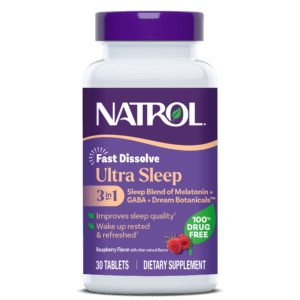
- Melatonin 5 mg
- GABA 100 mg
- Dream Botanicals blend 50 mg (lemon balm and chamomile extracts)
Serving size: 1 tablet | Servings per container: 30
What Makes It Stand Out
Natrol’s Ultra Sleep 3-in-1 is the fast-dissolve option for people who want more than just melatonin but don’t need the full complexity of Sleep Restore or Luna. It delivers 5 mg melatonin, 100 mg GABA, and a 50 mg botanical blend of lemon balm and chamomile in a single fast-dissolve tablet. The fast-dissolve format means quicker absorption than a standard capsule, which can be useful if you want the melatonin to work relatively quickly at bedtime. It’s a compact, practical formula that covers the basics without a long ingredient list.
How It Supports Your Goal
The 5 mg melatonin is a widely used, broadly tolerated dose for sleep onset support. GABA adds inhibitory neurotransmitter support, and the botanical blend provides a light herbal calming layer. This is a solid middle-ground product — more complete than a plain melatonin tablet, less complex than a full herbal stack. If you want a fast-dissolve format with a bit more formula depth than a single-ingredient product, this is the most straightforward option in the roundup for that specific combination.
Safety & Side Effects
Like all fast-dissolve melatonin products, this can still be too strong if you’re sensitive to melatonin or if you take it too late in the evening. The botanical component is relatively light, but lemon balm and chamomile can still contribute to a calming effect that some users find stronger than expected in combination with melatonin and GABA. Don’t take this if you need to drive or operate machinery within several hours.
How to Take It
Place one tablet on your tongue and let it dissolve — no water needed. Take it 20 to 30 minutes before your target bedtime. The fast-dissolve format is designed for relatively quick onset, so don’t take it and then stay up for another hour scrolling your phone.
Pros & Cons
- Pro: Fast-dissolve format for convenient, no-water bedtime use
- Pro: Three-ingredient formula is easy to understand and evaluate
- Pro: 5 mg melatonin is a practical, widely tolerated dose
- Con: Botanical blend is lighter and less transparent than fuller herbal formulas
- Con: No magnesium support
- Con: Less formula depth than the higher-ranked products in this roundup
Customer Feedback
Buyers who prioritize the fast-dissolve format tend to respond well to this product. Sentiment around the convenience factor is consistently positive, and the 5 mg melatonin dose is generally described as effective without being overwhelming for most users. Some buyers note that the botanical component feels subtle — which is accurate given the 50 mg total blend weight. Overall Amazon reception is positive among buyers who want a simple, fast-acting bedtime supplement without a complex formula to manage.
How to Choose the Right Sleep Supplement for Your Situation
The most important thing you can do before buying any sleep supplement is identify your actual sleep problem. The products in this roundup are built for different situations, and picking the wrong one for your specific issue is the most common reason people feel like “supplements don’t work for me.”
If you struggle to fall asleep: Look for melatonin in a standard or fast-dissolve format. Products like the Natrol Ultra Sleep 3-in-1 Fast Dissolve or the Nature Made Melatonin + Magnesium Gummies are good starting points. If your problem is more about mental overactivation than a circadian signal issue, Jarrow Theanine 200 or the Luna formula with its high L-theanine dose may be more relevant.
If you wake up in the middle of the night: Nature Made Wellblends Back to Sleep is the most purpose-built option for this use case. Its low-dose, fast-dissolve format is specifically designed for the 2 a.m. wake-up scenario. The time-release format of Nature Made Wellblends Sleep Longer is also relevant here if you want a bedtime product that sustains its effect through the night.
If you want a complete multi-ingredient formula: Natrol Sleep Restore Capsules and Nested Naturals Luna are the two most comprehensive options. Sleep Restore is better if you want magnesium glycinate included; Luna is better if you want a deeper herbal stack.
If you want to avoid melatonin entirely: Jarrow Theanine 200 and Jarrow MagMind are your two options here. Theanine is better for mental wind-down; MagMind is better for people who suspect magnesium deficiency or brain-level tension is part of the issue.
If you hate swallowing capsules: Nature Made Melatonin + Magnesium Gummies or the Nature Made Wellblends Back to Sleep fast-dissolve tablet are your most accessible format options.
Consider your sensitivity level. If you’ve had bad experiences with sleep supplements in the past — morning grogginess, vivid dreams, feeling “off” — start with the lowest effective dose. The 1 mg melatonin in Back to Sleep or the single-ingredient simplicity of Theanine 200 are better starting points than a 10 mg time-release tablet or a complex herbal blend.
Think about what else you’re already taking. If you’re already using a magnesium supplement, a calming herb blend, or any prescription sleep aid, adding a multi-ingredient sleep supplement on top creates stacking risks. In that case, a single-ingredient product like Theanine 200 or a simple melatonin-plus-one formula is a smarter addition. If stress and cortisol patterns are a significant part of your sleep disruption, exploring adaptogens may also be worth your time — our guide to the best adaptogen supplements covers options that some people find helpful for evening wind-down.
Safety: What You Should Know Before Taking Sleep Supplements
Sleep supplements are widely available without a prescription, but that doesn’t mean they’re consequence-free. Here’s what you should know before starting any of the products in this roundup.
Melatonin is not a sleeping pill, but it’s not trivial either. It’s a hormone. Taking it regularly at high doses may affect your body’s natural melatonin production over time, though research on this is still developing. Most sleep researchers recommend using the lowest effective dose rather than defaulting to the highest available. If you find yourself needing more and more melatonin to get the same effect, that’s a signal to reassess.
Drug interactions are real. Melatonin can interact with blood thinners, immunosuppressants, diabetes medications, and contraceptives. Magnesium can affect the absorption of thyroid medications and certain antibiotics. Herbal ingredients like valerian and lemon balm can amplify the effects of sedative medications. If you’re on any prescription medications, check with your pharmacist or physician before adding a sleep supplement.
Grogginess the next morning is a real side effect. Higher melatonin doses, herb-heavy formulas, and products taken too late in the evening can all leave you feeling foggy the next day. If you drive early in the morning or operate machinery, this is a practical safety concern, not just a comfort issue.
These products are not appropriate for everyone. Pregnant or breastfeeding women, people with autoimmune conditions, and those with serious sleep disorders like sleep apnea should consult a healthcare provider before using sleep supplements. Sleep supplements are not a substitute for medical evaluation if your sleep problems are severe, persistent, or accompanied by other symptoms.
Keep melatonin products away from children. Melatonin gummies and fast-dissolve tablets in particular can look and taste like candy. Melatonin overdose in children is a growing concern, and accidental ingestion is a real risk if these products are stored within reach.
Final Verdict
If you’re looking for the single best starting point among these eight products, Nature Made Wellblends Sleep Longer earns the top spot because it addresses the most common and frustrating sleep complaint — waking up in the middle of the night and not being able to get back to sleep — with a purpose-built time-release formula. The three-ingredient formula is clean enough to evaluate clearly, and Nature Made’s brand reliability is a real advantage for buyers who want a trustworthy product from a well-established company.
That said, “best overall” doesn’t mean “best for you.” If you wake up at 3 a.m. and need something light and fast, Nature Made Wellblends Back to Sleep is the more targeted choice. If you want a complete multi-pathway formula, Natrol Sleep Restore Capsules is the most comprehensive option in the roundup. If you want to avoid melatonin entirely, Jarrow Theanine 200 is the cleanest single-ingredient alternative. And if you hate capsules, the Nature Made Melatonin + Magnesium Gummies make it easy to actually stick to a bedtime routine.
The best sleep supplement is the one that matches your specific sleep pattern, your sensitivity level, and your existing supplement routine — and that you’ll actually take consistently. Use this guide to match the right formula to your situation, start at a lower dose than you think you need, and give any new product at least one to two weeks before drawing conclusions.
Frequently Asked Questions
What is the best supplement for better sleep overall?
There’s no single best answer because it depends on your specific sleep problem. For staying asleep, a time-release melatonin formula like Nature Made Wellblends Sleep Longer is a strong choice. For falling asleep with a racing mind, L-theanine or a botanical blend may be more useful. For a complete multi-ingredient approach, Natrol Sleep Restore Capsules covers the most ground.
Is melatonin safe to take every night?
Melatonin is generally considered safe for short-term use. Long-term nightly use is less well-studied, and some researchers recommend using it situationally rather than as a permanent nightly habit. If you find yourself relying on melatonin every night for months, it’s worth discussing with a healthcare provider to rule out underlying sleep issues.
What’s the right melatonin dose for sleep?
Research suggests that lower doses — often 0.5 to 3 mg — can be as effective as higher doses for many people, with fewer side effects. Higher doses (5–10 mg) are not automatically more effective and are more likely to cause morning grogginess. Start low and only increase if a lower dose genuinely isn’t working.
Can I take magnesium and melatonin together?
Yes, many sleep supplements combine both, and they work through different mechanisms. Products like Natrol Sleep Restore Capsules and Nature Made Melatonin + Magnesium Gummies include both in a single formula. If you’re combining separate products, account for your total magnesium intake from all sources.
What sleep supplement is best if I want to avoid melatonin?
Jarrow Formulas Theanine 200 is the cleanest melatonin-free option in this roundup, and it’s particularly useful if your sleep problem is mental overactivation or racing thoughts. Jarrow MagMind is another melatonin-free option focused on brain-level magnesium support.
Do herbal sleep supplements actually work?
The research on individual herbs like valerian, chamomile, and lemon balm is less robust than for melatonin or magnesium, but these ingredients have long histories of traditional use and are generally well-tolerated. They tend to work best as part of a broader bedtime routine rather than as standalone solutions, and results can vary significantly between individuals.
Are sleep supplement gummies as effective as capsules?
The active ingredients can be equally effective in gummy form if the doses are the same. The main practical difference is that gummies are easier to take consistently for people who dislike capsules, but they also carry a higher risk of accidental overconsumption and typically contain added sweeteners. For most adults, the format is a personal preference rather than a meaningful efficacy difference.
When should I talk to a doctor instead of trying a supplement?
If your sleep problems are severe, have lasted more than a few months, are accompanied by symptoms like loud snoring or gasping (which can indicate sleep apnea), or are significantly affecting your daily functioning, a healthcare provider evaluation is the right first step. Sleep supplements are not a substitute for medical diagnosis or treatment of underlying sleep disorders.
References
- National Institutes of Health, Office of Dietary Supplements (NIH ODS) — Melatonin Fact Sheet for Health Professionals
- National Institutes of Health, Office of Dietary Supplements (NIH ODS) — Magnesium Fact Sheet for Health Professionals
- National Center for Complementary and Integrative Health (NCCIH) — Melatonin: What You Need to Know
- National Center for Complementary and Integrative Health (NCCIH) — Valerian
- Sleep Foundation — Melatonin and Sleep
- Sleep Foundation — Magnesium and Sleep
- Sleep Foundation — L-Theanine and Sleep
- Examine.com — L-Theanine Research Summary
- Examine.com — Magnesium L-Threonate Research Summary
- Ferracioli-Oda E, et al. — Meta-analysis of melatonin for the treatment of primary sleep disorders. PLOS ONE, 2013.
- Abbasi B, et al. — The effect of magnesium supplementation on primary insomnia in elderly. Journal of Research in Medical Sciences, 2012.