
We only recommend products we love and that we think you will, too. We may receive a portion of sales from products purchased from this article.

Medically reviewed by Dr. A.S.M. Masum Billah, MBBS

Aging changes the brain quietly. Memory slips don’t happen overnight—they build slowly, often linked with nutrient gaps, reduced absorption, and mitochondrial decline.
Here’s the uncomfortable truth:
Most multivitamins?
They’re built for general health, not cognitive aging.
So if you’re over 60 and want to support memory, focus, and mental clarity, you need something better than a “one-size-fits-all” formula.
In this guide, I’ve reviewed the best multivitamins for memory support after 60, focusing on:
- Bioavailable B vitamins (especially B12 and folate)
- Brain-relevant compounds like CoQ10 and antioxidants
- Realistic dosages (not label decoration)
- Ease of long-term use (because consistency beats complexity)
Let’s get into the ones worth your attention.
How to choose the best multivitamin for memory support after 60 years old
Choosing randomly won’t help. After 60, the goal shifts from “general health” to targeted support for aging physiology.
Focus on these:
1. Look for bioavailable forms
- Methylcobalamin (B12) instead of cyanocobalamin
- 5-MTHF instead of folic acid
- Chelated minerals instead of oxides
These matter because absorption declines with age.
2. Prioritize brain-relevant nutrients
Not every multivitamin is built for cognition.
Look for:
- Vitamin B12 + folate → neuronal function
- Vitamin D3 → linked with cognitive health
- CoQ10 → cellular energy
- Antioxidants → oxidative stress support
3. Check the dosage—not just presence
Many brands “sprinkle” ingredients.
Example:
- CoQ10 below 30 mg → often negligible
- B12 below 25 mcg → may be insufficient in seniors
4. Be honest about your lifestyle
- If you won’t take 6 capsules daily → avoid high-dose protocols
- If you have digestive issues → consider gentler formulas
The best supplement is the one you actually take daily.
Key nutrients that support memory after 60
Aging brains don’t just “forget.” They often lack fuel.
Here are the nutrients that matter most:
Vitamin B12
- Deficiency is common after 60
- Linked with cognitive decline
- Supplementation helps especially in low levels
Folate (B9)
- Works with B12 in methylation
- Supports neurotransmitter balance
Vitamin D3
- Low levels are associated with cognitive impairment
- Supports overall brain function
CoQ10
- Supports mitochondrial energy production
- Brain cells are energy-demanding → this matters
Magnesium
- Involved in neuronal signaling
- Low intake is common in older adults
Best Magnesium Glycinate Supplements
Polyphenols (green tea, resveratrol)
- Help reduce oxidative stress
- Evidence is moderate, not definitive
Common mistakes people make (and regret later)
This is where most buyers go wrong.
1. Choosing based on “more ingredients”
More isn’t always better. Many formulas overload with underdosed compounds.
2. Ignoring absorption
Cheap forms = poor utilization.
Example:
- Magnesium oxide → low absorption
- Synthetic B12 → less efficient in some individuals
3. Expecting memory improvement overnight
No multivitamin works that way.
These support long-term brain health, not instant recall.
4. Overlapping supplements
Stacking multiple products can lead to:
- Excess vitamin D
- Too much zinc or selenium
When you should NOT rely on a multivitamin alone
Let’s be clear—this is important.
A multivitamin is not enough if:
- You have diagnosed cognitive decline (MCI, dementia)
- You have severe B12 deficiency
- You’re experiencing rapid memory loss
In these cases:
You need medical evaluation, not just supplementation.
Pro tips to get better results (rarely discussed)
These small changes improve outcomes more than switching brands.
1. Take with meals containing fat
Improves absorption of:
- Vitamin D
- CoQ10
- Vitamin K
2. Stay consistent for at least 8–12 weeks
Micronutrient repletion takes time.
3. Pair with lifestyle basics
- Sleep
- Physical activity
- Social engagement
No supplement replaces these.
Who should choose which type (quick guide)
- You want simplicity → Nature’s Lab One Daily
- You want maximum coverage → Six Daily
- You want better absorption → Inessa
- You want basic support → Centrum / One A Day
- You want natural-style → Garden of Life / MegaFood
Best multivitamins for memory support after 60 years old
1. Nature’s Lab Gold One Daily Multivitamin

Quick take
This one earns the top spot for a reason. It goes beyond basic nutrition and adds a layer of cognitive-relevant nutrientsthat many senior multivitamins simply skip.
You’re not getting a miracle brain pill here. But you are getting a well-thought-out daily formula that supports energy metabolism, antioxidant defense, and neuronal function—all of which matter after 60.
The biggest advantage?
It delivers all of this in just one capsule a day, which makes long-term consistency realistic.
Key ingredients & dosage
From the verified label:
- Vitamin D3 (100 mcg / 4000 IU) → high-end daily support
- Vitamin B12 (500 mcg, methylcobalamin) → active form, senior-friendly
- Folate (1,360 mcg DFE) → supports methylation
- CoQ10 (100 mg) → meaningful dose for mitochondrial function
- Alpha Lipoic Acid (50 mg) → antioxidant support (supportive, not therapeutic)
- Green tea extract (50 mg) → polyphenol-based protection
- Curcumin C3 Complex (25 mg) → anti-inflammatory support
- Lutein (6 mg) + Zeaxanthin (1.2 mg) → eye-brain axis support
- BioPerine (5 mg) → may enhance absorption
Form quality matters here:
- B12 is in methylated form
- Selenium is selenomethionine
- Zinc includes amino acid chelates
What makes it stand out
Most multivitamins for older adults focus only on vitamins and minerals. This one quietly adds a functional layer.
- Includes CoQ10 at a clinically relevant dose (rare in multis)
- Combines vitamins + antioxidants + polyphenols in one capsule
- Uses better forms of key nutrients, not just the cheapest options
- Adds absorption support (BioPerine)
In simple terms, it feels less like a generic multivitamin and more like a “smart daily formula.”
How it supports memory after 60
Let’s keep this grounded.
This product doesn’t directly “improve memory.”
What it does is support the systems that affect it.
- B12 + folate → critical for neuronal signaling and cognitive health
- CoQ10 → supports mitochondrial energy in brain cells
- Polyphenols (green tea, resveratrol) → help counter oxidative stress
- Vitamin D3 → linked with cognitive health in older adults
Research suggests that correcting micronutrient gaps may help maintain cognitive function in aging populations, though results vary across individuals.
So the role here is:
Support the foundation → not replace targeted brain therapy
How to take it
- 1 capsule daily with food
- Ideally with a meal containing some fat → improves absorption of:
- Vitamin D
- CoQ10
- Curcumin
Best time:
- Morning or lunch (B-vitamins can feel energizing)
Pros & cons
Pros
- One-capsule convenience
- Includes CoQ10 (100 mg)
- Uses better nutrient forms (methyl B12, chelated minerals)
- Adds antioxidant and polyphenol support
- Strong all-in-one design
Cons
- Some ingredients are present in supportive rather than therapeutic doses
- Vitamin D is relatively high → may not suit everyone long-term
- Not a dedicated brain supplement
Customer feedback snapshot
From consistent buyer patterns:
- Many users mention better daily energy and reduced fatigue
- Some older adults report feeling more mentally clear, though this is subjective
- A few note the capsule is easy to swallow compared to tablets
- Occasional concern about high vitamin D dose
2. Nature’s Lab Gold Six Daily Advanced Multivitamin

Quick take
If the previous product is about balance, this one is about maximum coverage.
This is not built for convenience. It’s built for people who want a full-spectrum nutrient intake, including vitamins, minerals, amino acids, antioxidants, and whole food blends—all in one system.
The trade-off is obvious:
six capsules per day.
That alone will decide whether this works for you.
Key ingredients & structure
This formula includes:
- Full spectrum vitamins (A, C, D3, E, K1 + K2, B-complex)
- Vitamin D3 ~5000 IU (high dose)
- CoQ10 (100 mg)
- Acetyl-L-carnitine (brain-energy support)
- Alpha-lipoic acid
- Chromium (ChromeMate®)
- Beta-glucan + mushroom complex
- Whole food and antioxidant blends
Total: 90+ nutrients
⚠ Exact per-ingredient doses vary across the full panel and should be checked on the product label before clinical use.
What makes it stand out
This is closer to a nutritional protocol than a multivitamin.
- Includes amino acids + mushrooms, which most multis skip
- Uses split dosing (6 capsules) → better absorption
- Combines metabolic, immune, and antioxidant layers
- Designed for people who want comprehensive support in one stack
How it supports memory after 60
The strength here is coverage + synergy.
- Acetyl-L-carnitine → studied in cognitive decline
- CoQ10 + ALA → mitochondrial support
- B-complex + vitamin D → foundational brain nutrients
- Mushroom compounds → immune and possible neuro-support
But let’s be honest:
The benefit comes from combined support, not one standout ingredient.
How to take it
- 6 capsules daily
- Split into:
- 2 capsules × 3 times daily
- or 3 capsules × 2 times
Always take with meals.
This reduces:
- GI discomfort
- nutrient competition
Pros & cons
Pros
- Extremely comprehensive formula
- Includes brain-relevant compounds (ALCAR, CoQ10)
- Better absorption due to split dosing
- Broad systemic support
Cons
- 6 capsules daily → compliance issue
- High vitamin D → requires awareness
- Hard to track individual nutrient intake
- Overkill for many users
Customer feedback snapshot
- Advanced users appreciate the depth of formulation
- Some report improved energy and overall vitality
- Many mention the pill burden is challenging long-term
- Occasional complaints about cost vs convenience
3. Inessa Methylated Multivitamin for Men & Women
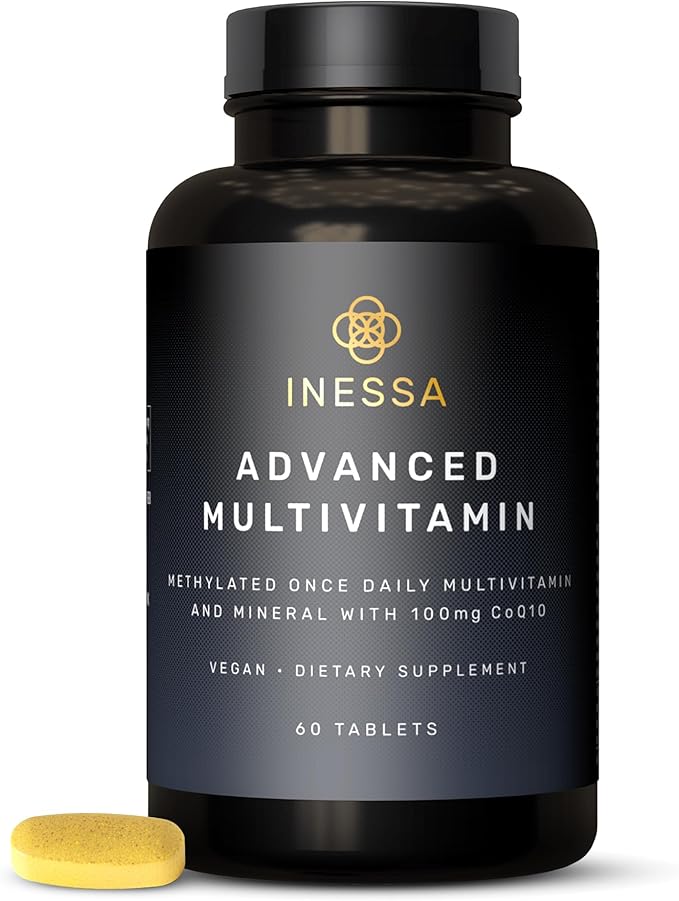
Quick take
If your priority is absorption and bioactive nutrients, this is where Inessa stands out.
Instead of stuffing the formula with dozens of extras, it focuses on methylated B vitamins, CoQ10, and clean ingredient forms. That makes it a strong pick for people over 60 who may struggle with nutrient conversion or gut absorption.
This is less about “more ingredients” and more about smarter forms.
Key ingredients & dosage
From verified product data:
- Vitamin D3 (50 mcg / 2000 IU)
- Vitamin B12 (methylcobalamin)
- Folate (L-5-MTHF)
- Vitamin B6 (P5P form)
- CoQ10 (100 mg)
- Vitamin C (250 mg)
- Vitamin K2 (MK-7, 100 mcg)
- Zinc (citrate form)
⚠ Exact full mineral panel and all dosages vary slightly by batch and label—check before clinical use.
What makes it stand out
- Uses methylated/active B-vitamin forms (huge advantage for older adults)
- Includes CoQ10 at a meaningful dose
- Avoids unnecessary filler ingredients
- Clean, vegan-friendly formulation
In simple terms, this is built for people who want efficiency over complexity.
How it supports memory after 60
This formula targets a key issue in aging:
Declining nutrient absorption and methylation efficiency
- Methyl B12 + methylfolate → support neuronal signaling
- CoQ10 → supports brain energy production
- Vitamin D3 → linked with cognitive health
Unlike broader multis, this one focuses on core mechanisms rather than stacking extras.
How to take it
- 1 tablet daily with food
- Best taken:
- Morning
- With a fat-containing meal
Pros & cons
Pros
- Uses bioactive nutrient forms
- Includes CoQ10 (100 mg)
- Clean and focused formulation
- Easy one-tablet dosing
Cons
- Less comprehensive than full-spectrum multis
- Limited antioxidant diversity
- Not designed as a “complete coverage” formula
Customer feedback snapshot
- Many users mention better tolerance vs standard multis
- Some report improved energy and clarity
- Popular among those with sensitive digestion
- A few expect more ingredients for the price
4. Centrum Silver Adults 50+ Multivitamin
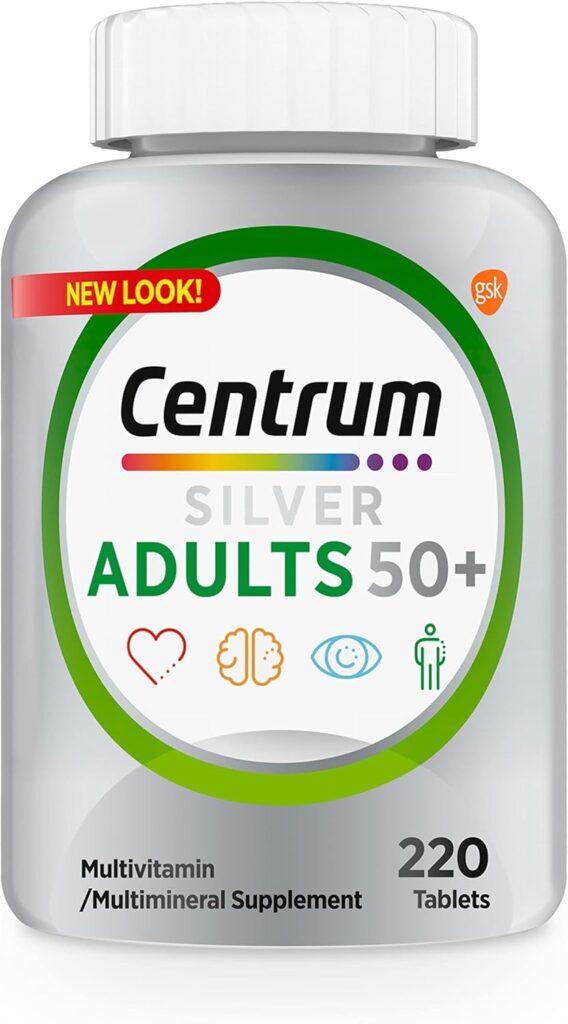
Quick take
This is the classic. It’s everywhere for a reason.
Centrum Silver is a foundation-level multivitamin—not exciting, but reliable. It doesn’t try to act like a brain supplement. Instead, it focuses on covering essential nutrient gaps common after 60.
And interestingly, it has one advantage many overlook:
It has been associated with large-scale cognition research (COSMOS-Mind trial).
Key ingredients & dosage
From label data:
- Vitamin D3 (25 mcg / 1000 IU)
- Vitamin B12 (standard form)
- Calcium (220 mg)
- Chromium (50 mcg)
- Lutein (250 mcg)
- Lycopene (300 mcg)
- No iron (appropriate for many older adults)
What makes it stand out
- Backed by large randomized trials on multivitamins and cognition
- Designed specifically for 50+ adults
- Balanced, safe baseline dosing
- Widely accessible and consistent quality
This is not a “premium” formula. It’s a safe starting point.
How it supports memory after 60
The benefit here is indirect but important.
- Helps correct micronutrient deficiencies
- Supports B12 and vitamin D levels
- Maintains overall physiological function
Research suggests that correcting deficiencies may help maintain cognitive function over time.
So think of it as:
Baseline support rather than active enhancement
How to take it
- 1 tablet daily with food
Pros & cons
Pros
- Simple, trusted formula
- Good baseline for seniors
- Backed by cognition-related research
- Easy to take
Cons
- Lacks advanced brain-support ingredients
- Uses standard (not premium) nutrient forms
- Lower potency compared to top-tier formulas
Customer feedback snapshot
- Users appreciate reliability and affordability
- Many long-term users report consistent well-being
- Few expect cognitive benefits and are satisfied with general health support
- Some complain about tablet size
5. One A Day Men’s 50+ Healthy Advantage Multivitamin
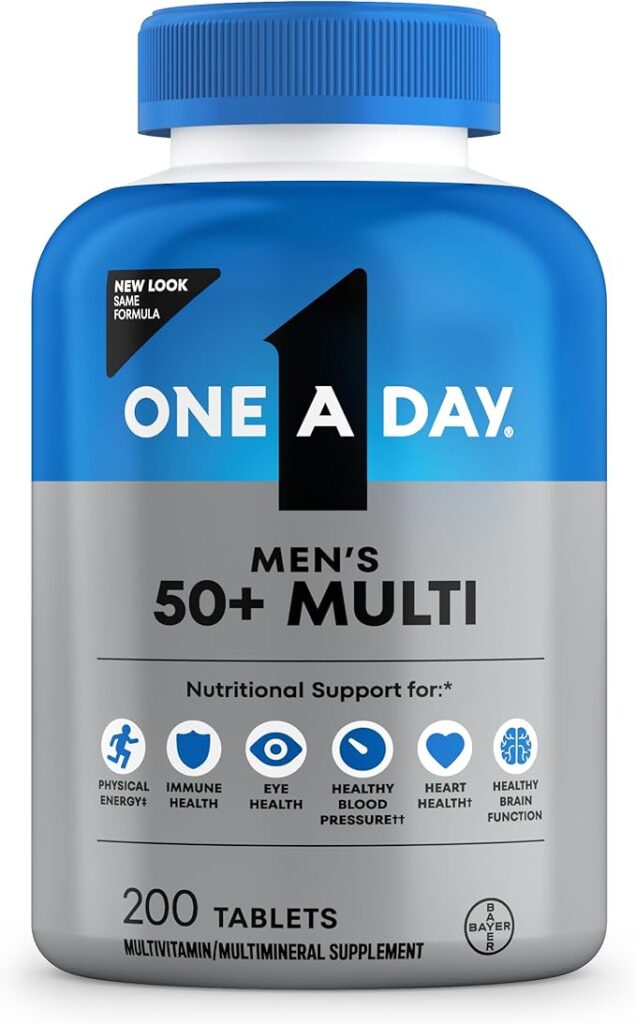
Quick take
This one sits in a similar category to Centrum—but with slightly more emphasis on heart, energy, and metabolic support.
It’s practical, straightforward, and designed for people who want a no-nonsense daily multivitamin without complexity.
Key ingredients & dosage
From verified label:
- Vitamin D (17.5 mcg / 700 IU)
- Vitamin B12 (25 mcg)
- Vitamin B6 (6 mg)
- Folate (665 mcg DFE)
- Magnesium (110 mg)
- Zinc (24 mg)
- Selenium (117 mcg)
- Lycopene (370 mcg)
What makes it stand out
- Balanced formula covering 6 key health areas
- Includes a decent mineral profile (magnesium, zinc)
- Easy single-tablet dosing
- Widely available and consistent
It doesn’t try to be fancy—and that’s actually its strength.
How it supports memory after 60
- B12 + folate → support cognitive pathways
- Magnesium → plays a role in neuronal function
- Zinc + selenium → antioxidant support
Again, this is about supporting the system, not targeting memory directly.
How to take it
- 1 tablet daily with food
Pros & cons
Pros
- Balanced nutrient profile
- Includes key minerals often missing in other multis
- Easy to follow
- Good value
Cons
- Uses conventional nutrient forms
- No advanced brain-support ingredients
- Moderate potency
Customer feedback snapshot
- Many users report improved daily energy
- Appreciated for simplicity and affordability
- Some note it feels similar to other basic multis
- Occasional complaints about tablet size
6. Garden of Life Vitamin Code 50 & Wiser Multivitamin
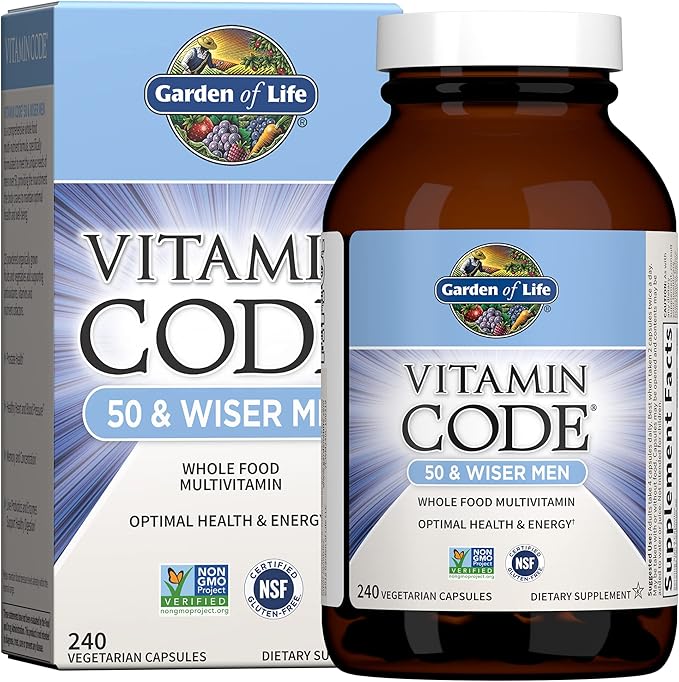
Quick take
This one speaks to a different kind of buyer.
If you prefer whole-food-based supplements with probiotics and minimal synthetic feel, this formula will appeal to you. It’s marketed heavily around being “raw” and “natural,” which attracts health-conscious users.
But here’s the honest take:
It looks premium, but you need to evaluate it based on nutrient delivery, not just branding.
Key ingredients & composition
From verified product information:
- Includes vitamins A, C, D, E, K + full B-complex
- Contains 23 powdered fruits and vegetables
- Includes live probiotics + digestive enzymes
- Added antioxidant blends
⚠ Full exact per-ingredient dosages vary by label version and were not fully verifiable here → always check the bottle.
What makes it stand out
- Strong clean-label positioning (non-GMO, gluten-free, vegetarian)
- Includes probiotics + enzymes (rare in multivitamins)
- Appeals to users avoiding synthetic-heavy formulas
It’s less about potency and more about philosophy of formulation.
How it supports memory after 60
Let’s stay grounded.
- Provides baseline micronutrients needed for brain health
- Probiotics may support gut health, which indirectly affects overall well-being
- Antioxidants contribute to oxidative stress control
But:
There’s no strong evidence that the “raw whole-food blend” directly improves memory.
How to take it
- Typically multiple capsules daily (check label version)
- Take with meals
Pros & cons
Pros
- Clean ingredient profile
- Includes probiotics and enzymes
- Good for “natural supplement” preference
Cons
- Less focused on cognitive-specific nutrients
- Doses may be lower than expected
- Requires multiple capsules
Customer feedback snapshot
- Loved for being gentle on the stomach
- Popular among “natural product” users
- Some feel it lacks noticeable effects
- Mixed opinions on value
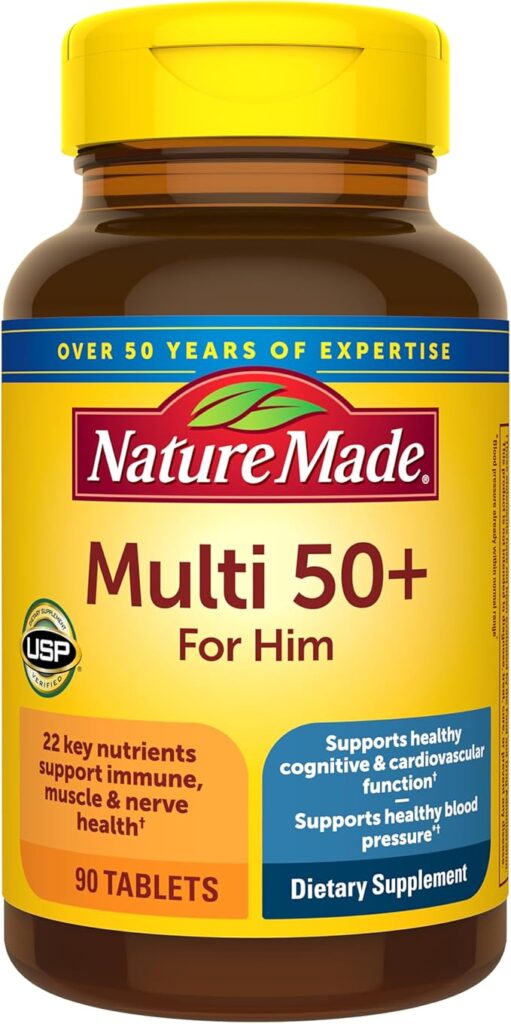
7. Nature Made Multi for Him 50+
Quick take
This is another foundation-level multivitamin, similar to Centrum but slightly cleaner in presentation.
It’s built for people who want something simple, reliable, and not overloaded.
Key ingredients & dosage
From verified product listings:
- Vitamin D3 (~1000 IU range)
- Vitamin B12
- Calcium
- Zinc
- Magnesium (low dose)
⚠ Exact values vary slightly by product version and region.
What makes it stand out
- USP-verified in many versions → quality assurance
- Straightforward, no unnecessary extras
- Good for long-term daily use
How it supports memory after 60
- Supports nutrient sufficiency
- Helps maintain B12 and vitamin D levels
- Indirect support for brain function
This is a maintenance product, not a performance enhancer.
How to take it
- 1 tablet daily with food
Pros & cons
Pros
- Trusted brand
- Simple and safe
- Easy to follow
Cons
- No advanced ingredients
- Lower potency
- Not tailored for cognitive support
Customer feedback snapshot
- Users appreciate reliability and simplicity
- Good tolerance reported
- Some find it “too basic”
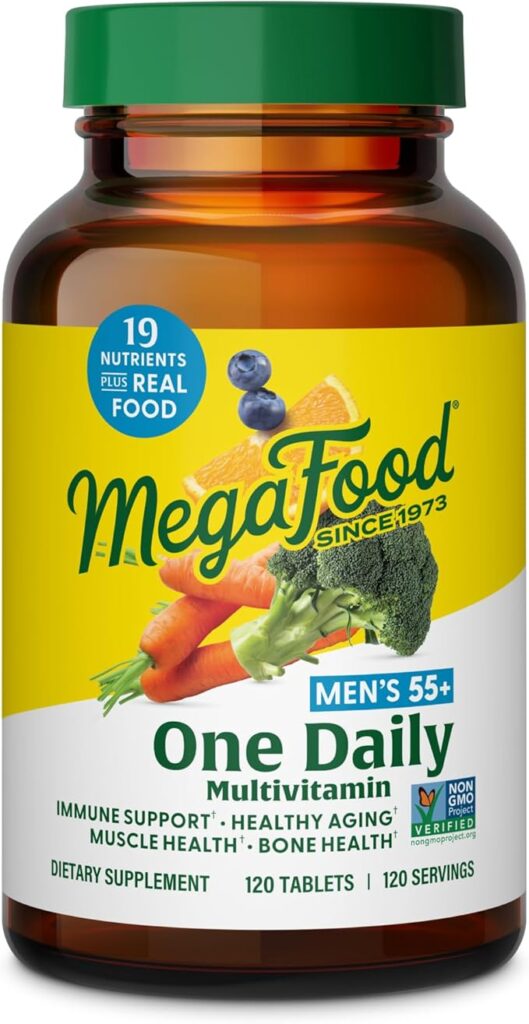
8. MegaFood Men 55+ One Daily Multivitamin
Quick take
This sits somewhere between natural formulation and practical usability.
MegaFood focuses on food-derived nutrients and gentle digestion, making it a good option for those who can’t tolerate harsher multivitamins.
Key ingredients & composition
From verified product info:
- Includes vitamin D, B-complex, zinc, selenium
- Uses food-derived nutrient sources
- Includes whole food blends
⚠ Exact full panel not fully verified here → check product label before clinical use.
What makes it stand out
- Designed to be easy on the stomach
- Can often be taken without food (brand claim)
- Appeals to users preferring less synthetic formulations
How it supports memory after 60
- Covers essential nutrients like B12 and vitamin D
- Supports overall cellular function and energy
- Works best as a gentle daily baseline
How to take it
- 1 tablet daily
- Can be taken with or without food (per brand claim)
Pros & cons
Pros
- Gentle on digestion
- Food-based formulation
- Easy to use
Cons
- Lower potency
- Limited cognitive-targeted ingredients
- Premium pricing
Customer feedback snapshot
- Many report good tolerance and no stomach upset
- Popular among sensitive users
- Some feel effects are subtle
Conclusion
The best multivitamin for memory support after 60 years old isn’t the one with the longest ingredient list. It’s the one that fits your routine, supports key nutrients, and can be taken consistently.
If you want a balanced daily formula, Nature’s Lab Gold One Daily stands out. For maximum coverage, Six Dailyoffers a deeper approach. And if absorption is your priority, a methylated formula like Inessa makes sense.
Stay realistic with expectations. These supplements don’t replace targeted treatment, but they can help support cognitive function, energy metabolism, and overall brain health over time.
Consistency matters more than complexity.
Frequently Asked Questions
What is the best multivitamin for memory support after 60 years old?
The best option depends on your goal. A formula like Nature’s Lab Gold One Daily offers a balance of essential nutrients plus brain-relevant compounds such as CoQ10 and methylated B12. If you want broader coverage, multi-capsule formulas provide more nutrients but require higher commitment.
Do multivitamins actually improve memory in older adults?
Multivitamins may help support memory by correcting deficiencies—especially vitamin B12, vitamin D, and folate. Research suggests they can contribute to maintaining cognitive function, but they do not act as direct memory enhancers.
Which vitamins are most important for brain health after 60?
The most important nutrients include vitamin B12, folate, vitamin D, magnesium, and antioxidants. These support neuronal function, energy metabolism, and protection against oxidative stress.
Is it better to take a methylated multivitamin after 60?
In many cases, yes. Methylated forms like methylcobalamin (B12) and 5-MTHF (folate) are easier to absorb and utilize, especially in older adults who may have reduced conversion capacity.
Should I take a multivitamin daily after 60 years old?
Many older adults benefit from daily use due to reduced nutrient absorption with age. However, the decision should consider your diet, health status, and medications.
Are there any risks of taking multivitamins for seniors?
Yes, especially if taken in excess or combined with other supplements. High levels of vitamin D, zinc, or selenium may cause issues over time. People on medications (like blood thinners) should review ingredients such as vitamin K before use.