

Medically reviewed by Dr. A.S.M. Masum Billah, MBBS

If you’re here, something probably feels off — restless nights, shallow sleep, or recovery that doesn’t match the effort you put in. Glycine often comes up in these moments not as a loud solution, but as a quiet support your body already relies on.
Glycine is an amino acid that may help support sleep quality, nervous system calm, collagen production, and metabolic balance. Unlike sedatives, it works by gently calming neural activity and supporting natural sleep signals. The best glycine supplement depends on dose, form (powder vs capsules), and transparency, which is why this guide compares leading options based on research-aligned dosing and real-world use.
Best Apigenin Supplements for Sleep
What Is Glycine?
Glycine is a non-essential amino acid, meaning your body can make it — but often not in amounts that fully meet demand, especially during stress, aging, or poor sleep.
It plays several critical roles:
- Acts as an inhibitory neurotransmitter in the central nervous system
- Serves as a building block for collagen, creatine, and glutathione
- Helps regulate core body temperature, which is essential for sleep initiation
Unlike stimulants or sedatives, glycine works by calming neural signaling, not forcing sleep.
This is why many people describe glycine’s effect as quiet but noticeable.
How Glycine May Help Support Better Sleep
Sleep is not just about feeling tired. It’s about cooling the brain and slowing neural noise.
Research suggests glycine may help sleep through three main pathways:
1. Nervous System Calm
Glycine binds to inhibitory receptors in the brain and spinal cord. This can help reduce hyperarousal, especially in people who feel “tired but wired” at night.
This is particularly relevant for:
- High-stress professionals
- Older adults
- People sensitive to melatonin or magnesium
2. Core Body Temperature Regulation
One well-studied effect of glycine is its ability to lower core body temperature slightly, which signals the brain that it’s time to sleep.
This mechanism explains why glycine may help with:
- Faster sleep onset
- Fewer nighttime awakenings
3. Sleep Quality, Not Sedation
Glycine does not act like a sleeping pill. It doesn’t knock you out.
Instead, users often report:
- Falling asleep more smoothly
- More refreshing sleep
- Less grogginess the next morning
This makes glycine attractive for people who want sleep support without dependence.
Glycine for More Than Sleep: Other Potential Benefits
While sleep is the most searched benefit, glycine’s role goes wider.
Collagen & Joint Support
Glycine makes up roughly one-third of collagen’s amino acid structure. Adequate intake supports:
- Skin elasticity
- Joint comfort
- Tendon and ligament health
This is why glycine is often paired with collagen peptides.
Glutathione & Antioxidant Defense
Glycine is required to synthesize glutathione, one of the body’s primary antioxidants. Low glycine availability may limit glutathione production, especially with aging.
Metabolic & Blood Sugar Balance
Some studies suggest glycine may help modulate insulin response and inflammation, though this area is still developing and should be viewed as supportive, not therapeutic.
How Much Glycine Do You Actually Need?
This is where many supplement labels fall short.
Evidence-aligned intake ranges
- General wellness: 1–2 g daily
- Sleep support: ~3 g taken before bedtime
- Collagen / metabolic support: often 3–5 g daily (split doses)
This explains why:
- Powder forms often feel more effective for sleep
- Capsule products may require multiple capsules to reach functional doses
Lower doses are not “bad” — they are simply more conservative.
Glycine Powder vs Capsules: Which Is Better?
There is no universal winner. It depends on your goal and tolerance.
Powder may suit you if:
- You want research-aligned dosing
- You dislike swallowing many capsules
- You want to adjust dose precisely
Capsules may suit you if:
- You travel often
- You prefer convenience
- You are sensitive to taste or texture
For sleep-focused use, powders often provide better dose efficiency. Capsules work well for gradual support or daytime use.
Buying Guide: How to Choose the Right Glycine Supplement
Before buying, look beyond the front label.
1. Dose Logic
Ask yourself:
Does one serving get me close to 3 g, or will I need to stack doses?
2. Transparency
Prefer brands that clearly disclose:
- Exact mg per serving
- Manufacturing standards
- Purity or testing practices
Vague phrases without numbers add little value.
3. Form & Tolerance
- Sensitive stomach? Start lower
- Using it for sleep? Evening dosing matters
- Stacking with magnesium or collagen? Powders mix better
4. Your Goal Matters
- Sleep: dose + timing matter most
- Collagen support: consistency matters more than timing
- General calm: lower daily doses may be enough
Who Should Be Careful with Glycine?
Glycine is generally well tolerated, but caution is advised if you:
- Have kidney disease
- Are pregnant or nursing
- Are taking multiple amino acid supplements
When in doubt, professional guidance is appropriate.
Best Glycine Supplements for Sleep
1. Toniiq Glycine Capsules
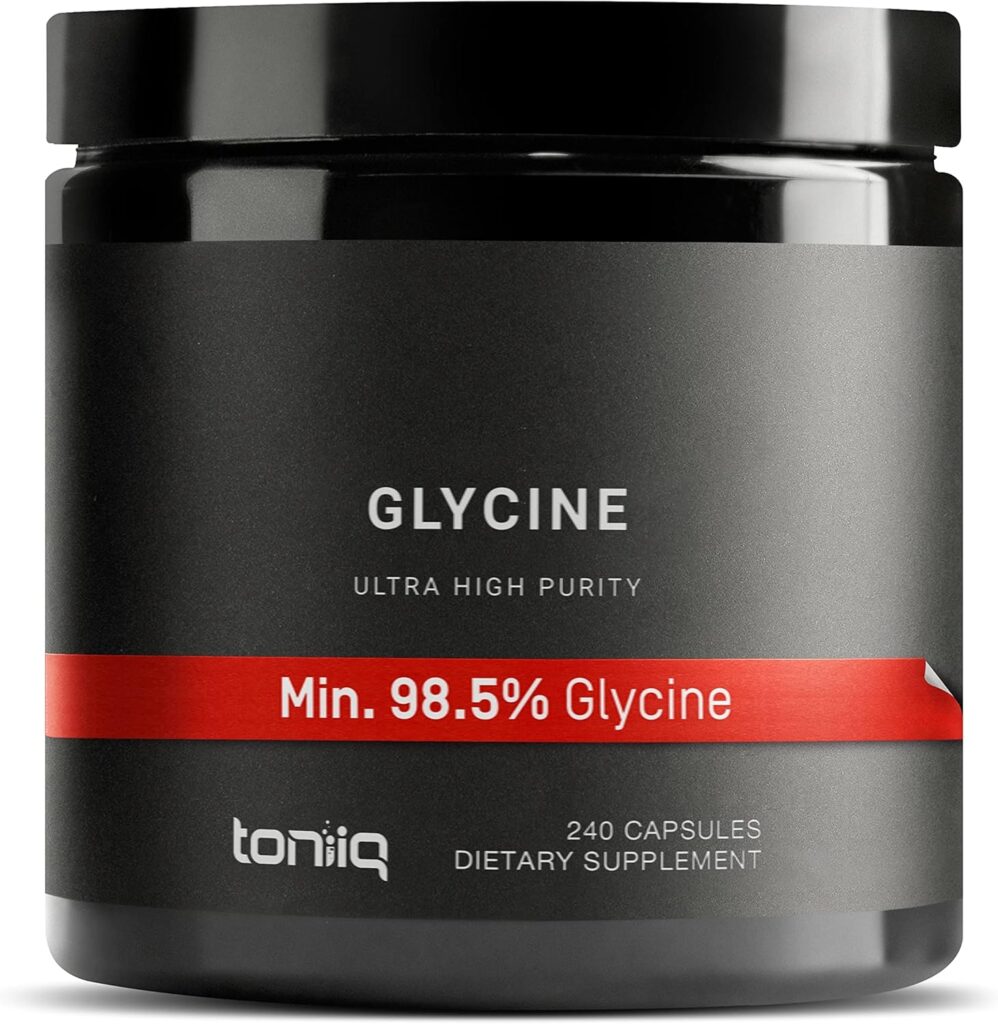
Toniiq Glycine is made for people who value purity and control over aggressive dosing. It’s a strong choice for adults seeking sleep support, nervous system calm, or metabolic balance, especially if they prefer capsules and want to avoid unnecessary additives.
Key Ingredients & Dosage
L-Glycine (free-form): 1,300 mg per serving (2 capsules)
Toniiq discloses a minimum purity of ≥98.5% glycine, which is uncommon among capsule-based glycine products. Higher purity reduces the likelihood of taste issues, digestive discomfort, or variability between batches.
Dose analysis that matters:
Most clinical sleep studies use approximately 3,000 mg of glycine before bedtime. Toniiq’s labeled dose sits below that range by design. This approach favors:
- Better tolerance for first-time users
- Flexibility for split or daytime dosing
- Safer titration for people sensitive to amino acids
For sleep-focused use, many users gradually increase to 4–6 capsules, which brings intake closer to amounts used in research — without forcing a powder format.
What Makes It Stand Out
Toniiq’s strength is not flashy formulation. It’s measured transparency.
Instead of vague “premium” language, the brand emphasizes purity disclosure and testing, which matters for an amino acid often sourced in bulk. The capsule-only format also appeals to users who dislike powders or want consistent dosing without measuring scoops.
This product fits well for:
- Professionals who want a clean nightly routine
- Older adults easing into amino acid supplementation
- Anyone prioritizing ingredient clarity over convenience shortcuts
Safety & Side Effects
Glycine is generally well tolerated at supplemental doses. At higher intakes, some users may notice mild stomach upset or a heavy, relaxed feeling — especially if taken during the day.
Those who are pregnant, nursing, or managing kidney conditions should consult a clinician before use.
How to Take It
Label directions suggest 2 capsules daily.
Professional guidance:
- For sleep support: take 30–60 minutes before bedtime
- For stress or metabolic support: split dosing may work better
- Start low and increase gradually if aiming for higher intake
Pros & Cons
Pros
- High disclosed purity
- Capsule format with no fillers
- Flexible dosing for sensitive users
Cons
- Lower per-serving dose than clinical sleep studies
- Requires multiple capsules for higher intake
Customer Sentiment
Many users mention better sleep onset, calmer evenings, and good tolerance even at higher capsule counts. Capsule size and lack of taste are frequently praised, especially by those who previously struggled with powders.
2. Vital Nutrients Glycine Powder
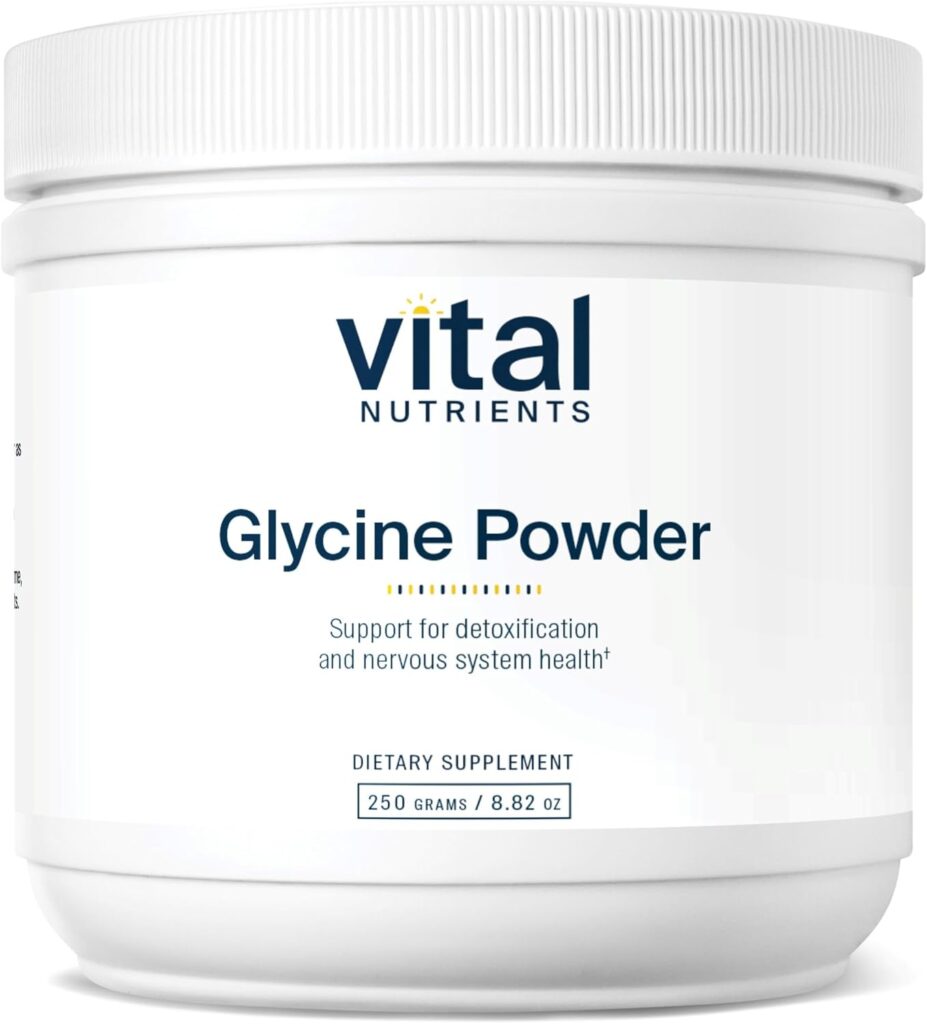
Vital Nutrients Glycine takes a very different approach from capsule-based options. This is a practitioner-grade powderdesigned for people who want research-aligned dosing with maximum flexibility. It’s especially well-suited for sleep-focused users, metabolically active adults, and those who already mix supplements into drinks.
Key Ingredients & Dosage
L-Glycine (free-form): ~3,000 mg per serving (rounded teaspoon)
This dosage aligns closely with amounts used in human studies examining sleep quality, sleep latency, and next-day alertness. That alignment alone makes this product stand out for evidence-driven users.
Because it’s a powder, dosing can be adjusted upward or downward without capsule stacking.
What Makes It Stand Out
Vital Nutrients earns its place near the top because it matches clinical logic rather than marketing convenience.
The powder format allows:
- Easy titration (2 g, 3 g, or more as needed)
- Fast absorption
- Use as a standalone sleep supplement or as part of a nighttime stack (often paired with magnesium or collagen)
The brand is widely used by functional medicine clinicians, which shows up in the plain labeling and absence of exaggerated claims. There are no sweeteners, flavors, or flow agents listed — just glycine.
This option fits particularly well for:
- Adults with sleep maintenance issues
- People using glycine for metabolic or glutathione support
- Users who prefer powders over swallowing multiple capsules
Safety & Side Effects
Glycine is generally well tolerated at 3 g. Some users may experience mild digestive discomfort if taken on an empty stomach, especially at higher intakes.
Those managing kidney disease or using multiple amino acid supplements should consult a clinician.
How to Take It
Label directions suggest one serving daily mixed with water or another beverage.
Professional guidance:
- For sleep: take 30–60 minutes before bedtime
- For daytime metabolic support: split the dose
- Mix thoroughly; glycine dissolves easily and has a mildly sweet taste
Pros & Cons
Pros
- Matches research-backed dosing
- Excellent dose flexibility
- Clean, single-ingredient formula
Cons
- Powder format may not suit everyone
- Requires measuring (not travel-friendly)
Customer Sentiment
Users frequently report deeper sleep, fewer nighttime awakenings, and calmer evenings. Many appreciate the neutral taste and the ability to fine-tune their dose without capsules.
3. Dr. Mercola L-Glycine Capsules
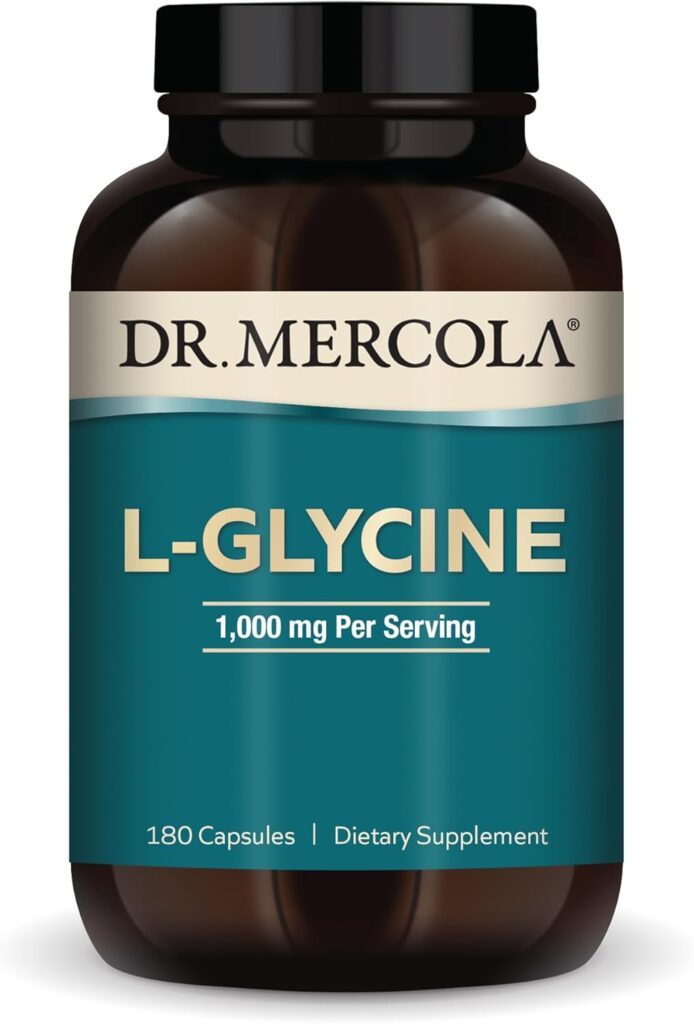
Dr. Mercola’s glycine is positioned for users who prefer simple, conservative supplementation from a brand associated with functional and preventive health. This product favors moderate daily support rather than sleep-specific dosing.
Key Ingredients & Dosage
L-Glycine (free-form): 1,000 mg per capsule
The single-capsule dose is intentionally modest. It does not aim to replicate sleep-study dosing on its own, but rather to support daily amino acid intake, glutathione synthesis, and collagen pathways.
What Makes It Stand Out
The appeal here is simplicity.
One capsule. One ingredient. No blending, no measuring, no stacking unless you choose to. This works well for:
- Adults already taking multiple supplements
- People using glycine as part of a broader antioxidant or longevity routine
- Users who want consistency over experimentation
That said, the brand’s messaging sometimes leans on benefit-oriented language without always connecting it clearly to dosage logic. For sleep-focused users, additional capsules are usually required.
Safety & Side Effects
At 1–3 g per day, glycine is typically well tolerated. Mild digestive effects are possible at higher intakes.
Caution is advised for pregnant or nursing individuals unless cleared by a healthcare professional.
How to Take It
Label suggests 1 capsule daily, preferably with food.
Professional guidance:
- For general wellness: 1–2 capsules daily
- For sleep-related use: intake closer to bedtime, with dose adjusted gradually
Pros & Cons
Pros
- Simple, clean capsule format
- Easy to integrate into existing routines
- Conservative dosing suits sensitive users
Cons
- Not aligned with sleep-study dosing at label use
- Less transparent purity disclosure than top-ranked brands
Customer Sentiment
Customers often describe it as easy to tolerate and reliable, though some note that noticeable sleep benefits required higher intake than the label suggests.
4. Micro Ingredients Glycine Capsules
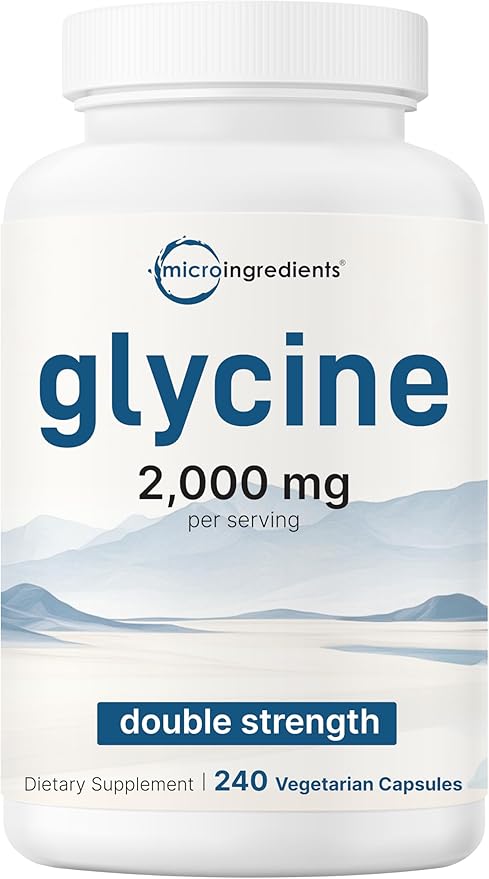
Micro Ingredients Glycine sits between powders and low-dose capsules. It’s designed for users who want near-clinical dosing without committing to a powder, making it a practical middle ground.
Key Ingredients & Dosage
L-Glycine (free-form): 2,000 mg per serving (2 capsules)
This dose is closer to research-backed ranges than many capsule products, while still leaving room for adjustment.
What Makes It Stand Out
The strength here is dose efficiency in capsule form.
Two capsules deliver a meaningful amount of glycine, reducing the need to swallow large quantities. The brand also emphasizes allergen-conscious manufacturing and minimal excipients, which appeals to ingredient-sensitive users.
This product fits well for:
- People transitioning from capsules to powders (or avoiding powders entirely)
- Adults targeting sleep support but wanting measured escalation
- Users who value clean-label positioning without premium pricing
Safety & Side Effects
Tolerance is generally good. Some users report mild sedation if taken during the day, which aligns with glycine’s calming neurotransmitter role.
As with all amino acids, those with medical conditions should consult a professional.
How to Take It
Label recommends 2 capsules daily.
Professional guidance:
- For sleep: take in the evening
- For higher intake: split dose or add an extra capsule as needed
Pros & Cons
Pros
- Higher capsule dose than most competitors
- No flavors or fillers
- Good balance of convenience and potency
Cons
- Still below typical sleep-study dosing
- Capsule count increases at higher intake
Customer Sentiment
Users often mention better sleep quality and relaxation, especially when taken at night. Many appreciate achieving noticeable effects without switching to powder.
5. Nutricost Glycine Powder
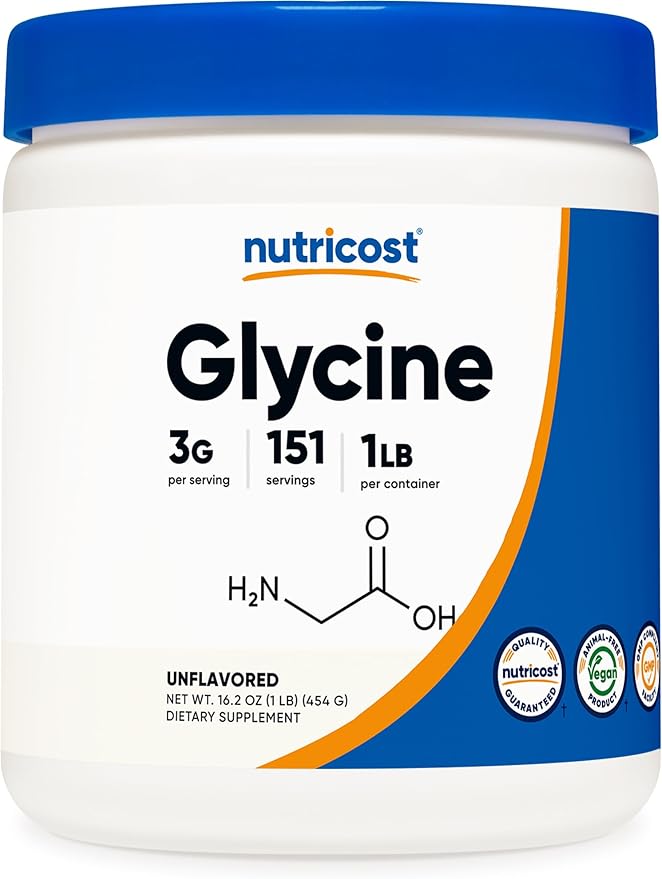
Nutricost Glycine Powder is aimed at buyers who want clinical-level dosing at a budget-friendly price. It’s a no-nonsense option for people comfortable with powders and focused on value per gram rather than brand prestige.
Key Ingredients & Dosage
L-Glycine (free-form): 3,000 mg per scoop
This dose aligns directly with amounts used in sleep and metabolic studies. The powder format allows easy scaling beyond 3 g if needed.
What Makes It Stand Out
Nutricost’s advantage is cost efficiency without unnecessary extras. There are no sweeteners, colors, or flavoring agents. The label is straightforward, and the product is manufactured in a GMP-compliant facility.
This option works well for:
- Long-term daily users
- Sleep-focused supplementation
- Users stacking glycine with magnesium or collagen
Safety & Side Effects
Well tolerated at standard doses. Large doses may cause mild GI discomfort in sensitive individuals.
How to Take It
Mix 1 scoop daily with water or another beverage.
For sleep support, take 30–60 minutes before bed.
Pros & Cons
Pros
- Matches research dosing
- Excellent cost per serving
- Simple, single-ingredient formula
Cons
- Powder only
- No disclosed purity percentage
Customer Sentiment
Customers frequently highlight value, effectiveness for sleep, and ease of mixing, though some note the lack of flavoring requires mixing with another drink.
6. Best Naturals Glycine Powder
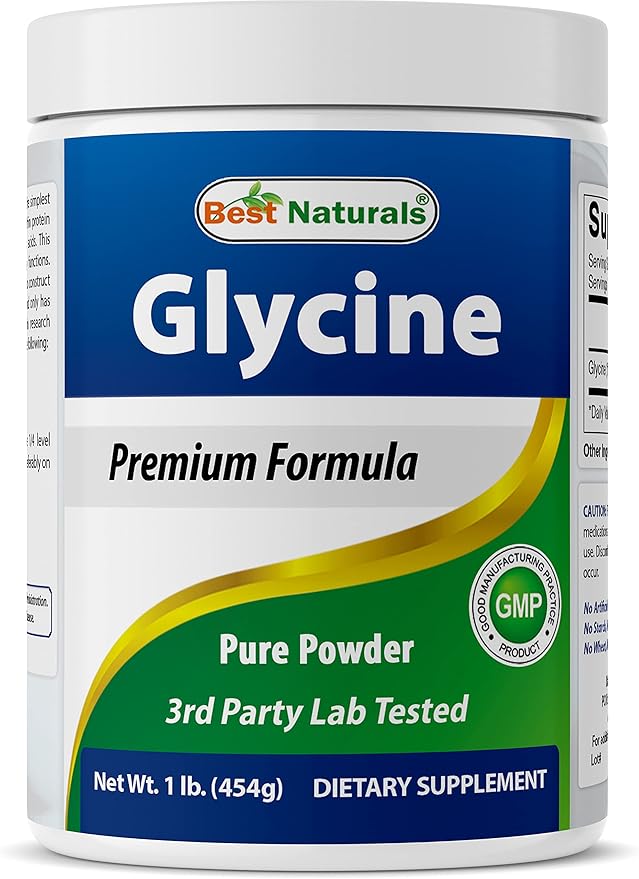
Best Naturals Glycine is a basic entry-level powder for users who want glycine support without premium pricing or complex branding.
Key Ingredients & Dosage
L-Glycine: 1,000 mg per serving (scoop size varies)
To reach commonly studied intake levels, users typically need multiple scoops.
What Makes It Stand Out
The product focuses on simplicity and accessibility. There are no added ingredients, and the brand emphasizes third-party testing, though detailed assay data is not shown publicly.
Best suited for:
- Budget-conscious buyers
- Users who don’t mind measuring multiple scoops
- General wellness use rather than targeted sleep protocols
Safety & Side Effects
Standard glycine safety profile applies. Measuring accuracy matters when using multiple scoops.
How to Take It
Label suggests one serving daily.
For sleep-focused use, intake often needs adjustment upward.
Pros & Cons
Pros
- Affordable
- Simple ingredient list
Cons
- Low per-serving dose
- Requires careful measuring
Customer Sentiment
Reviews often mention good tolerance and low cost, with mixed feedback on scoop size consistency.
7. BulkSupplements Glycine Powder
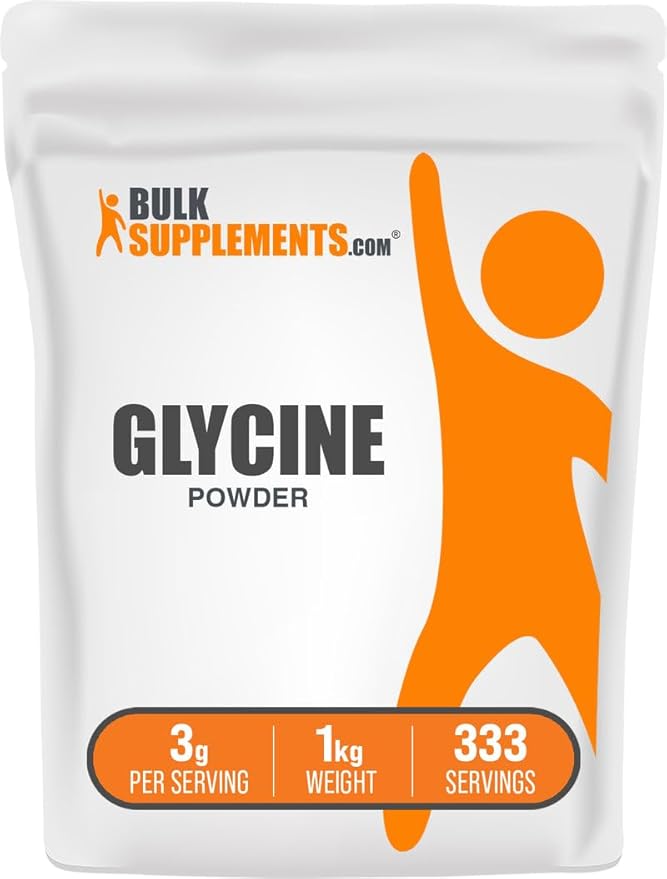
BulkSupplements Glycine is built for high-volume users who want full control over dosing and minimal branding interference.
Key Ingredients & Dosage
L-Glycine (free-form): 3,000 mg per serving
This matches common research doses and allows easy scaling.
What Makes It Stand Out
The defining feature is COA availability upon request, which adds credibility for buyers who value documentation. The powder is unflavored and highly concentrated.
Ideal for:
- Athletes and biohacking-oriented users
- Long-term supplementation
- Precise dose control
Safety & Side Effects
Generally safe at standard doses. Accurate measuring is important.
How to Take It
Mix with water or beverage of choice.
Evening use is common for sleep support.
Pros & Cons
Pros
- High transparency culture
- Flexible dosing
- Excellent bulk value
Cons
- Plain packaging
- No scoop included in some packages
Customer Sentiment
Users frequently cite effectiveness and purity, though beginners sometimes mention the learning curve with powders.
8. Pure Encapsulations Glycine
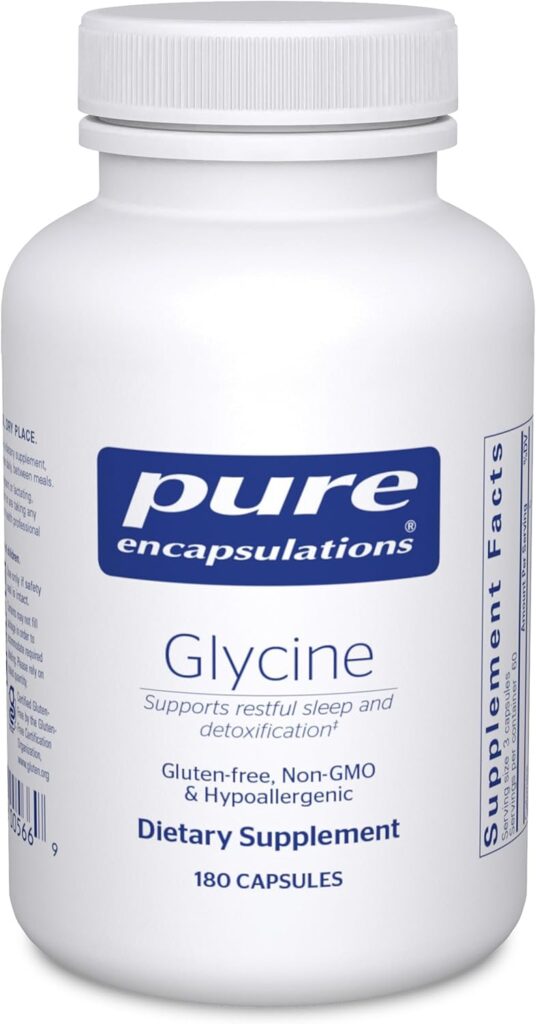
Pure Encapsulations Glycine is formulated for high-sensitivity users who prioritize excipient control over dose strength.
Key Ingredients & Dosage
L-Glycine: 1,500 mg per serving (3 capsules)
This is below sleep-study dosing but suitable for gradual titration.
What Makes It Stand Out
The product is hypoallergenic, avoiding common allergens and unnecessary fillers. This makes it appealing in clinical and practitioner-guided settings.
Best for:
- Individuals with ingredient sensitivities
- Conservative daily use
- Stacking with other practitioner-grade supplements
Safety & Side Effects
Excellent tolerance profile. Capsule count increases at higher intake.
How to Take It
Take 3 capsules daily, with timing adjusted based on goals.
Pros & Cons
Pros
- Extremely clean formulation
- Trusted in clinical environments
Cons
- Lower dose per serving
- Requires more capsules for sleep use
Customer Sentiment
Users often report good tolerance and consistency, especially those who previously reacted to other brands.
9. NOW Foods Glycine
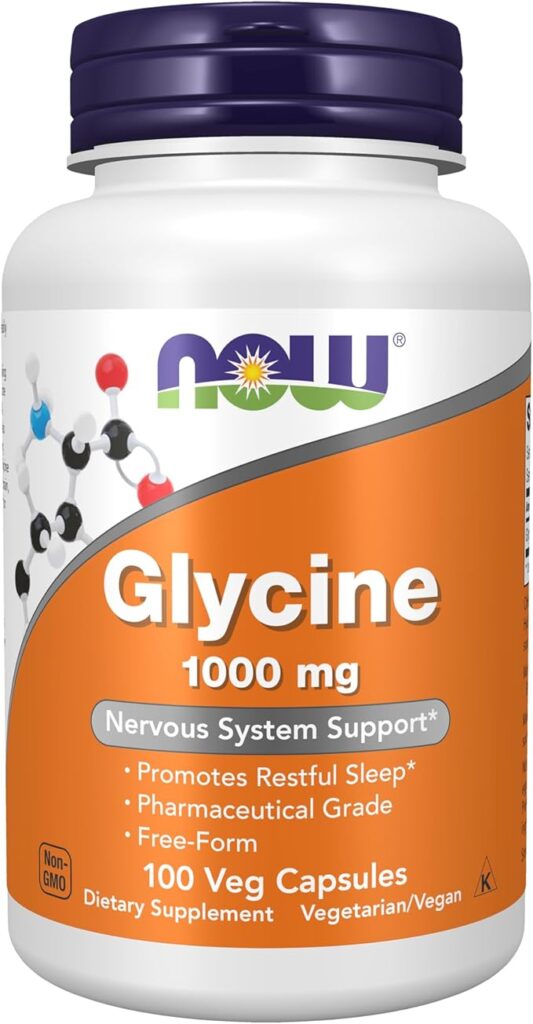
NOW Foods Glycine is a reliable, mass-market capsule option from a brand known for consistent quality control.
Key Ingredients & Dosage
L-Glycine: 1,000 mg per capsule
Most users aiming for sleep support take 2–3 capsules.
What Makes It Stand Out
NOW combines wide availability with named GMP certification, which adds trust at a mainstream price point.
Works well for:
- Everyday supplementation
- Users who want a familiar brand
- Capsule-only routines
Safety & Side Effects
Well tolerated. Daytime dosing may feel calming for some users.
How to Take It
Take 1 capsule daily, adjusting upward if needed.
Pros & Cons
Pros
- Trusted brand
- Clear labeling
Cons
- Conservative dosing
- Multiple capsules needed for higher intake
Customer Sentiment
Customers often mention steady results and reliability, especially for relaxation and sleep onset.
10. Thorne Glycine
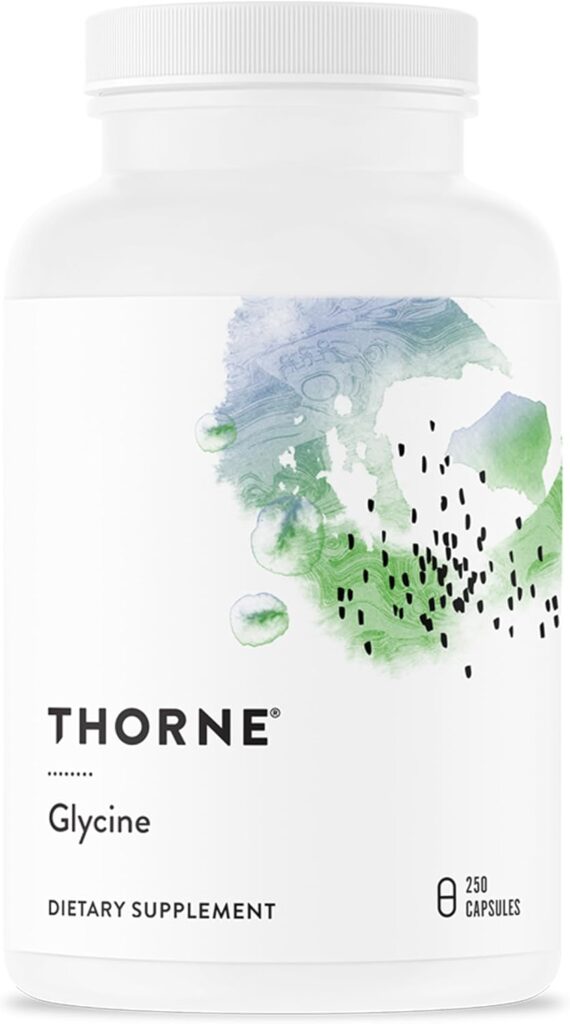
Thorne Glycine is designed for precision-focused, clinician-guided supplementation, not quick results.
Key Ingredients & Dosage
L-Glycine: 500 mg per capsule
Reaching research-aligned intake typically requires multiple capsules.
What Makes It Stand Out
Thorne emphasizes manufacturing rigor and certification, making it a favorite in professional settings despite lower per-capsule dosing.
Best for:
- Gradual titration
- Sensitive individuals
- Practitioner-supervised protocols
Safety & Side Effects
Excellent safety record. Capsule count can be high at therapeutic intake.
How to Take It
Take 1–3 capsules daily, adjusting slowly.
Pros & Cons
Pros
- High manufacturing standards
- Strong professional trust
Cons
- Low dose per capsule
- Higher capsule burden
Customer Sentiment
Users appreciate consistency and quality, though many note the need for higher capsule counts.
Conclusion: Choosing the Best Glycine Supplement for Your Needs
Glycine isn’t a flashy supplement — and that’s exactly why it works for the right people. Whether your priority is better sleep quality, calmer evenings, collagen support, or metabolic balance, the best glycine supplement is the one that matches your dose needs, preferred form, and tolerance.
Powders tend to make more sense for sleep-focused users who want research-aligned intake, while capsules work well for conservative daily support or travel-friendly routines. Transparency, dose logic, and consistency matter far more than marketing language.
Used thoughtfully, glycine may help support sleep and recovery without dependency or next-day grogginess, making it a quiet but valuable addition to many wellness routines.
Frequently Asked Questions (People Also Ask)
1. Can I take glycine every night long term?
Based on available research, glycine is generally considered safe for daily, long-term use at typical supplemental doses (1–5 g). Many people use it nightly for sleep support without tolerance buildup. If you have kidney concerns or are pregnant, professional guidance is recommended.
2. How long does glycine take to work for sleep?
Some people notice benefits within the first few nights, especially at doses around 3 g before bedtime. For others, improvements in sleep quality may appear gradually over 1–2 weeks of consistent use.
3. Can glycine be taken with magnesium or melatonin?
Yes. Glycine is commonly combined with magnesium glycinate or magnesium threonate for sleep routines. It can also be taken alongside low-dose melatonin, though many users find glycine alone provides sufficient calm without hormonal signaling.
4. Does glycine cause weight gain?
There is no strong evidence that glycine causes weight gain. In fact, some research explores glycine’s role in metabolic regulation and insulin signaling, though it should not be viewed as a weight-loss supplement.
5. Is glycine better taken on an empty stomach?
For sleep support, glycine is often taken 30–60 minutes before bed, with or without food. Some people tolerate it better with a light snack, while others prefer an empty stomach. Both approaches are acceptable.
6. Can glycine make you feel groggy the next day?
Glycine does not act as a sedative, so next-day grogginess is uncommon. If it does happen, it’s usually related to dose timing or excessive intake, and adjusting the amount or timing typically resolves it.