
We only recommend products we love and that we think you will, too. We may receive a portion of sales from products purchased from this article.

Medically reviewed by Dr. A.S.M. Masum Billah, MBBS
Artichoke leaf extract works quietly. Most people don’t feel fireworks—what they notice is that meals sit better, digestion feels smoother, and that sluggish post-meal heaviness eases over time.
That’s why people search for best artichoke supplements. Not for instant stimulation, but for digestive flow, bile support, and liver resilience.
Clinical research on artichoke leaf extract (Cynara scolymus) has focused on functional dyspepsia, cholesterol balance, and fatty liver markers. Randomized trials commonly use standardized extracts in the 600–1,800 mg daily range, taken consistently for several weeks.
This list evaluates whether each product’s extract strength, standardization, and usage logic actually align with that evidence.
What Is Artichoke Leaf Extract and Why Is It Used in Supplements?
Artichoke supplements are made from the leaves, not the vegetable heart you eat. That distinction matters.
Artichoke leaves contain bioactive polyphenols, mainly caffeoylquinic acids (including cynarin) and flavonoids like luteolin. These compounds are studied for how they interact with bile production, lipid metabolism, and digestive signaling.
Historically, artichoke leaf preparations were used in European herbal medicine for:
- Heavy or slow digestion
- Poor fat tolerance
- Liver congestion symptoms
A comprehensive review published in Phytomedicine explains that artichoke leaf extract influences bile secretion and lipid metabolism through polyphenol-mediated pathways: PubMed
How Artichoke Supplements Work in the Body
Artichoke doesn’t act like a stimulant. Its effects are more mechanical and regulatory.
Here’s what research suggests it may help support:
Bile Flow and Fat Digestion
Artichoke leaf extract has been shown to stimulate bile secretion in both animal and human studies. Bile is essential for breaking down dietary fats. When bile flow is sluggish, people often notice:
- Bloating after meals
- Heaviness after fatty foods
- Greasy or irregular stools
This explains why artichoke is often felt after meals, not on an empty stomach.
Cholesterol and Lipid Metabolism
Several randomized controlled trials have observed reductions in total cholesterol and LDL cholesterol with standardized artichoke leaf extract taken consistently for 6–12 weeks.
The mechanism appears linked to:
- Reduced cholesterol synthesis in the liver
- Increased bile-mediated cholesterol excretion
This is supportive, not medicinal—but relevant for people managing diet-related lipid concerns.
Functional Dyspepsia Support
Functional dyspepsia is medical language for upper digestive discomfort without structural disease. Multiple studies have found that artichoke leaf extract may help reduce symptoms like:
- Early fullness
- Upper abdominal discomfort
- Post-meal pressure
This is why artichoke often shows up in digestive formulas, even without enzymes.
Artichoke Extract vs Artichoke Powder: What’s the Difference?
This is a common point of confusion—and labels don’t always help.
Artichoke Powder
- Made from dried, ground leaves
- Lower concentration of active compounds
- Requires higher doses to match extract effects
Better suited for:
- Mild, food-like supplementation
- People testing tolerance
Artichoke Extract
- Concentrated form (often 4:1, 10:1, 15:1, or 20:1)
- Standardized to cynarin or caffeoylquinic acids
- Used in most clinical research
If your goal is digestive or lipid support, extracts are far more consistent and practical.
What Is a Clinically Meaningful Dose of Artichoke?
Based on published human studies:
- 600 mg/day of standardized artichoke leaf extract is the most commonly studied dose
- Some studies use up to 1,800 mg/day, split into multiple servings
- Duration matters more than single-day dosing (most benefits appear after several weeks)
Important nuance:
- “10,000 mg equivalent” claims are not clinical doses
- What matters is actual extract weight and standardization
That’s why products with clearly stated extract milligrams are easier to evaluate than equivalency-heavy labels.
Who Benefits Most from Artichoke Supplements?
Artichoke supplements tend to help specific groups more than others.
They are best suited for:
- Adults who feel digestive heaviness after meals
- People eating moderate to higher fat diets
- Individuals supporting cholesterol through diet and lifestyle
- Those with functional (non-disease) digestive discomfort
They are not ideal for:
- People with bile duct obstruction
- Those with active gallbladder disease unless medically cleared
- Anyone expecting rapid or stimulant-like effects
Artichoke works best when paired with consistent meals, hydration, and time.
How Long Does It Take for Artichoke Supplements to Work?
This is one of the most searched questions.
Based on user experience and study timelines:
- Digestive comfort may be noticed within 1–2 weeks
- Cholesterol-related markers typically require 6–12 weeks
- Benefits are gradual and cumulative
If nothing is felt after 4–6 weeks at an appropriate dose, the product—or artichoke itself—may not be a good fit.
Can Artichoke Be Taken Daily?
Yes, in healthy adults, daily use is typical in studies.
Most trials administer artichoke extract:
- Once or twice daily
- With meals
- Over several weeks or months
Cycling isn’t mandatory, but some users prefer breaks after 8–12 weeks.
Consistency matters more than timing tricks.
Our Top Picks
Best overall: Nutricost Artichoke Extract 600 mg
Best high-potency extract: Toniiq Artichoke Extract 15:1
Best long-term value: Zazzee Extra Strength Artichoke 20:1
Best for sensitive digestion: Bronson Artichoke Leaf Extract 4:1
Best capsule-free option: Go Nutra Artichoke Extract Powder
Top 10 Best Artichoke Supplements for Liver, Digestion, and Metabolic Support
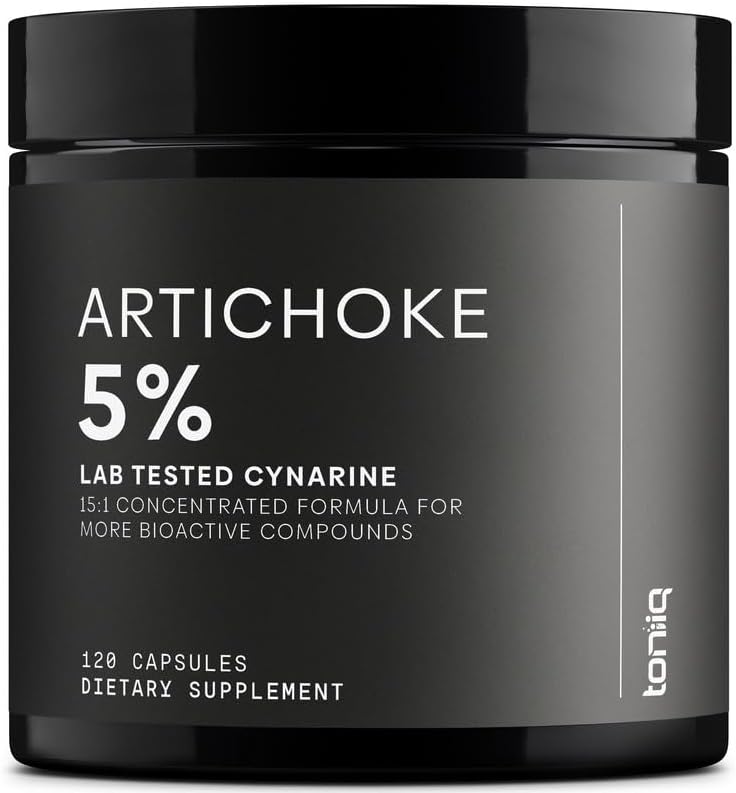
1. Toniiq Artichoke Extract 15:1 (Standardized to Cynarin)
Quick overview
This is a high-concentration, single-ingredient artichoke extract built for people who want focus, not blends. No digestive enzymes. No extra botanicals. Just artichoke—concentrated and standardized.
It typically appeals to educated supplement users, often 30+, who already understand what artichoke does and prefer fewer variables.
Key ingredients and dosage
- Artichoke leaf extract (Cynara scolymus)
- Extract ratio: 15:1
- Claimed strength: 18,000 mg equivalent per serving
- Standardized to 5% cynarin
Bioavailability insight:
The “mg equivalent” figure represents raw plant comparison, not actual extract weight. Clinical studies reference extract mass, so direct comparison isn’t precise. Still, cynarin standardization adds consistency.
What makes it stand out
- Single-ingredient focus, which simplifies tolerance assessment
- Standardized cynarin content, a commonly cited artichoke marker
- Appeals to users who value clean formulas over kitchen-sink blends
This is more analytical than flashy—and that’s intentional.
How to take it
Label directions recommend use with food.
From a professional standpoint:
- Take with the largest meal of the day
- New users may benefit from starting at half-dose
- Consistency matters more than timing tricks
Pros and cons
Pros
- Clean, focused formulation
- Standardized extract
- Vegan-friendly
Cons
- Extract equivalency limits clinical comparison
- Full label details are not fully visible publicly
What users tend to report
Across comparable high-extract artichoke products, users often describe:
- Less post-meal heaviness
- Improved digestion tolerance
- Gradual, noticeable comfort—not dramatic shifts
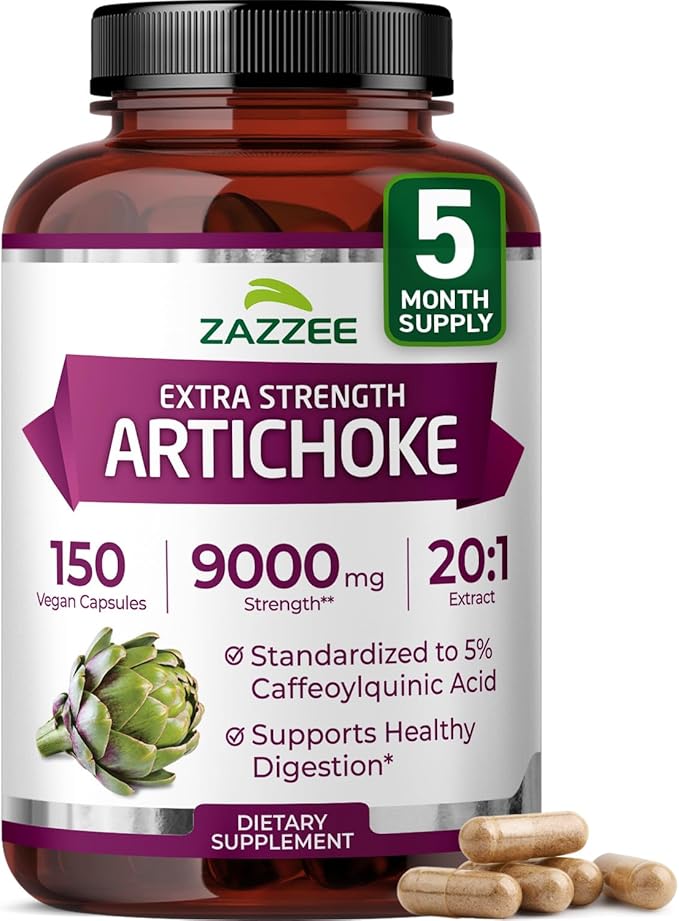
2. Zazzee Extra Strength Artichoke 20:1 Extract
Quick overview
This product is built for long-term, value-oriented users. A high extract ratio combined with a large capsule count makes it appealing for those planning months of consistent supplementation.
It’s commonly chosen by people focused on cholesterol and bile flow support, rather than short-term digestive relief alone.
Key ingredients and dosage
- Artichoke leaf extract
- Extract ratio: 20:1
- Strength claim: 9,000 mg equivalent per capsule
- Standardized to minimum 5% caffeoylquinic acids
Clinical context:
Caffeoylquinic acids are frequently discussed in lipid-related artichoke research. As with other equivalency-based products, exact extract mass per capsule is not clearly stated, which limits dosing precision.
What makes it stand out
- Higher extract ratio than many mainstream options
- Long supply supports adherence
- Avoids unnecessary herb combinations
It’s a practical choice for users who want consistency over novelty.
How to take it
Positioned as a single-capsule serving.
Professional guidance:
- Take with meals
- Users focused on metabolic support often split intake between meals
- Expect benefits over weeks, not days
Pros and cons
Pros
- High extract concentration
- Long-term supply
- Standardized polyphenol content
Cons
- Equivalency-based labeling may confuse beginners
- Exact extract weight not clearly disclosed
What users tend to report
Across similar formulations, common feedback includes:
- Improved digestion regularity
- Better tolerance of dietary fats
- Subtle energy stability after meals
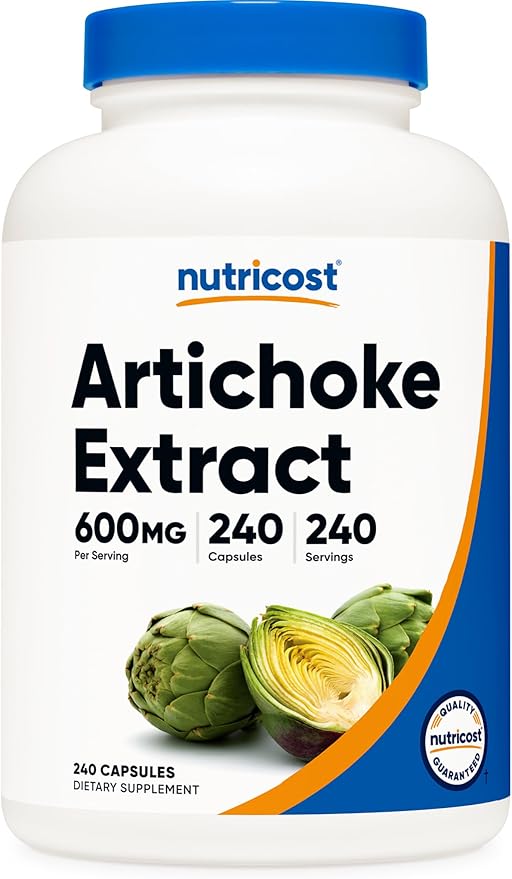
3. Nutricost Artichoke Extract 600 mg (Standardized to Cynarin)
Quick overview
This is the most straightforward, label-transparent option in the list. Nutricost doesn’t chase extract ratios or inflated equivalency numbers. Instead, it offers a clearly stated extract weight per capsule, which makes it easier to compare against clinical research.
This product fits readers who value clarity, cost control, and predictable dosing—often professionals, long-term supplement users, or anyone already stacking multiple supplements.
Key ingredients and dosage
- Artichoke extract (Cynara scolymus, whole herb)
- Amount: 600 mg per capsule
- Standardization: 5% cynarin (≈30 mg cynarin per capsule)
Dose analysis:
Several clinical trials investigating artichoke for liver fat and dyspepsia used 600 mg per day, making Nutricost’s single-capsule serving align cleanly with research protocols. This is one of the few products here where the math lines up without assumptions.
Inactive ingredients are minimal and typical for encapsulated supplements (vegetable capsule, magnesium stearate, silica).
What makes it stand out
- Research-aligned dosing without extract-ratio marketing
- One capsule per serving simplifies compliance
- High capsule count supports long-term use without constant repurchasing
For readers who dislike decoding supplement labels, this one is refreshingly direct.
How to take it
One capsule daily, preferably with food.
From a practitioner’s perspective:
- Taking it with the largest meal may improve digestive comfort
- For lipid-focused goals, some users split dosing into two 300 mg intakes
- Results tend to show after several weeks of consistent use
Pros and cons
Pros
- Clear, study-comparable dosage
- Simple ingredient list
- Strong value per serving
Cons
- No added synergistic compounds
- Less “potency marketing” for users who expect dramatic labeling
What users tend to report
Users commonly describe:
- Better meal tolerance
- Mild but steady digestive support
- Appreciation for the clean, no-nonsense formula
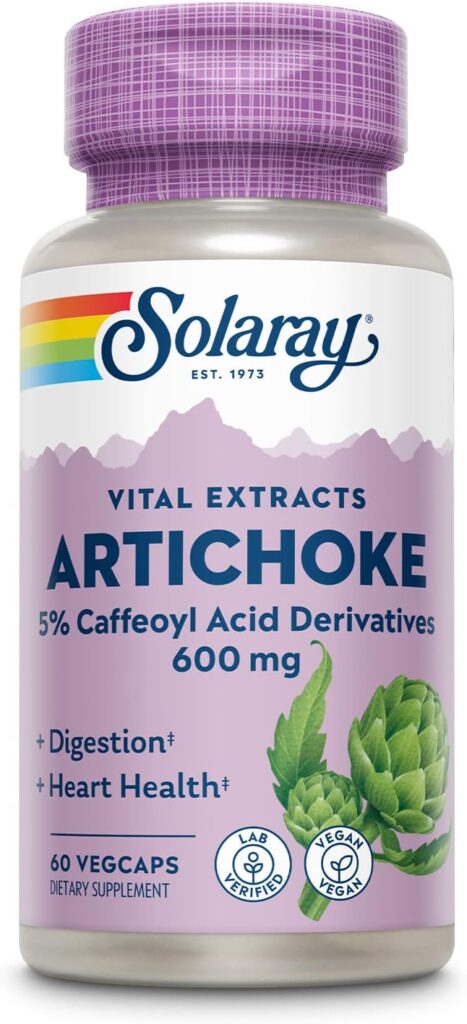
4. Solaray Artichoke Leaf Extract
Quick overview
Solaray brings a traditional herbal supplement approach to artichoke. This product appeals to users who trust legacy brands and prefer moderate dosing with long-standing manufacturing practices.
It’s often chosen by adults 40+, especially those who already use Solaray products and value brand familiarity.
Key ingredients and dosage
- Artichoke leaf extract
- Amount: 600 mg per serving (2 capsules)
- Standardized to caffeoyl acids
Clinical context:
This dose sits comfortably within ranges used in digestive-support studies. The focus on caffeoyl acids reflects compounds commonly examined for bile flow and lipid metabolism.
What makes it stand out
- Emphasis on herbal tradition rather than high-concentration extracts
- Balanced dosing suited for daily digestive maintenance
- Often preferred by users sensitive to very high-strength extracts
This isn’t a “push-the-limit” product—it’s a steady daily support option.
How to take it
Typically taken as two capsules daily with meals.
Professional insight:
- Splitting capsules across meals may improve tolerance
- This product works best as a daily habit, not an as-needed tool
- Suitable for users who want gentle digestive rhythm support
Pros and cons
Pros
- Moderate, balanced dosing
- Trusted legacy brand
- Suitable for sensitive users
Cons
- Requires multiple capsules per serving
- Less appealing for those seeking high extract ratios
What users tend to report
Feedback often centers around:
- Improved digestion consistency
- Fewer issues after heavier meals
- Preference for gentler effects over intensity
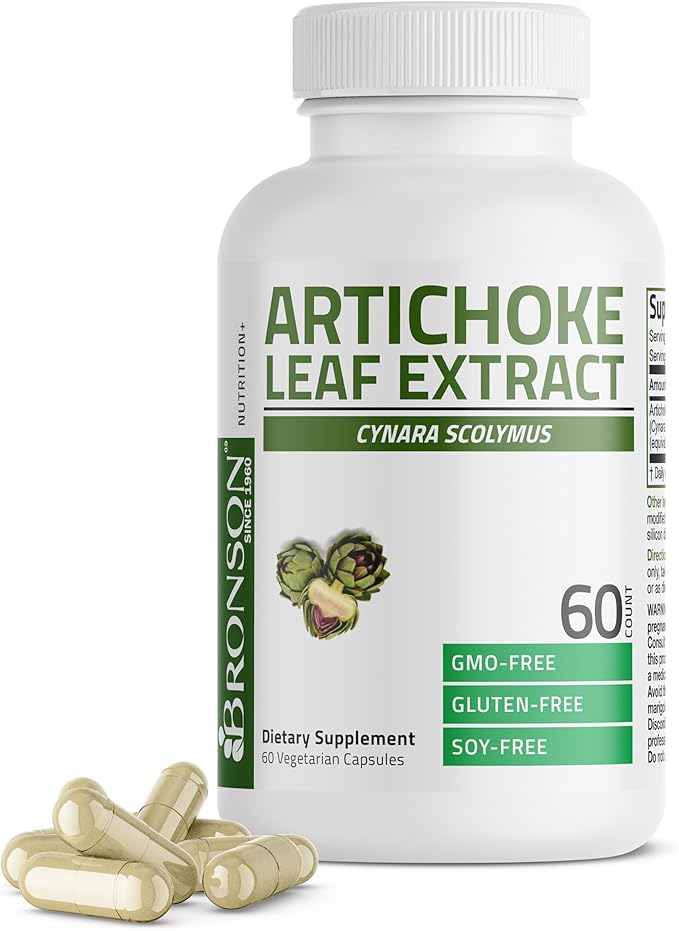
5. Bronson Artichoke Leaf Extra Strength 4:1 Extract
Quick overview
Bronson positions this product as extra strength, but with a lower extract ratio (4:1) than some competitors. That actually makes it attractive to users who want concentrated whole-plant support without aggressive extraction.
It’s frequently chosen by older adults and individuals new to artichoke supplementation.
Key ingredients and dosage
- Artichoke leaf extract
- Extract ratio: 4:1
- Whole-leaf focused formulation
Dose interpretation:
Lower extract ratios often preserve a broader phytochemical profile. While less concentrated, they may feel gentler for sensitive digestive systems.
What makes it stand out
- Lower extract ratio favors tolerance
- Simple, vegetarian-friendly formulation
- Appeals to users prioritizing comfort over maximal potency
This is less about pushing metabolic markers and more about digestive ease.
How to take it
Typically taken once daily with food.
Practical guidance:
- Best taken with the heaviest meal
- Ideal starting point for first-time artichoke users
- Can be paired with dietary changes for digestive rhythm support
Pros and cons
Pros
- Gentle extract profile
- Suitable for beginners
- Straightforward formulation
Cons
- Lower concentration may require longer use for noticeable effects
- Not ideal for users targeting lipid markers aggressively
What users tend to report
Common observations include:
- Reduced meal-related discomfort
- Good tolerance over long periods
- Preference for mild, consistent support
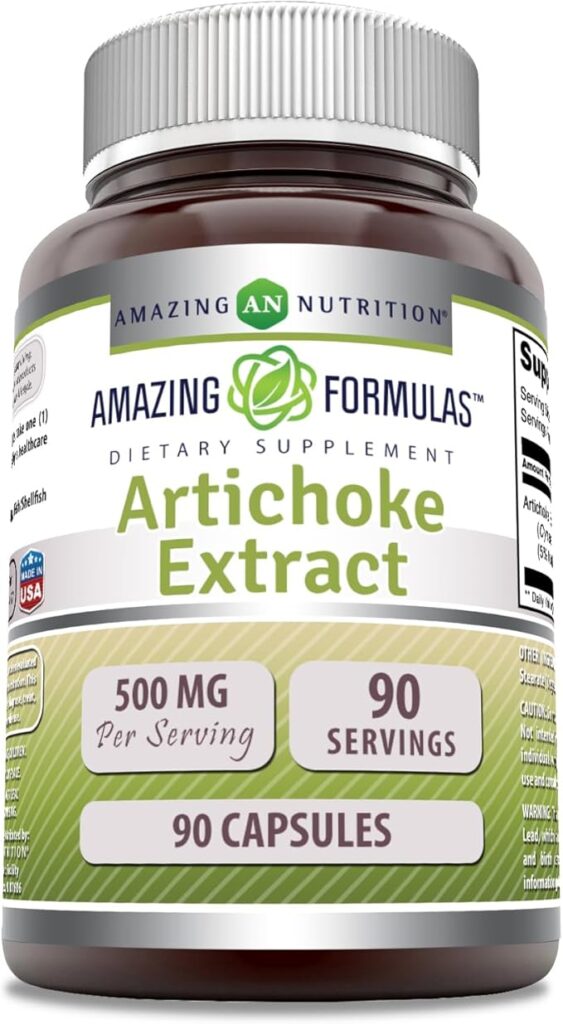
6. Amazing Formulas Artichoke Extract 500 mg
Quick overview
Amazing Formulas targets budget-conscious, consistency-first users. This product keeps dosing moderate and avoids aggressive extract ratios, which can matter for people who want digestive comfort without pushing bile activity too hard.
It often appeals to adults who are new to artichoke or already taking several supplements and don’t want overlap.
Key ingredients and dosage
- Artichoke leaf extract (Cynara scolymus)
- Amount: 500 mg per capsule
- Standardization: not clearly disclosed
Dose analysis:
Five hundred milligrams sits just below the most commonly studied 600 mg/day dose. That’s close enough to be practical, especially for beginners or those planning longer-term use.
What makes it stand out
- Moderate dose that favors tolerance
- Straightforward capsule format
- Positioned for daily digestive maintenance rather than targeted metabolic intervention
How to take it
One capsule daily with food.
Professional note:
- If digestive sensitivity exists, start every other day for the first week
- Effects tend to be subtle and cumulative
Pros and cons
Pros
- Accessible dose
- Simple formula
- Suitable for beginners
Cons
- No clear standardization marker
- Less informative labeling for advanced users
What users tend to report
Users typically mention:
- Gradual digestive comfort
- Minimal side effects
- Good value for daily use
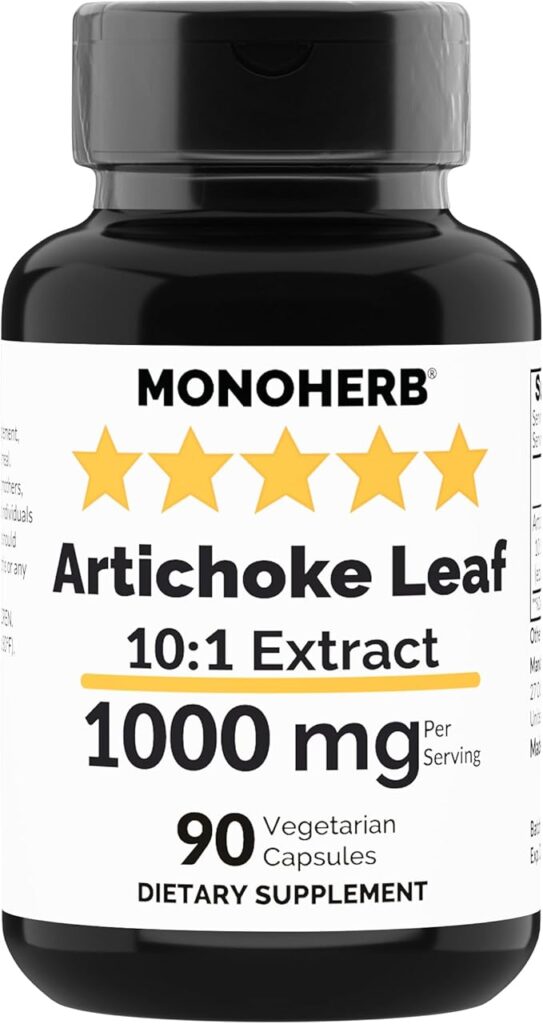
7. MONOHERB Artichoke Leaf Extract 1000 mg
Quick overview
This product is designed for users who want higher raw extract weight without complex blends. It’s often chosen by people who equate dosage clarity with confidence.
It appeals to individuals who prefer simpler math on labels.
Key ingredients and dosage
- Artichoke leaf extract
- Amount: 1000 mg per serving
- Extract ratio and standardization: not clearly specified
Dose interpretation:
A 1000 mg dose exceeds the 600 mg level used in several clinical studies, which may be appropriate for experienced users—but also raises tolerance considerations.
What makes it stand out
- High stated extract weight
- Minimal ingredient list
- Appeals to users who want “one capsule, one ingredient”
How to take it
Typically taken once daily with meals.
Professional guidance:
- Not ideal as a starting dose for sensitive users
- Splitting the dose may improve tolerance
Pros and cons
Pros
- High-dose option
- Simple formulation
- Suitable for experienced users
Cons
- Lack of standardization limits quality comparison
- Higher dose may cause digestive discomfort in some users
What users tend to report
Feedback often includes:
- Stronger digestive effects
- Better fat-meal tolerance
- Occasional bloating if taken on an empty stomach
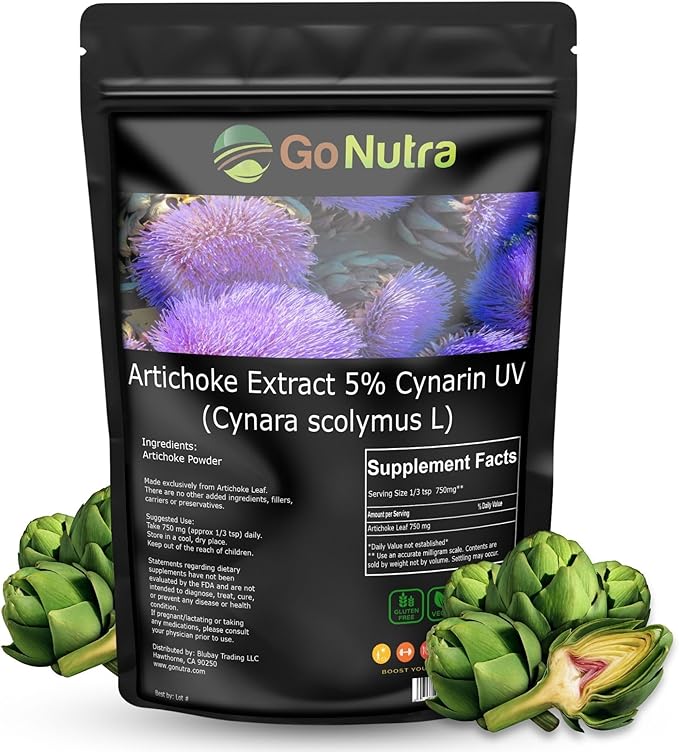
8. Go Nutra Artichoke Extract Powder (Standardized)
Quick overview
This is the only powder-based artichoke product on the list. It’s for users who dislike capsules or want dose flexibility.
Powder supplements attract a smaller, more intentional audience—often smoothie users or people who want incremental dosing control.
Key ingredients and dosage
- Artichoke extract powder
- Standardization: typically listed to cynarin
- Serving size varies by scoop
Clinical insight:
Powder forms allow users to approximate studied doses more flexibly, though consistency depends heavily on measuring accuracy.
What makes it stand out
- Non-capsule delivery
- Flexible dosing
- Useful for people with swallowing difficulty
How to take it
Mixed into water, smoothies, or juice.
Professional tip:
- Start with half a serving
- Take with meals to reduce bitterness and GI sensitivity
Pros and cons
Pros
- Flexible dosing
- Capsule-free
- Easy to adjust intake
Cons
- Bitter taste for some users
- Less convenient for travel
What users tend to report
Users often mention:
- Control over dosage
- Preference for mixing over swallowing pills
- Taste requiring masking
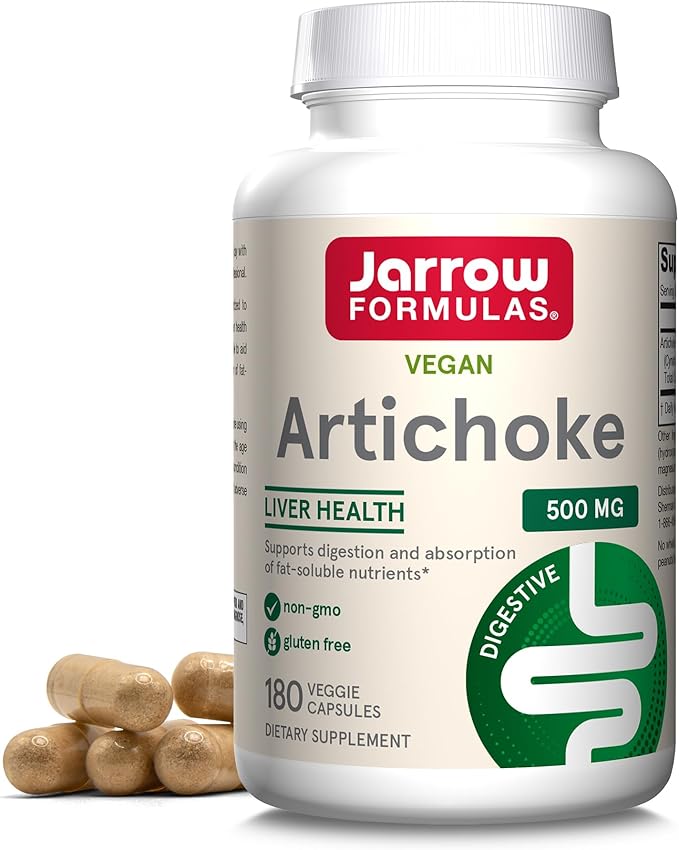
9. Jarrow Formulas Artichoke Extract
Quick overview
Jarrow’s product reflects a research-oriented supplement philosophy. The brand tends to prioritize formulation rationale over marketing language.
This one attracts users who already trust Jarrow and want steady digestive or liver support, not exaggerated potency.
Key ingredients and dosage
- Artichoke leaf extract
- Moderate-dose formulation
- Focus on standardized botanical sourcing
Dose perspective:
Jarrow typically formulates within conservative, research-informed ranges, favoring safety and consistency.
What makes it stand out
- Brand reputation for science-forward formulations
- Balanced dosing strategy
- Appeals to long-term supplement users
How to take it
Taken daily with meals.
Clinical note:
- Best suited for daily routines
- Works well alongside dietary changes
Pros and cons
Pros
- Trusted brand profile
- Balanced formulation
- Suitable for long-term use
Cons
- Not the strongest option on paper
- Less appealing to “maximum potency” seekers
What users tend to report
Users often cite:
- Digestive steadiness
- Good tolerance
- Preference for conservative dosing
10. Generic Artichoke Leaf Extract (Low-dose formulations)
View on Amazon
Quick overview
These products typically contain lower-dose artichoke extract with minimal standardization. They appeal mostly to casual users or those testing tolerance before committing.
They’re not ideal for therapeutic intent but may suit entry-level exploration.
Key ingredients and dosage
- Artichoke leaf extract
- Lower-dose formulations
- Often no clear standardization
What makes it stand out
- Accessibility
- Entry-level dosing
- Minimal commitment
How to take it
As directed, with meals.
Professional view:
- Suitable for tolerance testing
- Not ideal for users targeting lipid or liver outcomes
Pros and cons
Pros
- Easy entry point
- Mild effects
Cons
- Limited transparency
- Unclear clinical relevance
Safety Considerations You Shouldn’t Skip
Artichoke may increase bile flow. That’s helpful for digestion—but not suitable for everyone.
Avoid or use caution if you have:
- Bile duct obstruction
- Active gallbladder disease
- Known allergy to plants in the daisy family
Pregnant or breastfeeding individuals should avoid supplemental doses due to limited safety data.
Final Thoughts
The best artichoke supplement isn’t the loudest label. It’s the one that matches your tolerance, your goal, and your routine.
For clarity and research alignment, Nutricost stands out.
For concentration, Toniiq and Zazzee lead.
For gentler daily use, Solaray and Bronson make sense.
Artichoke works quietly—but when it fits, you notice.