
We only recommend products we love and that we think you will, too. We may receive a portion of sales from products purchased from this article.

Medically reviewed by Dr. A.S.M. Masum Billah, MBBS
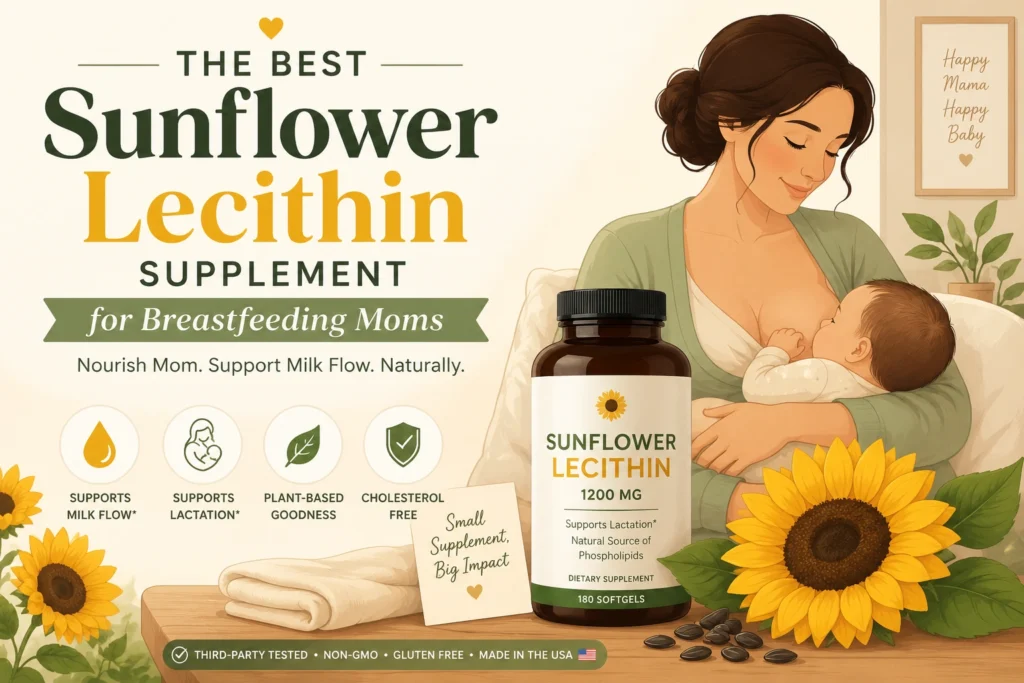
Searching for the best sunflower lecithin supplements? You’re probably here for one of two reasons — you’re steering clear of soy, or you’re a breastfeeding mom who first heard the words “sunflower lecithin” during a painful clogged duct at 2 a.m.
Either way, welcome. Let’s make this simple.
Sunflower lecithin has become the clean-label favorite, and for good reason. It’s naturally soy-free and non-GMO, and it’s rich in phosphatidylcholine — the phospholipid your cells, liver, and brain actually run on. That’s where most of its benefits trace back to, from steady choline to healthier fat metabolism.
For nursing moms, sunflower lecithin earns its name by thinning sticky milk, which may help ease and prevent clogged milk ducts. One honest caveat worth saying up front: it supports milk flow, not supply — and that benefit leans on real-world experience more than large studies.
So whether you want soy-free brain and liver support or smoother breastfeeding, there’s a right bottle below. Ten real products, checked against real labels, each with a plain answer to “is this the one for me?” Let’s find yours.
Best Lecithin Supplements for Every Needs
What Is Sunflower Lecithin, and Why Choose It?
Sunflower lecithin is a blend of phospholipids pressed from sunflower seeds — usually cold-pressed, without the chemical solvents some soy lecithin relies on. Its star component is phosphatidylcholine, backed by phosphatidylinositol, phosphatidylethanolamine, and essential fatty acids.
Its biggest selling point is what it isn’t: sunflower seeds aren’t genetically modified, so the lecithin is naturally non-GMO and soy-free.
People take it because it may help support:
- Healthy cholesterol already in the normal range
- Liver function, by helping move and metabolize fat
- Brain and focus, through choline and acetylcholine
- Breastfeeding comfort, by thinning sticky milk
- Skin and digestion, thanks to its emulsifying nature
Sunflower Lecithin for Breastfeeding: What It Really Does
This is the reason most moms find this page, so let’s be clear and honest.
Sunflower lecithin works by reducing the “stickiness” of breast milk and keeping milk fats from clumping. Smoother, less sticky milk moves more freely — which may help prevent and ease clogged milk ducts before they snowball into engorgement or mastitis.
Lactation consultants (IBCLCs) commonly suggest it for moms with recurrent plugged ducts. The catch worth repeating: the evidence is mostly clinical experience, not large trials, and it supports milk flow, not supply. It won’t make more milk.
A typical routine looks like this:
- Active clogged duct: about 1,200 mg, three to four times daily
- Prevention/maintenance: 1,200 mg, once or twice daily
Two real-world tips from me: pick a fenugreek-free formula (fenugreek upsets some moms and babies), and if you develop a fever, or a red, hot, painful area on the breast, stop guessing and call your provider — that can signal mastitis, which may need treatment.
Sunflower vs. Soy Lecithin: Which Should You Pick?
Quick, practical breakdown:
- Choose sunflower if you’re soy-allergic, avoiding GMOs, breastfeeding, or you simply want the cleanest label. It’s naturally non-GMO and usually cold-pressed.
- Choose soy if budget is your priority and you tolerate soy fine. It’s the cheaper, more heavily studied option — just look for identity-preserved, non-GMO soy.
For most readers who’ve made it to a sunflower-specific guide, you’ve already answered your own question. (If you’re still weighing it, our main lecithin roundup covers the soy picks in full.)
How to Choose the Best Sunflower Lecithin
Here’s the label-reading checklist I’d use:
- Form — softgels for grab-and-go, powder for vegans and smoothie/baking use.
- Serving size — watch this. Many “2,400 mg” claims are per three softgels, not per pill.
- Disclosed phosphatidylcholine — most brands hide it; the ones that print it (like NatureBell) earn trust.
- Extraction — cold-pressed beats solvent-extracted for keeping phospholipids intact.
- Certifications — non-GMO, GMP facility, and third-party testing separate serious brands from filler.
- For nursing moms — fenugreek-free, and ideally organic.
How Much Sunflower Lecithin Should You Take?
There’s no official daily requirement, so here’s the practical range:
- General support: about 1,200–2,400 mg per day
- Powder: roughly 1 tablespoon daily, blended into food or drink
- Breastfeeding (clogged ducts): around 1,200 mg, three to four times daily during a flare, easing back to once or twice daily for upkeep
Always take it with food — the fat helps absorption — start low, and check with your doctor before higher doses, especially if you’re nursing or on medication.
Safety & Side Effects
The reassuring part: sunflower lecithin is well tolerated by most people.
At higher doses, a few notice:
- Mild stomach upset, nausea, or loose stools
- Occasionally a faint fishy odor (from choline)
A few things to keep in mind:
- It’s soy-free, which solves the most common allergen worry — but gelatin softgels aren’t vegan (powders usually are).
- Pregnant? Avoid products labeled for lactation use, and check with your provider first.
- On medication or managing a condition? A quick word with your doctor or pharmacist is cheap insurance.
Editor’s Selection
All 10 Sunflower Lecithin Picks, Ranked
A doctor-curated lineup — every spec checked against the current label, so you can match yourself to the right bottle at a glance.
NOW Sunflower Lecithin 1200 mg
Soy-free, properly tested, and priced to live in your cabinet.
1,200 mg • Soy-Free • GMP / 3rd-party
NatureBell Sunflower 2400 mg
High potency, and one of the few that prints its phosphatidylcholine.
2,400 mg • 360 mg PC • Soy-Free
Pink Stork Sunflower 1200 mg
A postpartum brand’s gentle 60-count starter for breastfeeding.
1,200 mg • 60 ct • Non-GMO
Micro Ingredients Sunflower 1600 mg
300 cold-pressed softgels — the lowest cost per serving here.
1,600 mg • 300 ct • Cold-Pressed
Legendairy Milk Sunflower
Organic, fenugreek-free, and purpose-built for lactation.
1,200 mg • Organic • Fenugreek-Free
Nutricost Sunflower Powder
Gelatin-free powder for smoothies, baking, and DIY liposomal C.
Powder • Vegan • Soy-Free
Carlyle Sunflower 2400 mg
A big dose and a clean profile without the premium price.
2,400 mg • 200 ct • Soy-Free
Swanson Sunflower Non-GMO 1200 mg
Free of both soy and egg, and third-party tested.
1,200 mg • Soy & Egg-Free • 90 ct
TRUEMED Organic Sunflower 1200 mg
The cleanest label here — certified organic and US-made.
1,200 mg • Organic • USA-Made
Natural Nutra Sunflower 2000 mg
A generous middle-ground dose between everyday and maximal.
2,000 mg • 120 ct • Soy-Free
Independently researched • specs verified against current product labels
The 10 Best Sunflower Lecithin Supplements, Reviewed
1. NOW Sunflower Lecithin 1200 mg — Best Overall
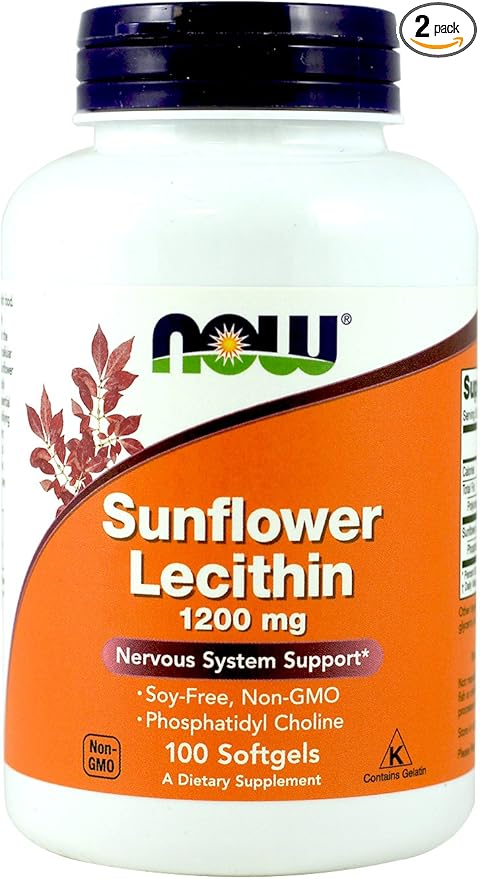
If you want one trustworthy bottle and no fuss, start here. NOW is the pick I’d hand almost anyone — soy-free, properly tested, and priced like it wants to be in your cabinet.
Key Ingredients & Dosage
- 1,200 mg sunflower lecithin per softgel, with naturally occurring phosphatidylcholine
- Also supplies phosphatidylinositol, phosphatidylethanolamine and essential fatty acids
- Soy-free, non-GMO; label suggests 2 softgels daily
What Sets It Apart (and How It Helps You)
NOW runs GMP A-rated facilities with ISO-accredited in-house labs plus third-party testing — quality control most sunflower brands can’t claim. The phosphatidylcholine may help support brain signaling, liver function, and steady choline supply.
Safety & Side Effects
Soy-free, so it clears the main allergen hurdle. The softgel uses bovine gelatin, so it isn’t vegan. Mild stomach upset is possible at higher doses.
How to Take It
Two softgels daily, with food. Lecithin absorbs better alongside a little fat.
Pros & Cons
- Pros: trusted brand, third-party tested, soy-free, fair price
- Cons: two-softgel serving, not vegan
The Bottom Line
When you want a clean, soy-free pick from a name pharmacists actually respect, this is the easy yes. Reliable, affordable, done.
2. NatureBell Sunflower Lecithin 2400 mg — Best High-Dose
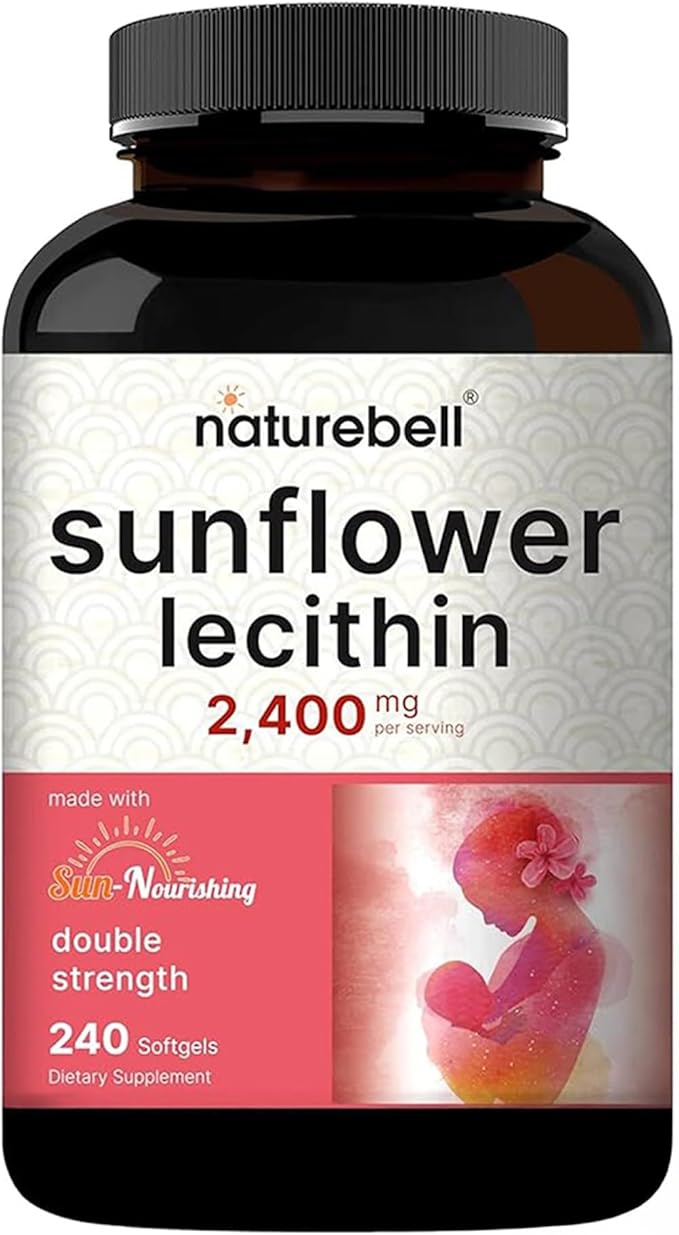
Want strength and transparency? NatureBell delivers a big dose and, refreshingly, tells you exactly how much phosphatidylcholine is inside.
Key Ingredients & Dosage
- 2,400 mg cold-pressed sunflower lecithin per serving (3 softgels)
- 360 mg phosphatidylcholine disclosed — rare on a label
- 240 softgels (80 servings); soy-free, non-GMO, gluten-free
What Sets It Apart (and How It Helps You)
The “Sun-Nourishing” base uses sunflower seed oil instead of corn or soy oil — a cleaner carrier. Printing the actual PC number is the green flag here, since phosphatidylcholine is the part doing the heavy lifting for cells and choline.
Safety & Side Effects
Soy-free and well tolerated. Gelatin softgel, so not vegan. Split the three softgels across the day if your stomach is sensitive.
How to Take It
Three softgels with food, together or spread out.
Pros & Cons
- Pros: soy-free, discloses PC, clean oil base, high potency
- Cons: three-softgel serving, not vegan
The Bottom Line
Nursing moms and everyday users alike praise the easy-to-swallow softgels. If you want a strong dose from a brand that shows its work, this is my high-potency pick.
3. Pink Stork Sunflower Lecithin 1200 mg — Best for New Moms
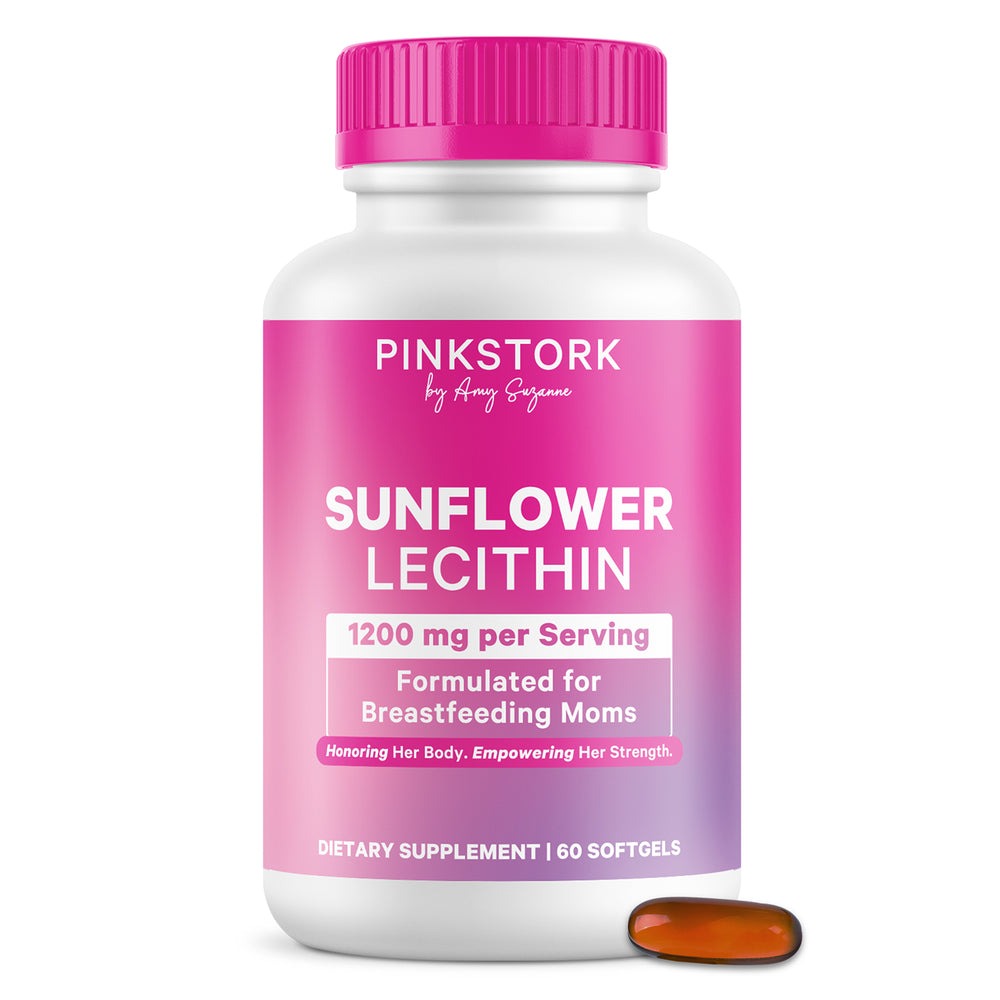
Made by a postpartum-focused brand, this is the gentle starting point for breastfeeding moms testing the waters with a smaller, 60-count bottle.
Key Ingredients & Dosage
- 1,200 mg sunflower lecithin per softgel
- Non-GMO, gluten-free; bovine gelatin cap
- 60 softgels — a sensible trial size
What Sets It Apart (and How It Helps You)
Pink Stork is built around the postpartum journey, and it’s refreshingly honest: it states the lecithin supports milk flow and fat dispersion, but does not directly increase supply. By making milk less sticky, it may help moms prone to recurrent clogged ducts.
Safety & Side Effects
Non-GMO and gluten-free. Not vegan (gelatin). As with any lactation supplement, loop in your doctor or an IBCLC first.
How to Take It
For plugged ducts, 1 softgel 3–4 times daily; for maintenance, 1 softgel twice daily.
Pros & Cons
- Pros: trusted postpartum brand, honest claims, easy trial size
- Cons: small bottle, pricier per softgel, not vegan
The Bottom Line
If you’re a new mom dipping a toe in, this is the reassuring, no-overcommitment place to begin.
4. Micro Ingredients Sunflower Lecithin 1600 mg — Best Bulk Value
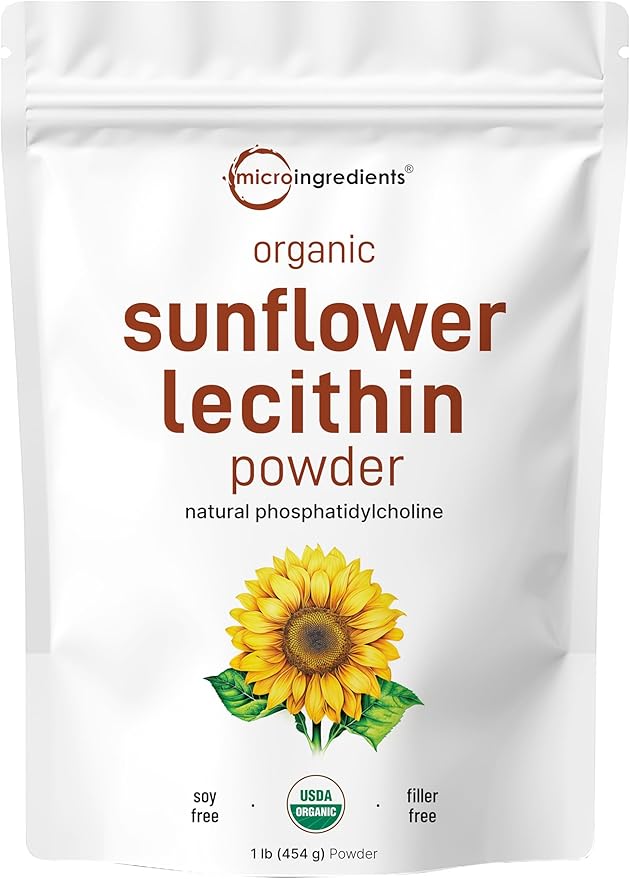
For the long-haul user. If sunflower lecithin is becoming a daily habit, buying 300 softgels at a time is how you stop overpaying.
Key Ingredients & Dosage
- 1,600 mg sunflower lecithin per serving, rich in phosphatidylcholine
- 300 softgels — months of supply
- Cold-pressed, sustainably farmed, soy-free, non-GMO
What Sets It Apart (and How It Helps You)
Cold-pressing protects those delicate phospholipids better than heat-and-solvent extraction. The result is clean sunflower lecithin that may help support brain, liver, and cell-membrane health over the months you’ll actually be taking it.
Safety & Side Effects
Soy-free, well tolerated, gelatin softgel (not vegan). Ease in if your gut is sensitive.
How to Take It
With a meal, daily and consistently — this big bottle rewards routine.
Pros & Cons
- Pros: lowest cost-per-serving, cold-pressed, soy-free
- Cons: big bottle overkill for a quick trial; not vegan
The Bottom Line
This is the pick for someone who already knows they’re in it for the long run. Buy once, forget about restocking for a season.
5. Legendairy Milk Sunflower Lecithin — Best for Clogged Ducts
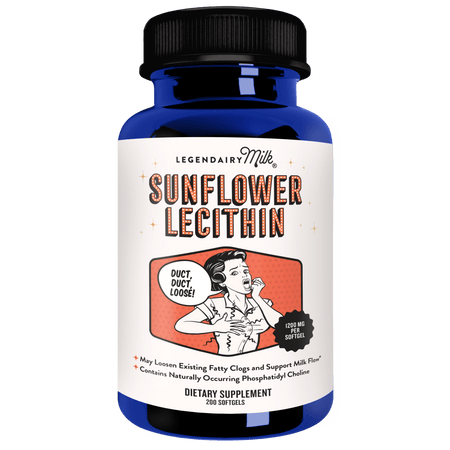
The lactation specialist. If clogged ducts are your reason for being here, this is the bottle built specifically for that fight.
Key Ingredients & Dosage
- 1,200 mg organic sunflower lecithin per softgel
- Fenugreek-free, non-GMO, sugar- and gluten-free
- Available in 60 and 200 counts
What Sets It Apart (and How It Helps You)
Made by a brand devoted to breastfeeding, it’s deliberately fenugreek-free — a smart touch, since fenugreek bothers some moms and babies. By loosening fatty clogs and easing milk stickiness, it may help keep things flowing and head off the dreaded progression to mastitis.
Safety & Side Effects
Not vegan (gelatin), and specifically not for use during pregnancy — only while nursing. A few users report mild tummy upset.
How to Take It
For clogged ducts, 1 softgel 3–4 times daily; for maintenance, 1 softgel twice daily.
Pros & Cons
- Pros: organic, fenugreek-free, lactation-focused, big-bottle option
- Cons: not vegan; not for pregnancy
The Bottom Line
With over a million bottles sold in 2025 and moms reporting relief often within a day, this is my go-to recommendation for recurrent clogs.
6. Nutricost Sunflower Lecithin Powder — Best Vegan Pick
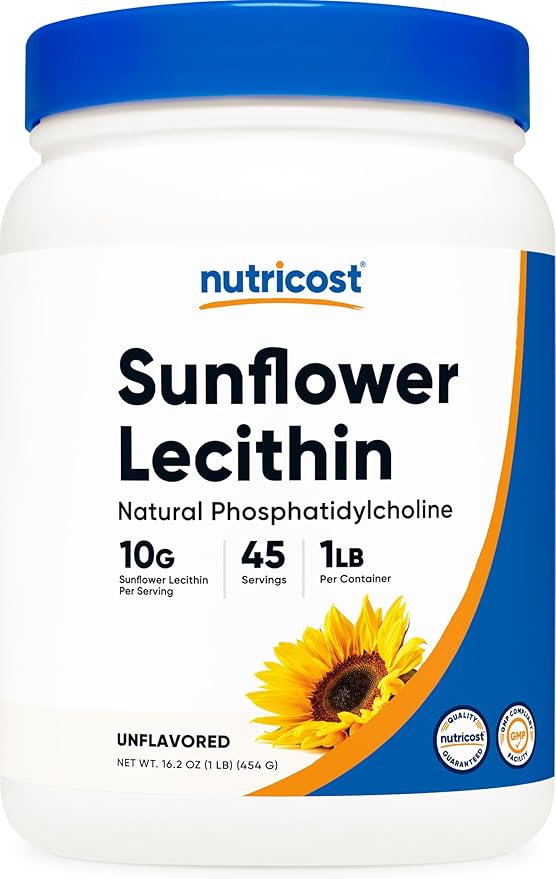
Plant-based and done with gelatin softgels? This clean sunflower powder is your answer — and it moonlights in your kitchen.
Key Ingredients & Dosage
- Pure sunflower lecithin powder, 1-pound bag
- Natural phosphatidylcholine
- Vegan, gluten-free, GMO-free — no gelatin
What Sets It Apart (and How It Helps You)
Powder gives you full control over your dose and a genuinely vegan option. Blend it into a smoothie, use it for homemade liposomal vitamin C, or add it to baking as a natural emulsifier — all while its phospholipids may help support cell and liver health.
Safety & Side Effects
Soy-free and vegan-friendly. The texture takes adjusting to, so blend rather than spoon it dry.
How to Take It
Stir a measured scoop into liquid or food daily; start small and build to taste.
Pros & Cons
- Pros: vegan, soy-free, flexible dosing, kitchen-friendly
- Cons: messier than a pill; flavor isn’t for everyone
The Bottom Line
For plant-based readers and DIY-smoothie types, nothing else here competes. It’s the most versatile bottle on the list.
7. Carlyle Sunflower Lecithin 2400 mg — Best Value High-Dose
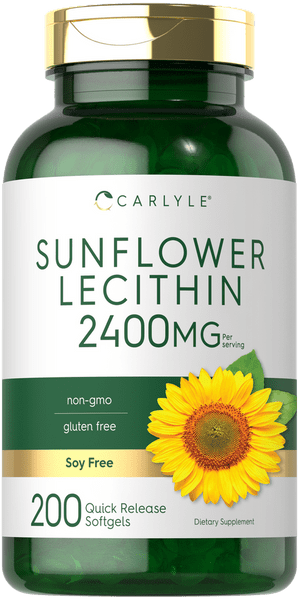
Want a strong dose without the premium price? Carlyle is the high-potency option that won’t dent your budget.
Key Ingredients & Dosage
- 2,400 mg sunflower lecithin per serving, rich in phosphatidylcholine
- 200 softgels; soy-free, non-GMO, gluten-free
What Sets It Apart (and How It Helps You)
It’s the crowd favorite for a reason — a big dose, a clean soy-free profile, and a price that undercuts most rivals. The phosphatidylcholine may help support liver, brain, and cardiovascular health, making it a solid everyday workhorse.
Safety & Side Effects
Soy-free and generally well tolerated. Gelatin softgel, so not vegan.
How to Take It
Take with food; split the serving across the day if needed.
Pros & Cons
- Pros: high dose, low price, soy-free, big bottle
- Cons: doesn’t disclose exact PC content; not vegan
The Bottom Line
If NatureBell is the transparent premium pick, Carlyle is the value champ that gets you most of the way there for less. Hard to argue with.
8. Swanson Sunflower Lecithin Non-GMO 1200 mg — Best for Allergy-Prone
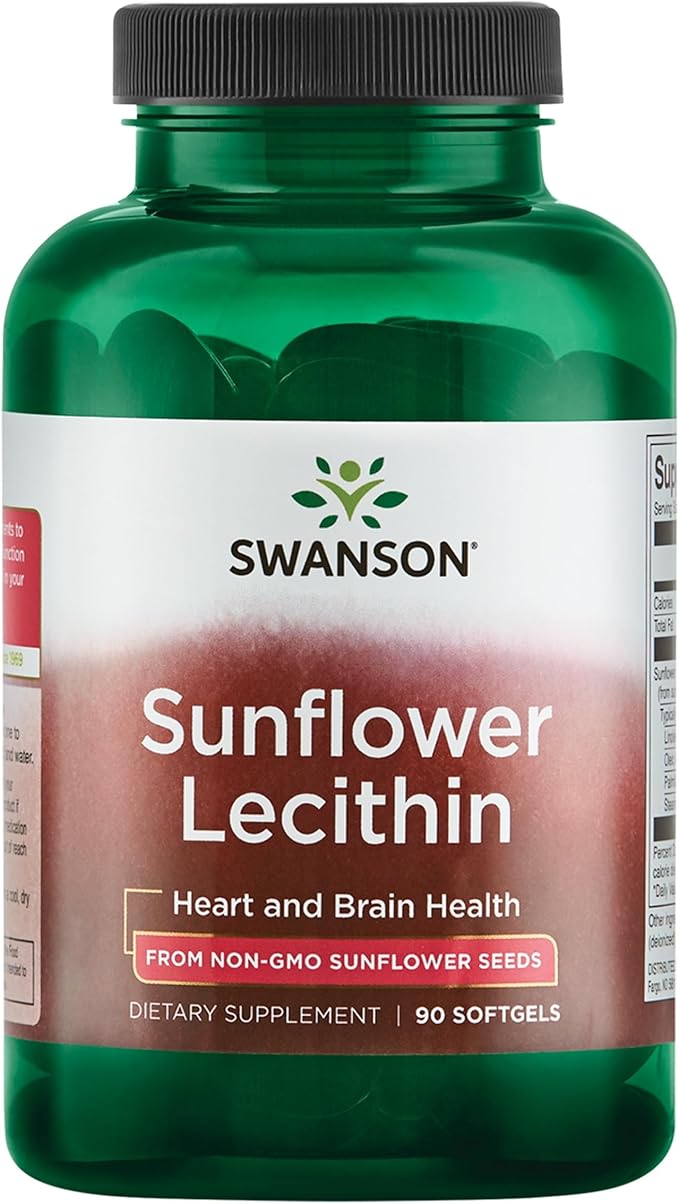
Juggling multiple allergies? This one’s a relief — derived from non-GMO sunflower and free of both soy and egg.
Key Ingredients & Dosage
- 1,200 mg sunflower lecithin per softgel (non-GMO)
- Naturally supplies linoleic and oleic acids plus phosphatidylcholine
- 90 softgels; soy-free and egg-free
What Sets It Apart (and How It Helps You)
Swanson positions this squarely for people with soy or egg sensitivities, backed by GMP facilities and independent third-party testing. As a fat emulsifier, it may help support healthy lipid balance, brain, and liver function.
Safety & Side Effects
Soy- and egg-free — a genuine plus for allergy-prone users. Gelatin softgel, so not vegan.
How to Take It
One softgel, one to three times daily, with food and water.
Pros & Cons
- Pros: soy- and egg-free, third-party tested, flexible dosing
- Cons: smaller 90-count; not vegan
The Bottom Line
For readers managing several allergies, this is the safe, well-tested choice — clean ingredients from a brand that checks its own work.
9. TRUEMED Organic Sunflower Lecithin 1200 mg — Best Organic
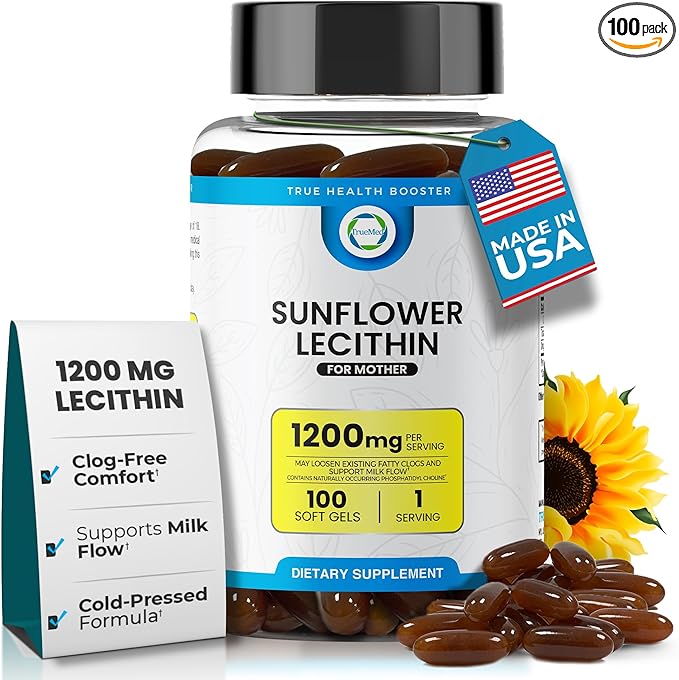
Want the cleanest label on the shelf? TRUEMED brings an organic, made-in-USA option for the truly label-conscious.
Key Ingredients & Dosage
- 1,200 mg organic sunflower lecithin per serving
- Soy-free, non-GMO; 100 softgels; made in USA
What Sets It Apart (and How It Helps You)
The organic sourcing is the headline here — appealing if you scrutinize everything you put in your body. It markets to both the wellness and breastfeeding crowds, and its phosphatidylcholine may help support brain, heart, nerve, and liver health.
Safety & Side Effects
Soy-free and made in the USA. Gelatin softgel, so not vegan. Standard mild-GI caution at higher intakes.
How to Take It
One softgel daily with food.
Pros & Cons
- Pros: organic, soy-free, US-made, single-softgel serving
- Cons: smaller bottle; pricier per gram than bulk options
The Bottom Line
If “organic” is non-negotiable for you, this is the pick that ticks the box without sacrificing a clean, soy-free profile.
10. Natural Nutra Sunflower Lecithin 2000 mg — Best Higher-Dose Everyday
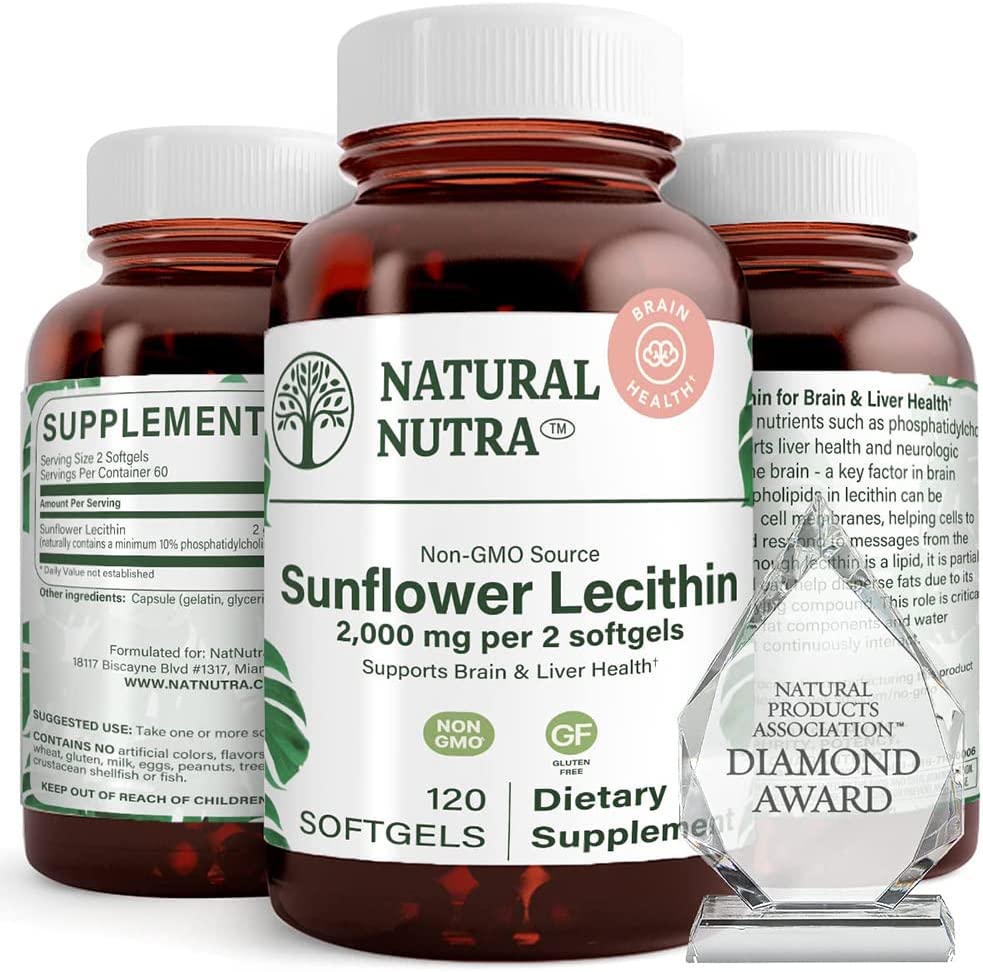
Looking for a meatier daily dose than the standard 1,200 mg? Natural Nutra splits the difference between the everyday and high-potency picks.
Key Ingredients & Dosage
- 2,000 mg sunflower lecithin per serving
- Soy-free, non-GMO, gluten-free; 120 softgels
What Sets It Apart (and How It Helps You)
That 2,000 mg lands neatly between the 1,200 mg everyday options and the 2,400 mg heavy-hitters — a sweet spot if you want more phospholipids without going maximal. It pitches to breastfeeding moms and to anyone after liver and brain support.
Safety & Side Effects
Soy-free, gluten-free, well tolerated. Gelatin softgel, so not vegan.
How to Take It
Take with food; ease in if you’re new to lecithin.
Pros & Cons
- Pros: generous dose, soy-free, gluten-free, mid-size bottle
- Cons: not vegan; less brand recognition than NOW or Swanson
The Bottom Line
A smart middle path for the reader who wants a little extra in every serving without committing to the biggest dose on the shelf.
Conclusion
Choosing the best sunflower lecithin supplement comes down to who you are. Want one clean, soy-free, non-GMO pick to trust? NOW is the easy call. Fighting clogged milk ducts? Legendairy Milk was built for it. Vegan, budget-minded, or juggling allergies — there’s a bottle above with your name on it.
Whichever you pick, the phosphatidylcholine in quality sunflower lecithin may help support your liver, brain, and — for nursing moms — smoother milk flow. Take it with food, give it a couple of weeks, and check with your provider if you’re breastfeeding or pregnant.
Small habit, real payoff. Find your match and start today.
Frequently Asked Questions
What is sunflower lecithin good for?
Sunflower lecithin is a soy-free source of phospholipids and choline that may help support healthy cholesterol, liver function, brain and focus, and — its most popular use — smoother milk flow for breastfeeding moms. Think of it as a clean, gentle everyday helper, not a cure.
How does sunflower lecithin help with clogged milk ducts?
It reduces the stickiness of breast milk and keeps milk fats from clumping, so milk moves more freely. That may help loosen an existing plug and prevent new ones — though it works best alongside frequent nursing or pumping, not on its own.
Does sunflower lecithin increase milk supply?
No — and this is the most common mix-up. It supports milk flow and duct comfort, but it doesn’t change how much milk you make. Any product claiming a supply boost is overselling it.
How much sunflower lecithin should I take for a clogged duct?
A common routine is about 1,200 mg, three to four times daily during an active clog, then easing back to once or twice daily for prevention. Confirm the right amount with your provider or a lactation consultant.
How long does sunflower lecithin take to work?
Many moms notice easier flow within a day or two of starting, and some report relief from an active clog within roughly 24 hours. For prevention, the benefit comes from taking it consistently rather than waiting for a problem.
Is sunflower lecithin safe while breastfeeding, and during pregnancy?
It’s widely used and generally considered safe while nursing, and many lactation consultants support it. Pregnancy is different — several lactation products specifically say not for use during pregnancy, so check with your doctor before taking any lecithin while expecting.
Sunflower vs. soy lecithin — which is better?
Neither wins for everyone. Sunflower is the pick if you’re soy-allergic, avoiding GMOs, or breastfeeding. Soy is cheaper and more researched, so it’s perfectly fine if you tolerate it — just choose identity-preserved, non-GMO soy.
Are there any side effects of sunflower lecithin?
For most people, very few. Higher doses can bring mild stomach upset, loose stools, or a faint fishy odor from choline. Ease in slowly and take it with food, and you’ll likely feel nothing but the benefits.