

Medically reviewed by Dr. A.S.M. Masum Billah, MBBS
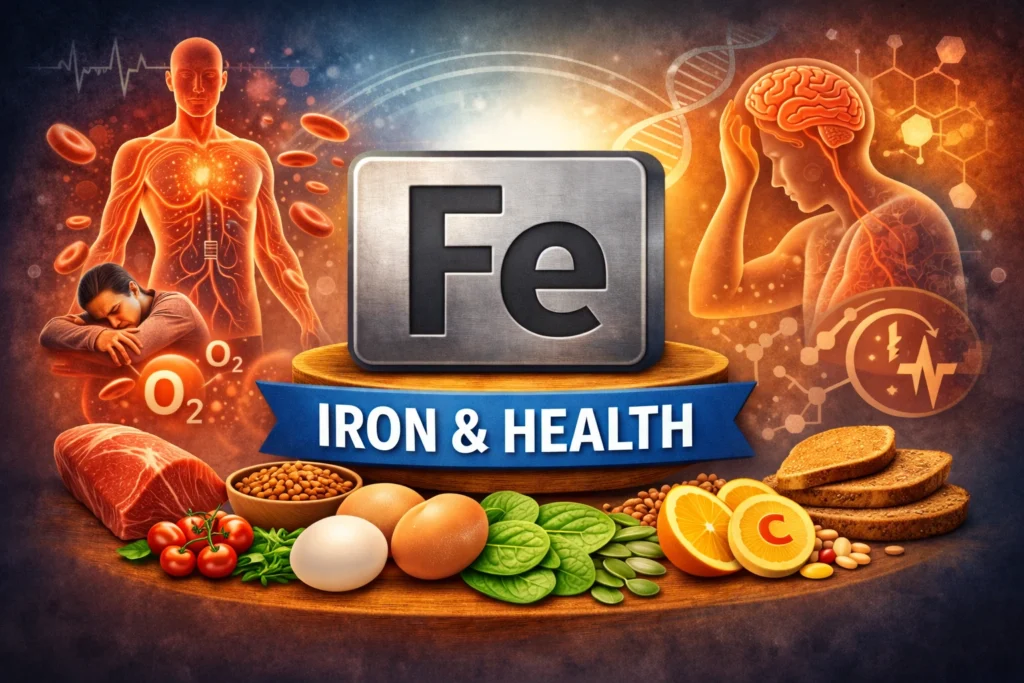
Iron is one of the most well-known minerals in human nutrition, yet it is also one of the most misunderstood. Many people associate iron only with anemia, assuming that iron status matters only when blood tests show low hemoglobin. In reality, iron plays a much broader role in the body, and deficiency can exist long before anemia develops.
Iron is essential for oxygen transport, energy production, brain function, immune health, and cellular metabolism. Because iron requirements vary widely between individuals—and because absorption is tightly regulated—iron deficiency remains one of the most common nutrient deficiencies worldwide.
This article explains what iron is, how it functions in the body, why deficiency is widespread, how low iron affects health, and what factors influence iron absorption and balance, without focusing on supplements or treatment strategies.
Best Bariatric Multivitamins with Iron
What Is Iron?
Iron is an essential trace mineral required for life. The body cannot synthesize iron, so it must be obtained from the diet and carefully regulated to maintain balance.
Most iron in the body is found in:
- Hemoglobin in red blood cells
- Myoglobin in muscle tissue
- Enzymes involved in energy metabolism
A smaller amount is stored in tissues such as the liver, spleen, and bone marrow.
Unlike some minerals, iron can be harmful in excess. For this reason, the body tightly controls iron absorption and recycling.
Why Iron Is Essential for the Body
Iron’s primary role is enabling oxygen transport and cellular energy production.
Without adequate iron:
- Oxygen delivery to tissues becomes inefficient
- Energy production declines
- Cells struggle to perform normal metabolic functions
This is why iron deficiency often presents with fatigue and reduced physical or mental performance.
What Does Iron Do in the Body?
Iron and Oxygen Transport
Iron is a key component of hemoglobin, the protein in red blood cells that carries oxygen from the lungs to tissues.
Each hemoglobin molecule contains iron atoms that bind oxygen. When iron availability is low, the body’s ability to transport oxygen is compromised—even before anemia is diagnosed.
Iron and Muscle Function
Iron is also found in myoglobin, a protein that stores oxygen in muscle cells.
Adequate iron supports:
- Muscle endurance
- Efficient oxygen use during activity
- Normal physical performance
Low iron levels may contribute to early fatigue during exertion.
Iron and Energy Production
Iron is involved in mitochondrial function, where energy (ATP) is produced.
Several enzymes in the electron transport chain require iron. Without sufficient iron:
- Energy production becomes less efficient
- Cells fatigue more quickly
This explains why iron deficiency can cause fatigue even when hemoglobin levels appear normal.
Iron and Brain Function
The brain has high energy demands and relies on iron for:
- Neurotransmitter synthesis
- Myelination of nerve fibers
- Normal cognitive development and function
Iron deficiency may affect attention, memory, and concentration, particularly when deficiency develops over time.
Iron and Immune Function
Iron plays a regulatory role in immune activity.
It supports:
- Immune cell proliferation
- Enzymatic reactions involved in immune defense
At the same time, iron balance is critical, as both deficiency and excess can disrupt immune regulation.
Types of Dietary Iron
Dietary iron exists in two main forms.
Heme Iron
- Found in animal-based foods
- More readily absorbed
- Less affected by dietary inhibitors
Heme iron is absorbed through a distinct pathway that is relatively efficient.
Non-Heme Iron
- Found in plant foods and fortified products
- Absorption is more variable
- Strongly influenced by other dietary factors
Most dietary iron globally comes from non-heme sources, which contributes to the prevalence of deficiency.
How Iron Is Absorbed
Iron absorption occurs primarily in the small intestine, particularly the duodenum.
Key features of iron absorption include:
- Regulation based on body iron status
- Increased absorption when iron stores are low
- Reduced absorption when stores are sufficient
The body absorbs only a fraction of dietary iron, adjusting absorption to maintain balance.
Regulation of Iron Balance
Iron regulation is unique compared to other minerals.
The body:
- Absorbs iron when needed
- Limits absorption when stores are adequate
- Recycles iron efficiently from old red blood cells
There is no active pathway for iron excretion, so regulation occurs mainly at the level of absorption.
Iron Deficiency Without Anemia
Iron deficiency develops in stages.
- Depletion of iron stores
- Reduced iron availability for tissues
- Development of anemia
Many individuals experience symptoms during the early stages, even when hemoglobin remains within normal ranges. This condition is often referred to as iron deficiency without anemia.
Why Iron Deficiency Is So Common
Iron deficiency is widespread due to a combination of dietary, physiological, and lifestyle factors.
Inadequate Dietary Intake
Diets low in iron-rich foods or reliant on low-bioavailability iron sources may not meet daily requirements.
Increased Iron Losses
Iron loss occurs through:
- Menstrual blood loss
- Gastrointestinal bleeding
- Blood donation
Even modest chronic losses can deplete iron stores over time.
Increased Iron Requirements
Iron needs increase during:
- Pregnancy
- Childhood and adolescence
- Periods of rapid growth
If intake does not rise accordingly, deficiency may develop.
Reduced Absorption
Iron absorption may be impaired by:
- Digestive conditions
- Inflammation
- Certain dietary patterns
Absorption efficiency matters as much as intake.
Iron Deficiency in Women
Women of reproductive age are particularly vulnerable due to:
- Menstrual blood loss
- Pregnancy-related demands
This makes iron deficiency one of the most common nutritional issues among women globally.
Iron Deficiency in Children and Adolescents
During growth, iron is required for:
- Expanding blood volume
- Muscle development
- Brain maturation
Inadequate iron during these periods may have long-term consequences.
Signs and Symptoms of Low Iron
Iron deficiency often develops gradually, leading to subtle symptoms.
Early or Mild Symptoms
- Fatigue
- Reduced exercise tolerance
- Difficulty concentrating
- Feeling cold easily
More Advanced Symptoms
- Shortness of breath with exertion
- Paleness
- Dizziness
- Headaches
Symptoms may appear before anemia is detected.
Iron and Fatigue: More Than Anemia
Fatigue related to iron deficiency is not solely due to low hemoglobin.
Iron deficiency affects:
- Mitochondrial energy production
- Muscle oxygen utilization
- Neurotransmitter balance
This explains why fatigue can occur even when anemia is absent.
Iron and Cognitive Function
Iron deficiency may affect:
- Attention
- Learning capacity
- Memory
These effects are particularly concerning during periods of brain development, but adults may also experience cognitive changes.
Factors That Affect Iron Absorption
Dietary Inhibitors
Certain compounds reduce non-heme iron absorption:
- Phytates (in grains and legumes)
- Polyphenols (in tea and coffee)
- Calcium (when consumed simultaneously)
Dietary Enhancers
Other factors enhance non-heme iron absorption:
- Vitamin C
- Organic acids
- Certain food combinations
Meal composition significantly influences absorption efficiency.
Iron and Inflammation
Inflammation alters iron metabolism by:
- Reducing iron absorption
- Increasing iron sequestration in storage sites
This mechanism helps limit iron availability to pathogens but may contribute to deficiency during chronic inflammation.
Iron and Gut Health
Healthy digestion supports iron absorption.
Conditions affecting the small intestine or stomach acidity may reduce iron uptake, even when intake appears sufficient.
Iron Status and Blood Testing
Iron status is evaluated using multiple markers, including:
- Hemoglobin
- Ferritin
- Transferrin saturation
No single test provides a complete picture. Interpretation requires clinical context.
Common Misconceptions About Iron
“Iron deficiency only matters if you’re anemic”
Symptoms may occur long before anemia develops.
“More iron is always better”
Excess iron can be harmful and should be avoided without medical guidance.
“Diet alone always prevents deficiency”
Absorption and losses play major roles.
When Iron Status Becomes Clinically Important
Iron balance may require evaluation when:
- Fatigue persists without explanation
- Exercise tolerance declines
- Cognitive symptoms appear
- Risk factors for deficiency are present
Healthcare professionals assess iron status within the broader health context.
Key Takeaways
- Iron is essential for oxygen transport, energy production, and brain function
- Deficiency can exist without anemia
- Women, children, and adolescents are at higher risk
- Absorption and losses strongly influence iron balance
- Symptoms are often subtle and overlooked
- Both deficiency and excess carry risks
Conclusion
Iron is a critical micronutrient that supports some of the body’s most fundamental processes, from oxygen delivery to cellular energy production. Because iron balance is tightly regulated—and because deficiency develops gradually—low iron status often goes unnoticed until symptoms become more pronounced.
Understanding how iron works in the body, why deficiency is so common, and how absorption and losses affect balance provides a clearer framework for interpreting fatigue, reduced performance, and broader health concerns. Rather than viewing iron solely through the lens of anemia, it is best understood as a cornerstone of overall physiological function.