

Medically reviewed by Dr. A.S.M. Masum Billah, MBBS
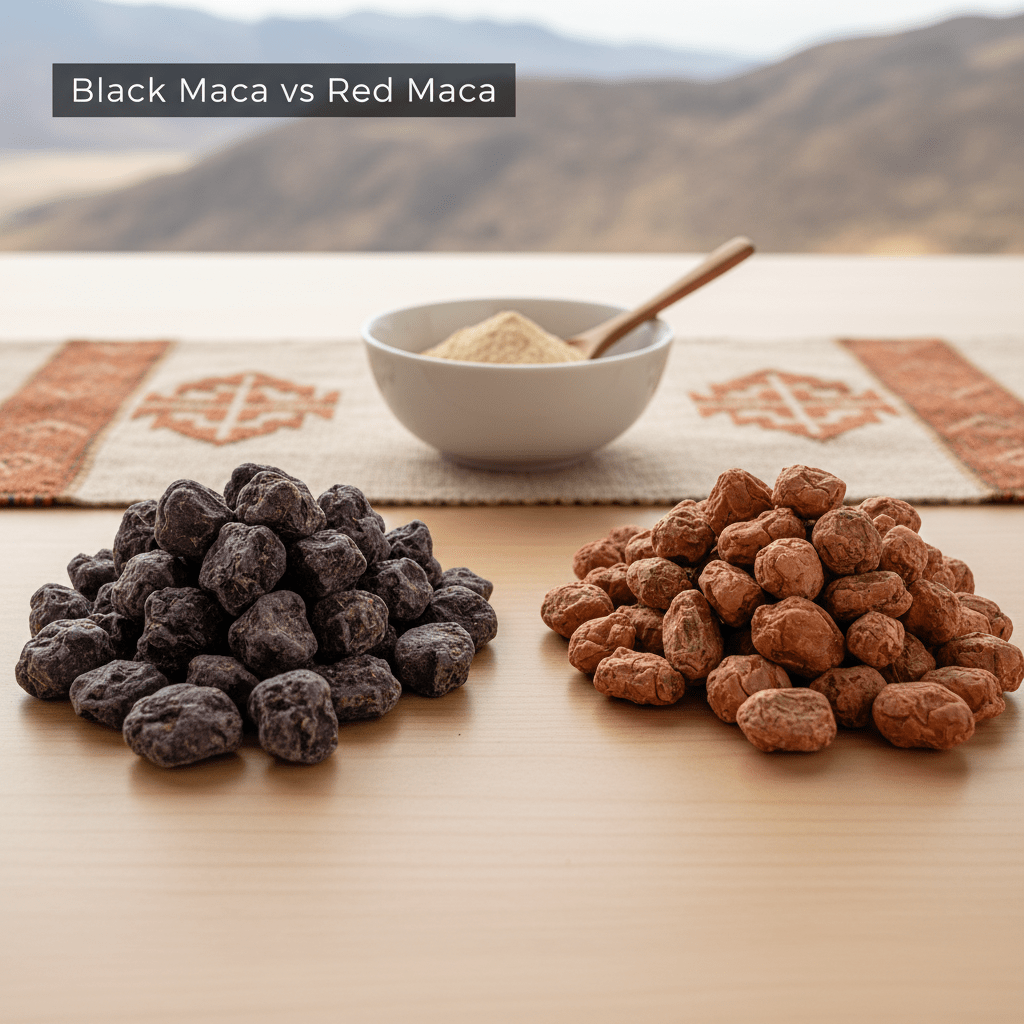
If you are comparing black maca vs red maca, you are probably trying to solve a practical buying problem. You want to know whether one color is better for energy, performance, hormonal balance, mood, routine fit, and overall value, and whether the differences are meaningful enough to influence what you buy.
In the supplement world, black maca is usually framed as the more performance- and drive-oriented option, while red maca is often positioned as the gentler everyday choice for hormonal balance, mood steadiness, and long-term wellness. Those angles are not completely random, but they are also easy to oversimplify.
The smarter question is not which one is universally better. It is which one fits your goal, budget, tolerance, ingredient preference, convenience needs, and tradeoffs. If you want a maca powder or capsule that feels more motivating and vitality-focused, black maca is often the first color buyers investigate. If you want a more balanced all-rounder, red maca may feel like the safer place to start.
This guide breaks down the real-world differences in plain English so you can choose more confidently. If you want broader context on herb categories after this article, DietaryHabit also has guides on what adaptogens are, red ginseng supplements, and tribulus supplements for readers comparing different vitality-support options.
Black Maca vs Red Maca at a Glance
- Black maca: usually chosen for energy, performance mindset, drive, and a more vitality-forward feel.
- Red maca: usually chosen for everyday balance, hormonal support positioning, and a calmer all-purpose wellness angle.
- Best for workout motivation, stamina goals, and “I feel flat” shoppers: Black maca
- Best for daily wellness, midlife balance, and gentler routine fit: Red maca
- Best for buyers who want the more “premium performance” story: Black maca
- Best for buyers who want a simpler everyday starting point: Red maca
What Is Black Maca?
Black maca is one color phenotype of Lepidium meyenii, the Peruvian root commonly sold as maca powder, gelatinized maca, or capsules. Supplement brands often describe black maca as the version most associated with stamina, motivation, performance, and male vitality. That positioning is one reason black maca products often cost a little more or are marketed with a more targeted audience in mind.
From a buyer perspective, black maca is attractive when you want a supplement that feels more purpose-built for drive. People browsing this category are often looking for support with gym consistency, morning energy, libido, or that vague but frustrating feeling of being underpowered.
The tradeoff is that black maca can be over-marketed. The color difference may matter, but it does not turn maca into a miracle performance compound. You still have to care about basics like dose, format, brand transparency, and whether the supplement fits your life.
What Is Red Maca?
Red maca is another maca color phenotype, and it is usually presented as the more balanced and everyday-friendly option. Buyers often encounter red maca in formulas marketed for women’s wellness, midlife support, hormonal balance, mood steadiness, and a gentler whole-body approach. That does not mean men cannot use it, and it does not mean red maca is weak. It just tends to be sold with a different buyer story.
In practical terms, red maca often appeals to shoppers who are not chasing a high-performance identity. They may want something they can take consistently without feeling like they are buying a niche athletic product. They may also prefer a wellness ingredient that sounds supportive rather than stimulating.
That softer positioning can be a real advantage. If your main goal is not “more push” but rather a steadier routine and broader lifestyle support, red maca may feel like the more intuitive choice.
Black Maca vs Red Maca: Key Differences
The biggest difference between black maca and red maca is not that one is “real maca” and the other is not. Both come from the same general plant category. The difference is mainly in how the color phenotypes are marketed, studied, and matched to buyer goals.
- Black maca is more often associated with energy, drive, stamina, and performance-oriented use cases.
- Red maca is more often associated with balance, everyday wellness, and hormone-related interest, especially among midlife shoppers.
- Black maca often feels like the more targeted pick.
- Red maca often feels like the more versatile pick.
That distinction matters because many supplement buyers are not choosing on chemistry alone. Some people want a product that feels active, energizing, and motivational. Others want something that feels safer, steadier, and easier to use long term.
There is also a product-format issue. Many brands do not use a single color at all. They sell blended maca. That can be fine, but if you are specifically trying to compare color-specific use cases, you should check the label carefully instead of assuming every maca supplement is equivalent.
Which Is Better for Energy, Performance, and Drive?
If your main question is which color is better for energy, performance, motivation, or libido-oriented shopping goals, black maca usually has the stronger case. It is the color more often chosen by buyers who want a product that feels more upward-driving than merely supportive.
That does not mean black maca acts like caffeine, nor should you expect an instant stimulant-like effect. The appeal is more about the category story: black maca is often the version shoppers turn to when they want to feel more switched on, more physically capable, or more in rhythm with training and busy routines.
Red maca can still support general wellness, but if you want the option with the clearer performance-forward reputation, black maca is usually the more logical first pick.
Choose black maca first if you feel more flat, unmotivated, or low-drive than stressed or hormonally off-balance.
Which Is Better for Hormonal Balance and Everyday Wellness?
If your priority is hormonal balance, daily steadiness, or broad routine-friendly wellness support, red maca often makes more sense. It is the version many buyers perceive as the calmer, more even-tempered choice. That is a big reason it frequently appears in women’s wellness conversations, menopause-related discussions, and general midlife supplement shopping.
A lot of people do not actually want a supplement that sounds intense. They want something they can take consistently while trying to support mood, routine stability, and overall well-being. Red maca often fits that emotional buying profile better than black maca.
If your question is not “How do I push harder?” but “What fits my life without feeling like overkill?” red maca is often the better match.
Choose red maca first if you feel more interested in balance, consistency, and broader wellness than in chasing a stronger drive effect.
Budget, Taste, Convenience, and Routine Fit
Supplement decisions are not made in a vacuum. A product can sound perfect and still fail because it is too expensive, tastes unpleasant, or does not fit your schedule.
On budget, red maca is sometimes easier to find in broad-market powders and everyday capsules, while black maca products can carry a slightly more premium angle.
On taste, both are earthy and distinct. If you dislike maca powder, the color difference will not save you. Capsules are usually the better move for convenience-focused buyers, while powders make sense for smoothie users who care more about cost per serving.
On convenience, gelatinized maca is often easier for buyers who want something more digestion-friendly and simple to use daily. Raw powders may appeal to purists, but they are not automatically the best routine choice.
On routine fit, black maca often belongs in a more goal-specific stack, while red maca often works better as an easy everyday habit. If you know yourself well, this can make the decision surprisingly simple: choose the one you are most likely to use consistently.
Which One Should You Choose?
Choose black maca if:
- You want a more energy- and drive-oriented maca option.
- You care about stamina, training motivation, or male-vitality-style positioning.
- You are comfortable paying a bit more for a more targeted story.
- You want a maca product that feels more performance-focused than general.
Choose red maca if:
- You want a more balanced, everyday-friendly maca option.
- You care more about steady wellness support than a stronger performance angle.
- You prefer a gentler buyer profile and routine-friendly positioning.
- You want a sensible first maca purchase without overcomplicating the decision.
If you are still torn, the simplest answer is this: buy black maca when your goal is more drive, and buy red maca when your goal is more balance.
Our Verdict: Black Maca vs Red Maca
There is no universal winner because black maca and red maca fit different buyer intentions. Black maca is usually the better pick for people who want more energy, motivation, performance support, and a stronger vitality story. Red maca is usually the better pick for people who want everyday balance, steadier routine support, and a supplement that feels less niche.
If you feel more underpowered than unbalanced, black maca probably makes more sense. If you feel more in need of consistency than intensity, red maca is often the smarter buy. For many first-time maca shoppers, red maca is the easier entry point. For more goal-specific buyers, black maca often feels more aligned with why they started searching in the first place.
The bottom line: black maca is usually the better performance-oriented choice, while red maca is usually the better balance-oriented choice.
FAQ: Black Maca vs Red Maca
Is black maca stronger than red maca?
Not in every sense, but black maca is usually marketed as the more performance- and drive-oriented option, which makes many buyers perceive it as the stronger choice for energy-focused goals.
Is red maca better for women?
Red maca is often positioned that way in the supplement market because it is associated with balance and everyday wellness, but the better choice still depends on the person’s goal, product quality, and routine fit.
Which maca is better for energy?
Black maca is usually the more popular choice for energy, motivation, and performance-oriented supplement shopping.
Which maca is better for hormonal balance?
Red maca is often the more natural first look for buyers shopping with hormonal-balance and everyday-wellness goals in mind.
Can you take black maca and red maca together?
Some blended maca products already combine colors. That can be fine, but if you are trying maca for a specific goal, starting with one clear direction often makes it easier to judge whether the product suits you.
References
- Gonzales GF. Ethnobiology and ethnopharmacology of Lepidium meyenii (maca), a plant from the Peruvian Highlands.
- Systematic and narrative reviews on maca covering libido, mood, menopause-related symptoms, and general safety considerations.
- Human and preclinical literature discussing black and red maca phenotypes and their different traditional and commercial use patterns.