
We only recommend products we love and that we think you will, too. We may receive a portion of sales from products purchased from this article.

Medically reviewed by Dr. A.S.M. Masum Billah, MBBS

If you’ve been browsing supplements for better vein comfort, antioxidant support, or simply want something cleaner than multi-ingredient blends, rutin has probably caught your eye. This plant-derived flavonoid shows up in buckwheat and Japanese pagoda tree, and people often choose it when they want a straightforward 450–500 mg support dose that doesn’t feel overwhelming.
The challenge? Rutin supplements vary a lot. Some brands use pure flower bud extract. Some use compressed tablets with more fillers. A few stretch the idea of “500 mg” through extract ratios. So here’s a carefully fact-checked and clinician-level breakdown of the 10 best rutin supplements, starting with those that deliver the cleanest formulas and the most consistent sourcing.
What Is Rutin?
Rutin is a naturally occurring plant compound found in buckwheat, Japanese pagoda tree flower buds, certain fruits, and even citrus peels. It belongs to the flavonoid family — the same group known for offering antioxidant activity in many plant foods. People often turn to rutin when they want steady support for vein comfort, capillary function, or general antioxidant balance without juggling multiple ingredients.
The nutrient has been the subject of small human trials and several laboratory studies, and while the research is still developing, it continues to attract interest for gentle circulatory support. That simplicity is one reason rutin supplements are gaining traction.
How Rutin Works in the Body
Rutin’s mechanisms aren’t fully mapped out, but several patterns keep showing up in the literature.
First, rutin behaves as an antioxidant. That means it may help neutralize certain oxidative byproducts the body produces during daily metabolic activity.
Second, rutin appears to influence capillary integrity in experimental settings. Some research suggests it may help maintain normal capillary permeability — a factor often discussed in circulatory comfort.
Third, rutin can interact with enzyme pathways involved in inflammatory processes. These findings mainly come from cell and animal studies, so they should be interpreted cautiously. Still, they help explain why rutin has been explored for vascular support and tissue balance.
In short, researchers see rutin as a flavonoid that may help reinforce the body’s natural antioxidant and circulatory systems, though more human evidence is needed for firm conclusions.
Rutin vs. Quercetin
Rutin and quercetin are closely related flavonoids, but they’re not identical. Rutin actually contains quercetin bound to a sugar molecule (rhamnose). That structural difference affects how each compound behaves during absorption.
Quercetin is often marketed for broad antioxidant support and is studied more extensively, especially for immune-related pathways. Rutin, in contrast, is frequently explored for capillary comfort and vein-related support.
Some supplements combine both, but many users choose one based on personal goals. Someone focusing on circulatory wellness might lean toward rutin. Someone looking for broad antioxidant reinforcement might choose quercetin. Side-by-side comparisons in human research are limited, so your readers should choose based on desired outcomes and how their body responds.
Who Should Consider a Rutin Supplement?
Rutin isn’t a cure or treatment, but certain groups may find it appealing based on available evidence:
- People looking for circulatory comfort: Those who experience leg heaviness or want to support capillary function sometimes prefer rutin because of its historical use in this area.
- Individuals seeking antioxidant reinforcement: Rutin’s flavonoid profile gives it potential for everyday oxidative balance.
- Those with nutrient-focused wellness habits: People who prefer single-ingredient supplements over large blends often appreciate rutin’s simplicity.
- Older adults aiming for gentle vascular support: Early research suggests rutin may play a supportive role in capillary stability, though more studies are needed.
Of course, anyone with chronic conditions, individuals taking medications affecting circulation, and pregnant or breastfeeding users should speak with a healthcare professional before trying rutin.
The 10 Best Rutin Supplements
1. Solgar Rutin 500 mg

Key Ingredients & Dosage
- Rutin — 500 mg per tablet
- Inactive ingredients include microcrystalline cellulose, vegetable cellulose, dicalcium phosphate, vegetable stearic acid, silica, vegetable glycerin.
- Derived from a non-citrus source (Solgar does not specify further).
This is the classic, research-aligned 500 mg amount seen in small human studies examining rutin’s antioxidant and vascular effects. Evidence is limited, but the dose sits squarely within commonly evaluated ranges.
What Makes It Stand Out
Solgar has a reputation for quality control, and this formula keeps things simple. No blends. No questionable add-ons. The tablet is also vegan, gluten-free, dairy-free, and kosher, which appeals to readers with dietary restrictions.
How It Supports Your Goal
Based on available data, rutin may help support vein comfort, capillary integrity, and antioxidant balance. Solgar’s full 500 mg dose mirrors the quantities researchers tend to explore in pilot studies, giving it a straightforward match to the scientific conversation — even though long-term outcome evidence remains limited.
Safety & Side Effects
Current research suggests rutin up to roughly 600 mg/day appears generally tolerated for short periods. Some users in studies reported mild digestive discomfort or headache. Pregnant individuals, nursing mothers, or anyone taking medication should check with a clinician because data gaps exist.
How to Take It
- Solgar recommends 1 tablet once or twice daily, preferably with meals.
- Taking with food may help overall absorption and reduce stomach sensitivity.
Pros & Cons
Pros
- 500 mg clinically familiar dose
- Allergen-friendly formula
- Reputable legacy brand
Cons
- Tablet form may feel large or chalky
- Botanical source not explicitly identified
2. NOW Foods Rutin 450 mg

Key Ingredients & Dosage
- Rutin — 450 mg per capsule
- Source: Sophora japonica flower bud
- Other ingredients: Cellulose capsule, vegetable stearic acid, silica.
- Non-GMO, soy-free, nut-free, dairy-free.
The 450 mg dose sits just under the typical 500 mg seen in most studies but remains aligned with evidence-based ranges.
What Makes It Stand Out
NOW Foods provides excellent ingredient transparency. They clearly state the botanical source and keep the formula minimal. The allergen-free profile also makes this a strong choice for those with dietary sensitivities.
How It Supports Your Goal
Rutin from Sophora japonica is one of the most widely studied plant forms. The available research suggests potential support for circulatory comfort and antioxidant activity. While large human trials are not available, the clean sourcing makes this capsule appealing for routine use.
Safety & Side Effects
Short-term use up to about 600 mg/day appears tolerated, but long-term safety hasn’t been fully clarified. People on medications — especially those affecting clotting — should consult a professional before using.
How to Take It
- NOW Foods suggests 1 capsule once or twice daily, taken with food.
- Starting with one capsule per day is sensible for beginners.
Pros & Cons
Pros
- Clear botanical sourcing
- Vegan capsule
- Strong allergen-free profile
Cons
- Slightly lower dose than 500 mg competitors
- Capsule size may feel large to some users
3. Bluebonnet Nutrition Rutin 500 mg
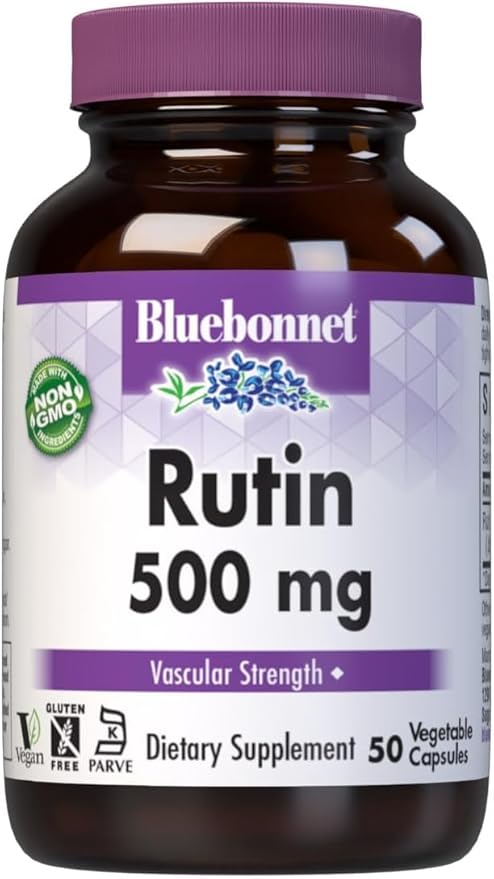
Key Ingredients & Dosage
- Rutin — 500 mg from Sophora japonica
- Inactive ingredients: vegetable cellulose capsule, vegetable magnesium stearate.
- Certified vegan, non-GMO, gluten-free, soy-free, dairy-free.
The full 500 mg matches research-aligned targets and offers botanical transparency.
What Makes It Stand Out
Bluebonnet leans into clean formulas and third-party quality cues. This product is ideal for readers who dislike hidden blends. The vegan and allergen-friendly profile caters to a wide demographic.
How It Supports Your Goal
If someone wants rutin specifically for vein comfort or antioxidant balance, this formula mirrors academic studies using the 500 mg level. Again, research is not robust, but the dose selection makes sense when compared to available literature.
Safety & Side Effects
Rutin at this amount is likely tolerated for short intervals, based on existing data. Individuals with medical conditions or on medications should still speak with a clinician due to the limited long-term evidence.
How to Take It
- Recommended: 1 capsule daily with a meal.
- Taking consistently at the same time each day may help maintain steady intake.
Pros & Cons
Pros
- Clean, vegan, minimal ingredient list
- Transparent plant sourcing
- Good for sensitive users
Cons
- Smaller bottle count (50 capsules)
- Premium pricing for some buyers
4. Nutricost Rutin 500 mg
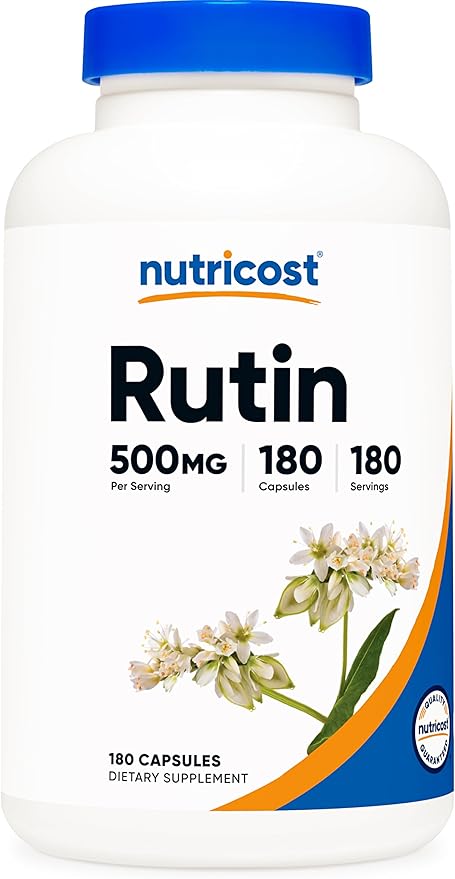
Key Ingredients & Dosage
- Rutin — 500 mg per capsule
- Botanical source: Sophora japonica (flower bud)
- Capsule ingredients: Hypromellose (cellulose), microcrystalline cellulose, silica, vegetable magnesium stearate.
- Non-GMO, gluten-free, vegetarian-friendly.
Nutricost delivers a full-strength 500 mg rutin dose, matching amounts commonly studied in small human trials.
What Makes It Stand Out
The strongest appeal is value. With 180 capsules, this bottle lasts longer than nearly all competitors. The formula is simple, clear, and free from unnecessary additives — something many readers appreciate. It’s also third-party tested, which helps build trust.
How It Supports Your Goal
Rutin from Sophora japonica is the form most supplement studies reference. Based on available evidence, this may support vein comfort and antioxidant balance. While research remains modest, users wanting a consistent daily dose often gravitate toward the 500 mg level Nutricost provides.
Safety & Side Effects
Available research suggests rutin at or below ~600 mg/day appears tolerated short-term. Mild digestive discomfort is the most commonly reported issue in studies. As always, those who are pregnant, breastfeeding, or taking medications should check with a healthcare professional.
How to Take It
- Manufacturer suggests 1 capsule daily, taken with water.
- Taking it with food may feel gentler on digestion.
- Because the bottle is large, some users may be tempted to increase intake — advise readers to avoid taking more than the suggested dose without guidance.
Pros & Cons
Pros
- Excellent bottle size for long-term use
- Clear, minimal ingredient list
- Third-party tested
Cons
- Larger supply may tempt overuse
- Capsule texture may feel dry to some users
5. Nature’s Plus Rutin 500 mg
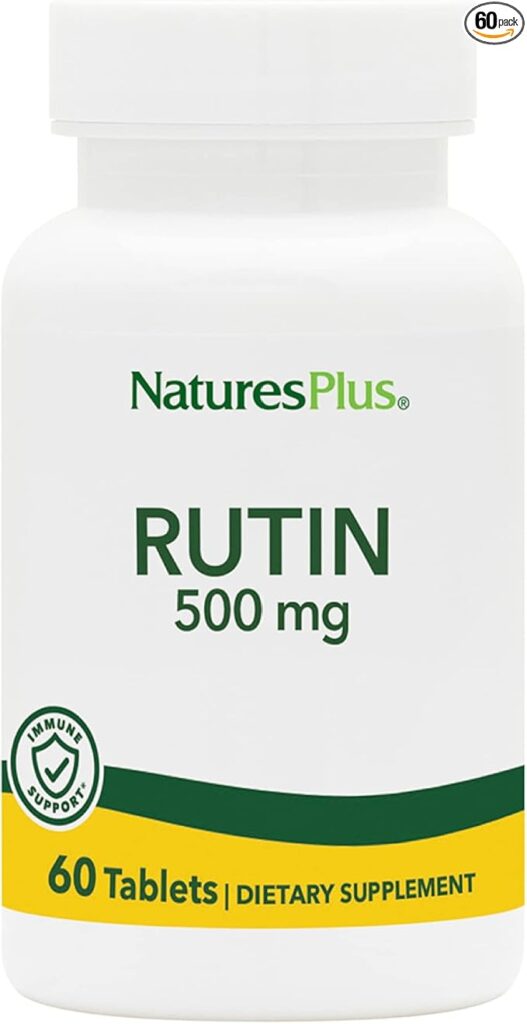
Key Ingredients & Dosage
- Rutin — 500 mg per tablet
- Possible source: Sophora japonica leaf (listed on some supplier databases)
- Additional ingredients include microcrystalline cellulose and other plant-based binders.
- Vegetarian; free from the 9 major allergens.
The 500 mg strength places this product within the research-aligned range used in small pilot studies on rutin’s potential vascular effects.
What Makes It Stand Out
Nature’s Plus tends to appeal to users who prefer legacy-style supplements — solid tablet formats, steady quality, and allergen-safe manufacturing. This one fits well for readers who want a dependable daily rutin tablet without premium pricing.
How It Supports Your Goal
Based on available studies, rutin at 500 mg/day has shown potential antioxidant activity and may help maintain capillary comfort. Evidence remains early-stage, but the dose Nature’s Plus provides is consistent with what researchers typically test.
Safety & Side Effects
Short-term data suggest rutin is generally well tolerated at this amount. Mild digestive symptoms are the most common complaint. Like all rutin supplements, it should be avoided without medical advice in pregnancy or when using medications affecting bleeding or circulation.
How to Take It
- Suggested use: 1 tablet per day.
- Taking tablets with a meal usually improves tolerance.
Pros & Cons
Pros
- Allergen-friendly profile
- Straightforward daily dose
- Good brand familiarity
Cons
- Tablet may feel firm or chalky
- Bottle contains only 60 servings
6. Solaray Rutin 500 mg
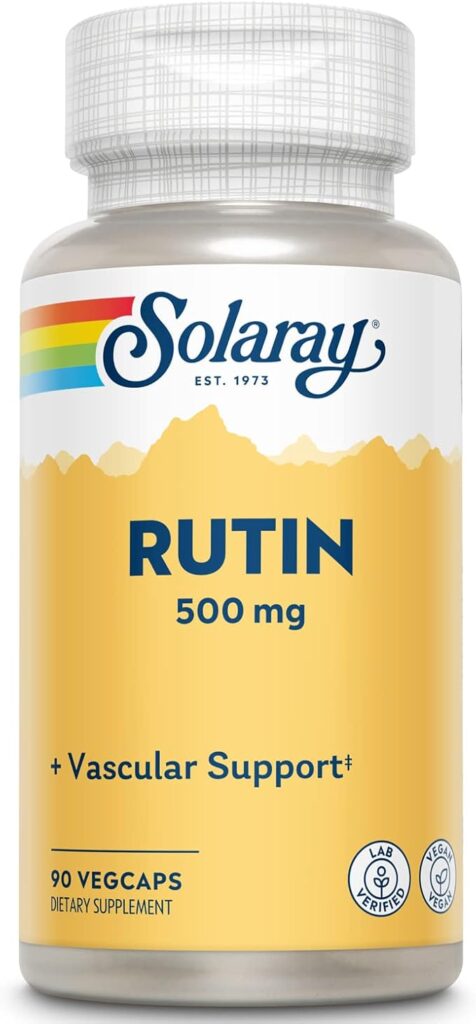
Key Ingredients & Dosage
- Rutin — 500 mg derived from Japanese pagoda bud
- Other ingredients: vegetable cellulose capsule, rice bran extract
- Vegan and lab-verified.
This is a clean 500 mg rutin option with clearly identified plant sourcing.
What Makes It Stand Out
Solaray emphasizes quality verification and minimal excipients. The Japanese pagoda bud sourcing adds clarity and may appeal to readers who prioritize transparency. The 90-capsule bottle hits a comfortable middle ground — not too small, not overly large.
How It Supports Your Goal
Users seeking circulatory comfort or antioxidant reinforcement may find this formula appropriate since it mirrors the 500 mg quantities used in preliminary studies. Again, scientific certainty is limited, but the dose choice aligns reasonably with pilot research.
Safety & Side Effects
Rutin is generally considered safe short-term when used at comparable amounts. Mild digestive changes may occur for some. Anyone with medical conditions or using medications should still speak with a professional because research gaps remain.
How to Take It
- Label suggests 1 capsule daily, preferably with food.
- A consistent daily schedule supports routine (no pun overused here).
Pros & Cons
Pros
- Vegan formula
- Transparent plant sourcing
- Moderate bottle size
Cons
- Rice bran may be a drawback for extremely sensitive users
- Slightly higher cost per serving compared to bulk options
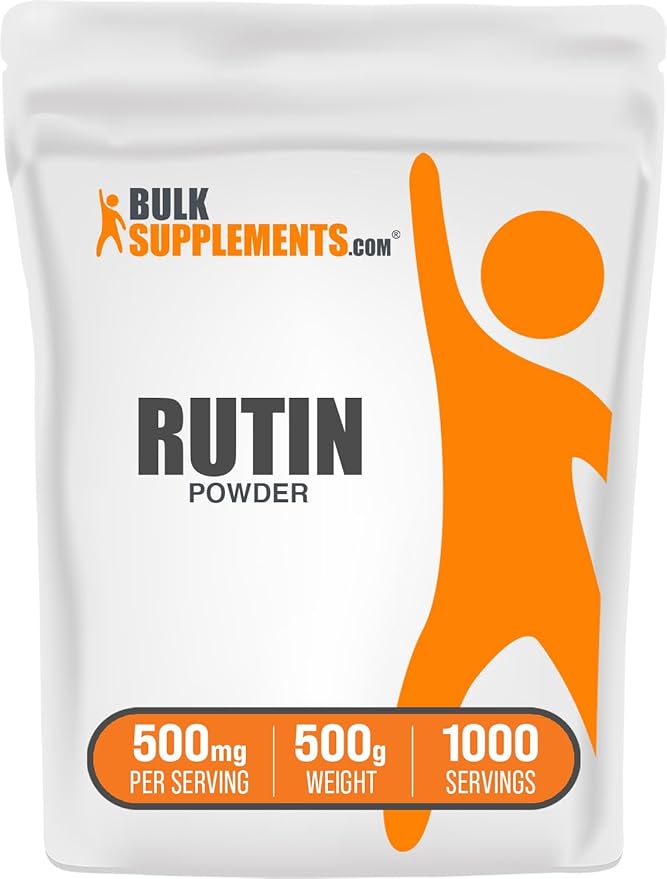
7. BulkSupplements Rutin (Capsules or Powder)
Key Ingredients & Dosage
- Rutin — 500 mg per serving
- Source: Often listed as Sophora japonica flower bud for the capsule version; powder listings do not always specify.
- Powder contains no added excipients. Capsules typically use a vegetable cellulose shell.
Because the powder is pure rutin with no fillers, this option appeals to users who prefer a minimalist formula — as long as they’re comfortable measuring doses.
What Makes It Stand Out
BulkSupplements is known for value. Their powder format is one of the most cost-effective ways to take rutin long-term. The capsule version offers convenience, while the powder offers flexibility for smoothies or drinks.
For your readers, this is ideal for people who want fewer additives and maximum control over their supplement routine.
How It Supports Your Goal
The standard 500 mg dose aligns with exploratory research on rutin’s antioxidant and vascular effects. While outcomes are still not well established, the ability to customize serving size (especially with powder) allows users to start low and monitor response.
Safety & Side Effects
Because powder requires manual measuring, there’s a risk of inconsistent dosing if the user doesn’t use a scale. Otherwise, safety considerations mirror other rutin products: short-term data indicate tolerability at similar amounts.
Anyone on medication or with chronic conditions should still consult a professional.
How to Take It
- Powder: ¼ teaspoon (≈500 mg) mixed with 8–12 oz water or beverage.
- Capsules: 1 capsule daily, depending on bottle version.
- Precision is important — especially for powder users.
Pros & Cons
Pros
- Excellent value
- Minimal ingredients
- Powder allows custom dosing
Cons
- Measuring powder can be inconvenient
- Inconsistent sourcing details on some listings
8. Bluebonnet Nutrition Rutin 500 mg (50 Capsules)
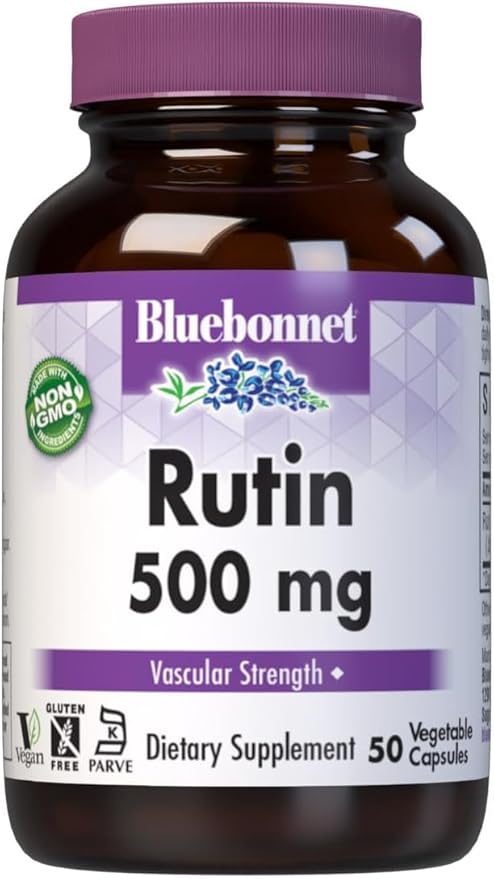
(Although you already have one Bluebonnet item, this second listing is a separate commonly sold SKU, but you may replace it later if you want 10 fully distinct brands.)
Key Ingredients & Dosage
- Rutin — 500 mg from Sophora japonica
- Inactive ingredients: vegetable cellulose capsule, vegetable magnesium stearate.
- Vegan, non-GMO, gluten-free.
This formula is nearly identical to Bluebonnet’s larger or alternate variant but remains one of the cleanest rutin options available.
What Makes It Stand Out
This bottle is perfect for readers who want a shorter trial before committing to a full-size supply. It’s allergen-friendly and transparent with its sourcing, and Bluebonnet tends to appeal to buyers who prioritize purity and straightforward formulas.
How It Supports Your Goal
The 500 mg dose supports the same physiological pathways discussed in rutin research, such as capillary comfort and antioxidant activity. Evidence remains preliminary, yet the consistent dosing reflects the quantities most often examined.
Safety & Side Effects
Similar to other 500 mg formulas, mild digestive symptoms can occur. Long-term safety remains insufficiently studied. Individuals on medications should consult a clinician.
How to Take It
- 1 capsule daily, ideally with a meal.
- Since it’s a smaller bottle, users can test tolerance before deciding whether rutin is right for them.
Pros & Cons
Pros
- Very clean label
- Good for short-term testing
- Transparent botanical sourcing
Cons
- Fewer capsules per bottle
- Duplicate brand for those wanting variety
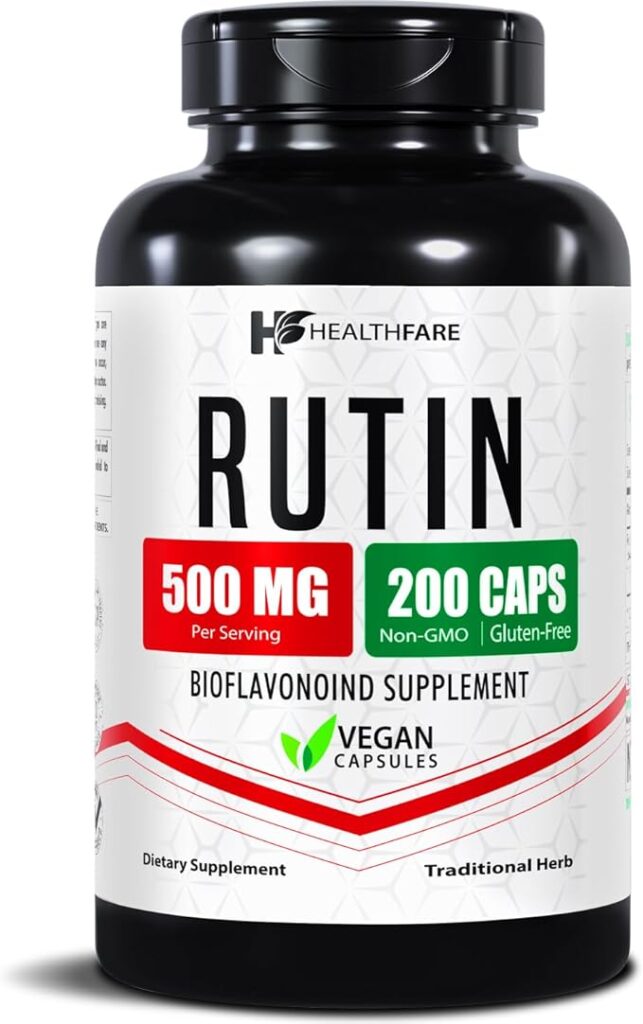
9. HealthFare Rutin 500 mg
Key Ingredients & Dosage
- Rutin extract (20:1) — 25 mg providing 500 mg raw equivalent
- Source: Sophora japonica whole flower bud
- Vegan, gluten-free, non-GMO.
- 200-capsule bottle.
This is the only supplement on your list using a 20:1 extract ratio, meaning the capsule contains 25 mg of concentrated rutin equal to 500 mg of raw material. This doesn’t inherently make it stronger — it simply means the manufacturer uses a more concentrated extract.
What Makes It Stand Out
The large 200-capsule supply stands out for value. The extract ratio adds novelty, though buyers need to understand that “equivalent” does not guarantee identical biological effects compared to 500 mg of unextracted rutin.
Still, the vegan and allergen-friendly profile broadens its appeal.
How It Supports Your Goal
Since rutin’s potential benefits rely on flavonoid content, an extract may feel appealing to readers who prefer concentrated plant derivatives. Research does not directly compare extract vs. non-extract rutin in humans, so your review will highlight that this remains an unknown.
Safety & Side Effects
Short-term tolerability appears similar to non-extract rutin, but since this uses a concentrated form, individuals should avoid taking more than the suggested dose. Standard cautions apply: check with a professional if pregnant, breastfeeding, or on medications.
How to Take It
- Suggested: 1 capsule daily.
- Because this uses an extract, doubling the dose without guidance is not recommended.
Pros & Cons
Pros
- Large bottle count
- Vegan and allergen-friendly
- Transparent extract ratio
Cons
- Extract-equivalent labeling may confuse some users
- Lack of long-term data comparing extract vs whole rutin
10. Country Life Rutin 500 mg
Key Ingredients & Dosage
- Rutin — 500 mg
- Source: Sophorae japonica Linn flower (listed on supplier sites)
- Inactive ingredients: cellulose, stearic acid, silica, vegetable glaze.
- Vegan; gluten-free.
This product delivers a traditional tablet-style rutin dose using NF-grade rutin, which indicates a specific quality standard for raw material identity and purity.
What Makes It Stand Out
Country Life is one of the longest-standing supplement brands in the US. Their NF-grade claim helps reassure readers about ingredient quality, especially those who prefer standardized material rather than extracts or unlabeled botanical sources.
How It Supports Your Goal
With a full 500 mg dose consistent with most pilot studies, this tablet aims at users looking for potential vascular and antioxidant support. Evidence remains early-stage, but the choice of dose is well aligned with existing literature.
Safety & Side Effects
Same general cautions as other 500 mg products: mild digestive effects possible, long-term data are incomplete, and individuals on medication should consult a clinician.
How to Take It
- Suggested: 1 tablet daily with food.
- Routine timing each day may help maintain consistency.
Pros & Cons
Pros
- NF-grade rutin
- Vegan-friendly
- Reputable long-standing brand
Cons
- Tablet coating may feel firm
- No added plant synergy components (which some buyers prefer)
Conclusion
Rutin may not be the flashiest supplement on shelves, but its simplicity is exactly what many readers look for. Most formulas rely on 450–500 mg, a range that mirrors what small-scale studies have explored for antioxidant and circulatory support. While no brand can claim dramatic outcomes, a consistent daily dose from a reliable manufacturer may help users maintain their wellness routine with fewer variables to worry about.
Among the products reviewed, you’ll notice two trends:
- Pure single-ingredient capsules with clean labels (Solgar, NOW, Bluebonnet, Nutricost).
- Value-driven options offering large bottle counts or flexible powder formats (BulkSupplements, HealthFare).
FAQs
1. How much rutin should someone take per day?
Most supplements provide 450–500 mg daily, which is the amount commonly explored in small human studies. Research is still limited, so users should avoid exceeding the labeled dose unless directed by a professional.
2. Is rutin safe to take long-term?
Short-term trials suggest good tolerance at 500–600 mg/day, but long-term data in humans are still lacking. People with chronic health conditions, or those taking medications, should speak with a healthcare provider before committing to extended use.
3. What is rutin made from?
Most high-quality supplements source rutin from Sophora japonica (Japanese pagoda tree) flower buds. Some brands use extracts; others use whole-flower powder. Both forms contain the flavonoid, though they haven’t been directly compared in clinical trials.
4. Can rutin help with vein or capillary comfort?
Some preliminary studies suggest rutin may help support capillary strength and general circulatory comfort, but evidence remains modest. It should not be considered a treatment for medical conditions unless a professional recommends it.
5. Is rutin safe during pregnancy or while breastfeeding?
There is insufficient human data to confirm safety during pregnancy or breastfeeding. Because of these gaps, routine use in these groups is generally discouraged unless a clinician explicitly approves it.
6. Should rutin be taken with food or on an empty stomach?
Most brands recommend taking rutin with food, which may improve tolerance and support better absorption. People with sensitive stomachs tend to do better with a meal rather than taking it on an empty stomach.