
We only recommend products we love and that we think you will, too. We may receive a portion of sales from products purchased from this article.

Medically reviewed by Dr. A.S.M. Masum Billah, MBBS
If you’re looking for the best phosphatidylserine supplements, you’re likely trying to support memory, focus, or cognitive performance in a practical way. Maybe you’ve noticed occasional brain fog. Maybe your concentration slips during long workdays. Or perhaps you’re simply proactive about brain health and aging.
But why should you choose a phosphatidylserine supplement?
Phosphatidylserine is a phospholipid that plays a structural role in brain cell membranes. Research suggests it may help support memory and cognitive function, particularly in older adults with mild memory concerns. Many human studies have used around 100–300 mg per day, often split into smaller doses throughout the day.
This in-depth roundup of 10 best phosphatidylserine supplements can help you take informed decision while buying.
Best Alpha GPC Supplements for Memory Boost
How to Choose the Best Phosphatidylserine Supplement
1. Look at the Daily Dose
Most human research examining phosphatidylserine and cognitive function has used about 100–300 mg per day, often split into smaller doses. That range has appeared in several studies involving older adults with mild memory concerns.
That means:
- 100 mg per capsule products allow flexible dosing
- 300 mg per day formulas match many research protocols
- Extremely high doses are not necessarily better
For most adults, 200–300 mg daily is a reasonable starting range.
2. Check the Ingredient Source
Phosphatidylserine is usually derived from either:
- Soy lecithin
- Sunflower lecithin
Both sources can work, but many buyers prefer sunflower-derived phosphatidylserine because it avoids soy allergens.
If you have a soy allergy or simply prefer avoiding soy, look for labels that clearly state “sunflower-derived phosphatidylserine.”
3. Understand Standardization
Some labels list something like:
“Phosphatidylserine complex standardized to 20%.”
This simply means the ingredient comes from a phospholipid mixture extracted from lecithin, and only a portion of that mixture is pure phosphatidylserine.
That is common in this category. The important thing is that the actual phosphatidylserine amount per serving is clearly stated.
4. Capsule Count Matters
Serving size can make a supplement much easier—or harder—to use consistently.
For example:
| Capsule Strategy | User Experience |
|---|---|
| 1–2 capsules daily | Very convenient |
| 3 capsules daily | Moderate |
| 4+ capsules daily | Less convenient |
Many readers eventually stop taking supplements that require too many capsules each day, so convenience matters.
5. Look for Manufacturing Quality
Reliable supplement brands typically mention:
- GMP-certified manufacturing
- Third-party testing
- Non-GMO ingredients
These indicators do not guarantee perfect quality, but they are useful signs that the company follows basic manufacturing standards.
Who May Benefit From Phosphatidylserine?
Phosphatidylserine supplements are usually taken by people who want to support cognitive performance or memory function.
The groups most often interested include:
Adults Noticing Mild Memory Changes
As people age, the composition of brain cell membranes can shift. Because phosphatidylserine is part of those membranes, researchers have explored whether supplementation might help support memory performance in some older adults.
Professionals With High Cognitive Workload
People working long hours—programmers, doctors, analysts, writers—sometimes use phosphatidylserine as part of a broader focus-support routine.
Students and Learners
Some students experiment with phosphatidylserine during demanding study periods because of its potential role in attention and cognitive processing.
Fitness Enthusiasts
Interestingly, some research has explored phosphatidylserine for exercise-related stress responses, though the evidence is limited and still developing.
Recommended Phosphatidylserine Dosage
Based on available research and clinical practice, the following ranges are commonly used.
| Goal | Typical Daily Intake |
|---|---|
| General cognitive support | 100–200 mg |
| Memory support | 200–300 mg |
| Higher-end supplementation | up to 400 mg |
Many studies used 100 mg three times daily, which equals 300 mg per day.
Taking phosphatidylserine with meals often improves tolerance.
Possible Side Effects and Safety
Phosphatidylserine is generally considered well tolerated, but like any supplement, it may cause side effects in some individuals.
Possible side effects include:
- stomach discomfort
- gas or bloating
- headache
- insomnia (rare)
These effects are more likely with higher doses.
People who should consult a healthcare professional before using phosphatidylserine include:
- pregnant or breastfeeding individuals
- people taking prescription medications
- individuals with chronic medical conditions
Medical consultation is always the safest approach when adding new supplements to a routine.
Quick Decision Guide
- Best Overall: Doctor’s Best Phosphatidylserine
- Best Simple Formula: Double Wood Phosphatidylserine
- Best Purity-Focused: Toniiq Phosphatidylserine
- Best Budget Choice: Nutricost Phosphatidylserine
- Best Soy-Free Clinical Formula: Vital Nutrients Phosphatidylserine
Best Phosphatidylserine Supplements
1. Nutricost Phosphatidylserine
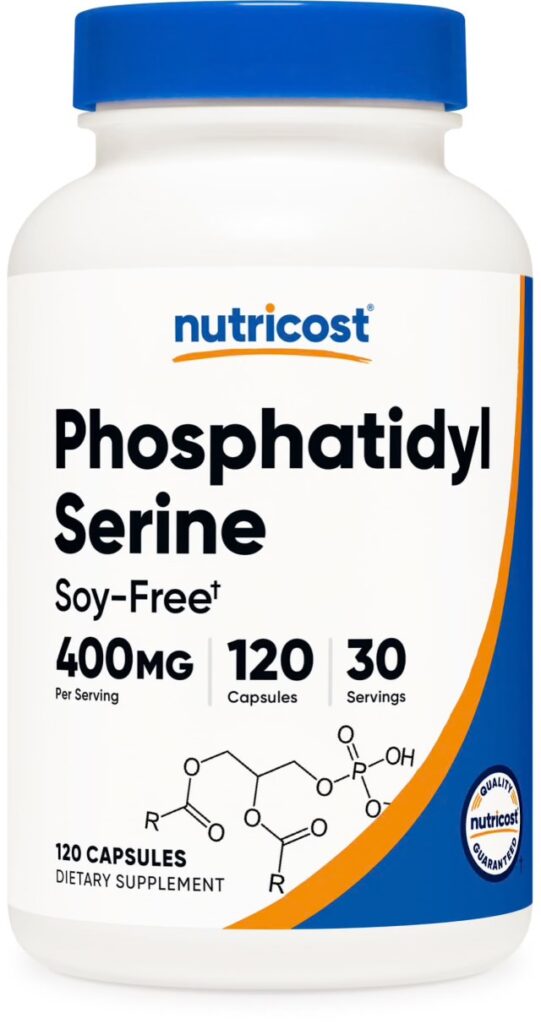
Nutricost tends to attract buyers who want a solid phosphatidylserine dose without paying premium-brand prices. It keeps the formula simple: phosphatidylserine, vegetarian capsules, and a straightforward label.
For readers who prioritize value and dose strength, this is often an appealing option.
Key Ingredients & Dosage
| Ingredient | Amount per serving | Notes |
|---|---|---|
| Phosphatidylserine | 400 mg | Slightly higher than common 300 mg research range |
| Capsule type | Vegetarian | Plant-based |
The supplement delivers 400 mg per serving, which is somewhat above the typical 300 mg/day used in memory-support studies. That doesn’t necessarily make it superior—it simply means the formula leans toward the higher-dose side.
What Makes It Stand Out
Several features make Nutricost appealing:
- Soy-free formula
- Manufactured in a GMP-compliant facility
- Good price-to-dose value
- Straightforward ingredient profile
It’s the kind of supplement that focuses on the core ingredient rather than adding a long list of extras.
How to Take It
The serving size is four capsules daily.
Many users find it easier to divide the dose:
- 2 capsules with breakfast
- 2 capsules with dinner
Taking phosphatidylserine with meals may improve tolerance and reduce stomach irritation.
Pros & Cons
Pros
- Strong daily dose
- Soy-free formulation
- Budget-friendly
- Simple ingredient profile
Cons
- Four capsules per serving
- Dose slightly above typical research range
Customer Review Insights
Buyers often mention good value for the price and noticeable support for focus or productivity. The main drawback mentioned by some users is the larger serving size.
2. Toniiq Phosphatidylserine 50%
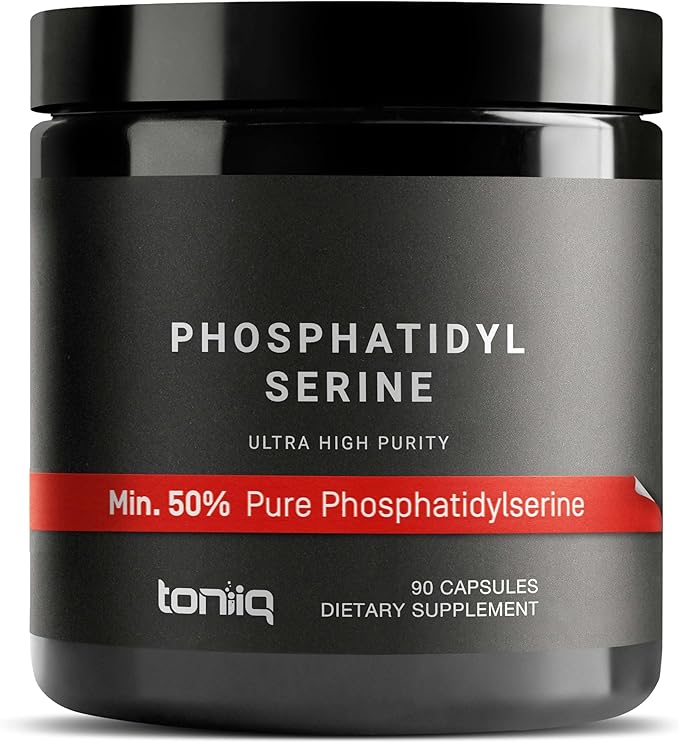
Toniiq approaches supplements with a heavy emphasis on ingredient purity and standardization. Instead of presenting phosphatidylserine as a generic phospholipid blend, the company highlights 50%+ standardized phosphatidylserine content.
That focus on ingredient quality makes it attractive for readers who carefully evaluate supplement labels.
Key Ingredients & Dosage
| Ingredient | Amount | Notes |
|---|---|---|
| Phosphatidylserine | 400 mg | Standardized to 50%+ concentration |
| Capsule form | Vegan | Plant-based |
The daily serving again delivers 400 mg phosphatidylserine, which is slightly higher than the most common research dosing range.
What Makes It Stand Out
Toniiq distinguishes itself in a few ways:
- High ingredient standardization
- Third-party testing claims
- Focus on purity and concentration
Many supplement labels list the weight of a phospholipid blend rather than the active phosphatidylserine content. Toniiq tries to make the active ingredient concentration clearer, which is helpful for experienced supplement users.
How to Take It
The label recommends two capsules daily.
Most users take them:
- with breakfast, or
- divided between meals
Taking phosphatidylserine with food can reduce stomach discomfort.
Pros & Cons
Pros
- Concentrated standardized formula
- Vegan capsules
- Soy-free sourcing
- Strong purity positioning
Cons
- Higher dose than most clinical research levels
- Slightly higher price than basic formulas
Customer Review Insights
Customers drawn to Toniiq typically care about ingredient quality and testing standards. Many reviews highlight confidence in the brand’s purity claims rather than simply focusing on dose size.
3. Designs for Health PS 150 Phosphatidylserine
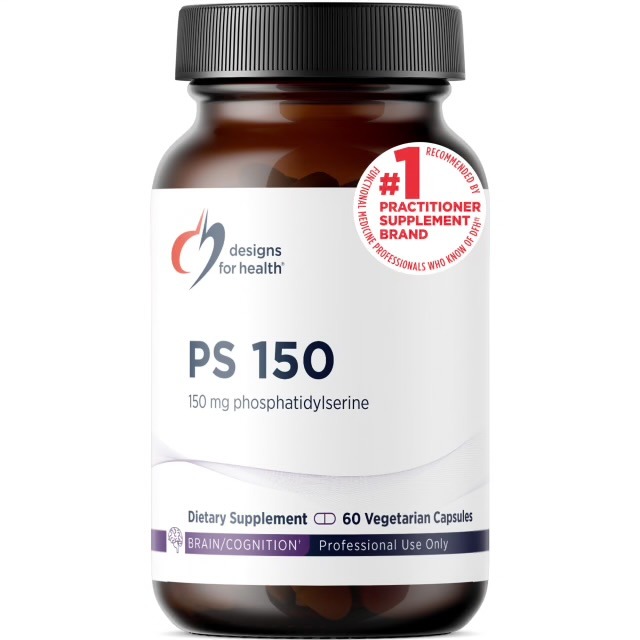
Designs for Health products often appear in clinical and practitioner settings, and this formula reflects that philosophy.
Instead of pushing an aggressive dose, it provides 150 mg per capsule, which gives users flexibility in adjusting their intake.
Key Ingredients & Dosage
| Ingredient | Amount | Notes |
|---|---|---|
| Phosphatidylserine | 150 mg per capsule | Sunflower-derived |
| Capsule form | Vegetarian | Soy-free |
Two capsules provide 300 mg daily, closely matching the dose used in many cognitive-support studies.
What Makes It Stand Out
The biggest advantage is dose flexibility.
You can take:
- 150 mg daily as a conservative starting point
- 300 mg daily to match research-level dosing
It also uses sunflower-derived phosphatidylserine, making it suitable for people avoiding soy.
How to Take It
Many users start with:
- 1 capsule daily
Then increase to:
- 2 capsules daily
Taking it with meals often improves comfort and absorption.
Pros & Cons
Pros
- Flexible dosing
- Sunflower-derived phosphatidylserine
- Practitioner-grade brand reputation
- Easy-to-adjust dosage
Cons
- Higher price compared with mass-market brands
- Smaller bottle size
4. Biotics Research Phosphatidylserine Supports Cognitive Health

Biotics Research takes a clinical-style approach to supplementation, and this phosphatidylserine product reflects that philosophy. The formula is straightforward, uses a moderate per-capsule dose, and avoids unnecessary extras.
This kind of product usually appeals to readers who prefer practitioner-style supplements rather than aggressive high-dose retail formulas.
Key Ingredients & Dosage
| Ingredient | Amount | Source | Notes |
|---|---|---|---|
| Phosphatidylserine | 100 mg per softgel | Soy lecithin | Standardized phospholipid complex |
From the label you shared:
- Serving size: 1 softgel
- Phosphatidylserine: 100 mg
- Derived from soy lecithin phospholipid complex
The label also notes that the phospholipid complex typically provides:
- 25 mg phosphatidylcholine
- 2.5 mg phosphatidylethanolamine
This means the ingredient is not isolated phosphatidylserine alone but part of a natural phospholipid matrix, which some clinicians prefer.
What Makes It Stand Out
A few things differentiate this supplement:
- Uses a balanced phospholipid complex
- Softgel format, which many users find easier to swallow
- Produced by a long-standing professional supplement brand
- Free from gluten and dairy
The formula is intentionally simple. It avoids trendy cognitive ingredients and focuses on phosphatidylserine as the core nutrient.
How to Take It
Because each capsule provides 100 mg, users often take:
- 1–3 softgels daily, depending on their target intake
Many phosphatidylserine studies use about 300 mg per day, which would equal three capsules daily with this product.
Taking it with meals can improve tolerance.
Pros & Cons
Pros
- Professional supplement brand
- Moderate dose allows flexible intake
- Softgel format is easy to swallow
- Gluten- and dairy-free
Cons
- Derived from soy lecithin
- Requires multiple capsules to reach research-level intake
Customer Review Insights
Buyers who choose Biotics Research usually prioritize brand trust and product consistency. Feedback often mentions gentle digestion and steady cognitive support, especially among users who prefer practitioner-grade supplements.
5. NatureBell Phosphatidylserine
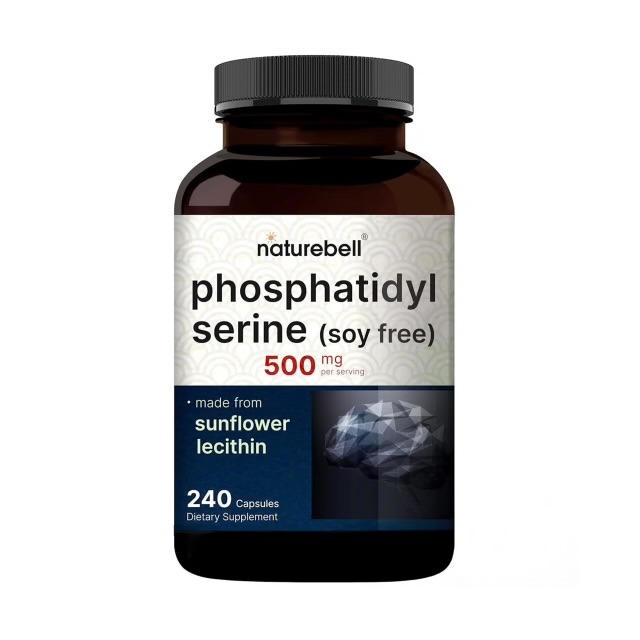
NatureBell’s phosphatidylserine formula is built around large supply size and soy-free sourcing. For many supplement users, those two things matter more than flashy marketing.
The product uses sunflower lecithin, making it suitable for buyers who avoid soy-based phospholipids.
Key Ingredients & Dosage
| Ingredient | Amount | Source | Notes |
|---|---|---|---|
| Phosphatidylserine | 500 mg per serving | Sunflower lecithin | Standardized to 20% |
From the label you shared:
- Serving size: 3 capsules
- Phosphatidylserine: 500 mg
- Standardized to 20%
The “20% standardization” simply means the ingredient originates from a phospholipid complex extracted from sunflower lecithin.
Other ingredients include:
- Silicon dioxide
- Magnesium stearate
- Rice flour
- Gelatin capsule
The product is also labeled gluten-free, dairy-free, egg-free, and fish-free.
What Makes It Stand Out
NatureBell emphasizes clean sourcing and allergen avoidance.
Key highlights include:
- Sunflower-derived phosphatidylserine
- Free from many common allergens
- Large 240-capsule bottle
- Strong supply length (around 80 servings)
For people planning long-term cognitive support, that larger bottle can be convenient.
How to Take It
The label indicates three capsules daily.
Many users take them:
- with breakfast and lunch
- or spread across meals
Because phosphatidylserine is a phospholipid, taking it with food containing fat may improve absorption.
Pros & Cons
Pros
- Sunflower-derived phosphatidylserine
- Soy-free formula
- Large bottle size
- Free from several common allergens
Cons
- Three-capsule serving size
- Standardization wording may confuse some buyers
Customer Review Insights
NatureBell customers often mention good value and clean ingredient sourcing. Many reviews highlight the soy-free sunflower source, which is a key reason buyers choose this product.
6. Double Wood Phosphatidylserine
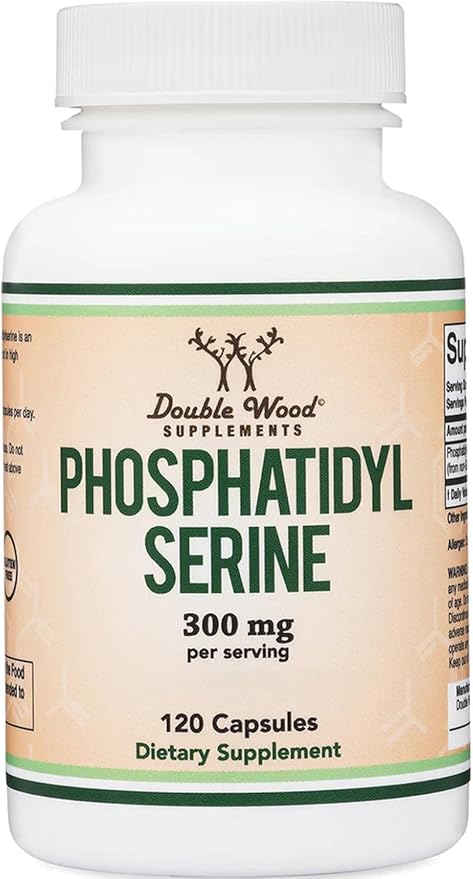
Double Wood has become popular among supplement enthusiasts because the company focuses on single-ingredient formulas with transparent dosing. There are no unnecessary blends or complicated marketing angles here. You get phosphatidylserine, a sensible dose, and straightforward labeling.
For readers who want a research-aligned phosphatidylserine supplement, this one deserves attention.
Key Ingredients & Dosage
| Ingredient | Amount | Source | Notes |
|---|---|---|---|
| Phosphatidylserine | 300 mg per daily serving | Soy lecithin | Matches commonly studied dosage |
This product delivers 300 mg per day, which closely mirrors the intake used in several human studies examining cognitive support and memory performance.
From a reviewer’s perspective, this dosing strategy is one of the most logical in the entire list.
What Makes It Stand Out
Double Wood’s formula works well because it focuses on the basics:
- Research-aligned dose (300 mg/day)
- Transparent supplement labeling
- Third-party testing claims
- Minimal ingredient list
Instead of inflating the formula with trendy “brain ingredients,” the product concentrates on a clinically familiar intake of phosphatidylserine.
How to Take It
Typical instructions recommend two capsules daily, ideally with food.
Some users take them:
- once daily with breakfast
- or split between breakfast and dinner
Either method generally works well.
Pros & Cons
Pros
- Evidence-aligned dose
- Simple ingredient profile
- Transparent supplement company
- Easy two-capsule serving
Cons
- Derived from soy lecithin
- No additional cognitive support ingredients
Customer Review Insights
Customers often highlight consistency and reliability as reasons for choosing Double Wood supplements. Many buyers appreciate the brand’s focus on clear dosing and straightforward formulations.
7. Deal Supplement Phosphatidylserine
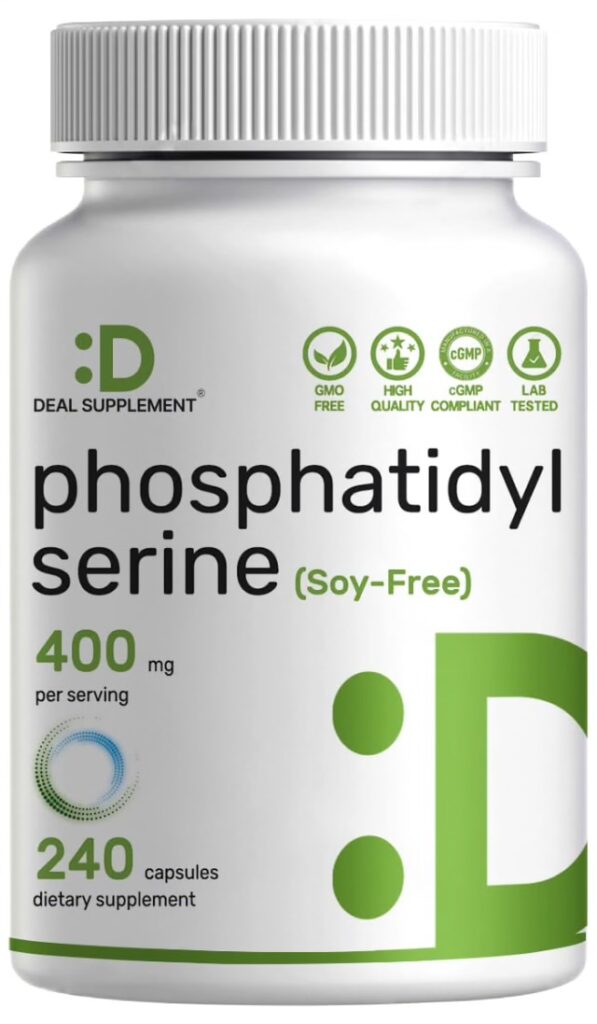
Deal Supplement is designed for buyers who want strong dosing and long-term value. The formula uses sunflower-derived phosphatidylserine and comes in a larger bottle, which makes it attractive for people planning to take the supplement consistently.
Key Ingredients & Dosage
| Ingredient | Amount | Source | Notes |
|---|---|---|---|
| Phosphatidylserine | 400 mg per serving | Sunflower lecithin | Higher than common research range |
The daily intake of 400 mg phosphatidylserine is slightly above the typical 100–300 mg daily range used in many studies.
This doesn’t necessarily mean better results. It simply places the product in the higher-dose category.
What Makes It Stand Out
This supplement is attractive for a few practical reasons:
- Sunflower-derived phosphatidylserine
- Large 240-capsule bottle
- Third-party testing claims
- Good value per serving
For users who dislike reordering supplements frequently, the bottle size is convenient.
How to Take It
The label typically recommends two capsules daily.
Taking the capsules with meals is generally the easiest way to incorporate them into a daily routine.
Pros & Cons
Pros
- Soy-free phosphatidylserine source
- Strong daily dose
- Long supply bottle
- Competitive price per serving
Cons
- Higher dose than most clinical studies
- Capsule size may feel large for some users
Customer Review Insights
Most buyers appreciate the value and bottle size. Reviews frequently mention that the supplement fits well into long-term cognitive support routines.
8. Vital Nutrients Phosphatidylserine
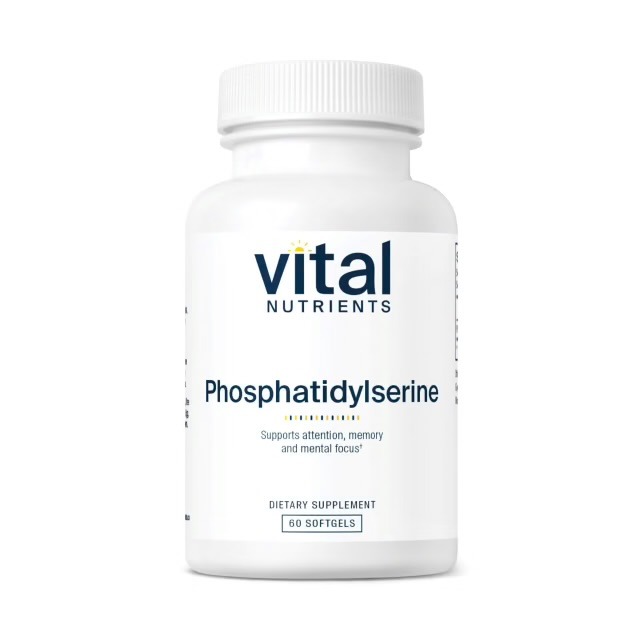
Vital Nutrients products are often recommended in functional medicine and clinical nutrition settings. This phosphatidylserine supplement uses Sharp-PS® GREEN, a branded phosphatidylserine ingredient derived from sunflower lecithin.
For readers who value ingredient sourcing and practitioner-grade products, this one stands out.
Key Ingredients & Dosage
| Ingredient | Amount | Source | Notes |
|---|---|---|---|
| Phosphatidylserine | 300 mg per serving | Sharp-PS® GREEN | Sunflower-derived |
Sharp-PS® GREEN is a well-known phosphatidylserine ingredient that originates from sunflower lecithin rather than soy, which makes it suitable for soy-sensitive users.
What Makes It Stand Out
This formula distinguishes itself through:
- Branded phosphatidylserine ingredient
- Sunflower-derived sourcing
- Practitioner-focused supplement brand
- Clean formulation approach
The brand’s products are often selected by clinicians who prefer ingredient transparency and consistent sourcing.
How to Take It
The label generally suggests two softgels daily, taken with meals.
Because phosphatidylserine is a phospholipid, consuming it alongside food—especially meals containing some fat—may help improve absorption.
Pros & Cons
Pros
- Sunflower-derived phosphatidylserine
- Branded ingredient source
- Practitioner-grade supplement brand
- Clean formulation
Cons
- Higher price compared with mass-market supplements
- Softgel capsules may not suit vegetarian users
Customer Review Insights
Users who buy Vital Nutrients often report confidence in the brand’s ingredient sourcing and manufacturing quality. Many customers prefer it for its clinical reputation.
9. Doctor’s Best Phosphatidylserine with SerinAid®
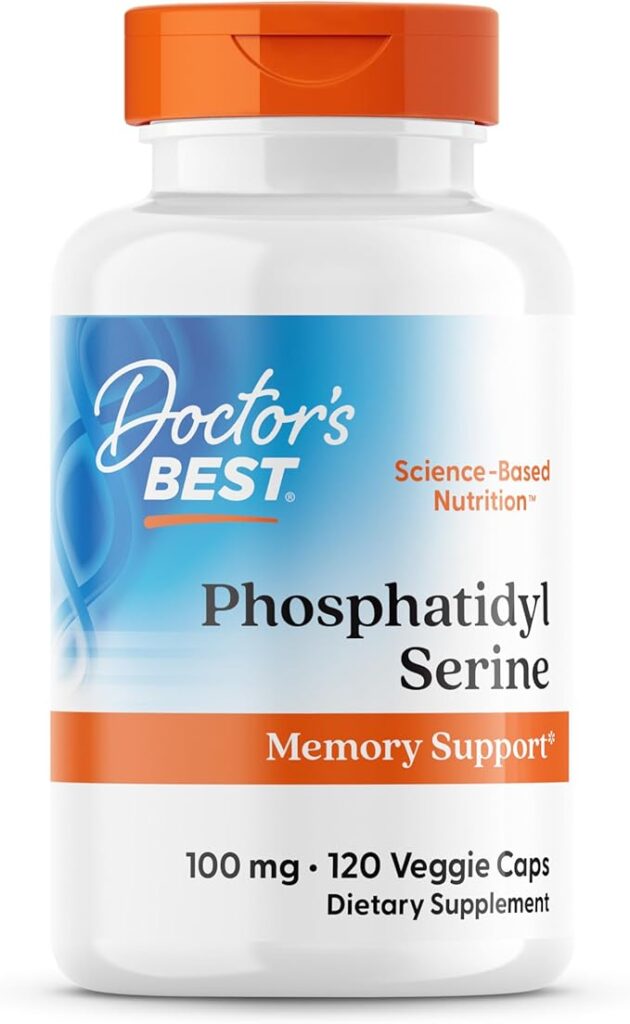
Doctor’s Best offers one of the most research-friendly phosphatidylserine formulas available. Instead of pushing a high single dose, the product uses 100 mg capsules, which allows users to replicate the dosing pattern used in several cognitive studies.
Key Ingredients & Dosage
| Ingredient | Amount | Source | Notes |
|---|---|---|---|
| Phosphatidylserine | 100 mg per capsule | SerinAid® | Branded ingredient |
Three capsules per day provide 300 mg phosphatidylserine, which aligns closely with research protocols.
What Makes It Stand Out
This formula stands out because it mirrors scientific dosing patterns.
Key advantages include:
- SerinAid® branded phosphatidylserine
- Flexible dosing
- Clean ingredient list
- Strong value per capsule
For readers who want a supplement that aligns with clinical research design, this product makes a lot of sense.
How to Take It
Typical instructions suggest one capsule three times daily with meals.
Some users also take three capsules together with food, though dividing the dose may improve tolerance.
Pros & Cons
Pros
- Research-aligned dosing
- Branded phosphatidylserine ingredient
- Good value per bottle
- Flexible intake schedule
Cons
- Requires multiple capsules daily
- Soy-derived phosphatidylserine
Customer Review Insights
Doctor’s Best users frequently mention steady cognitive support and reliable product quality. Many buyers appreciate the ability to adjust their daily intake.
10. Klaire Labs / SFI Health Phosphatidyl Serine SF
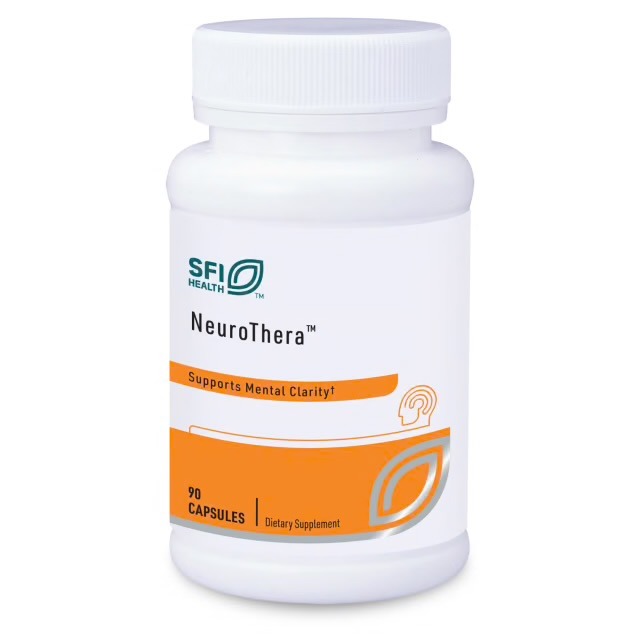
Klaire Labs (now part of SFI Health) produces supplements specifically designed for people with sensitivities or allergies. Their phosphatidylserine product reflects that focus by avoiding many common allergens.
For readers who want a clean-label cognitive support supplement, this product is particularly appealing.
Key Ingredients & Dosage
| Ingredient | Amount | Source | Notes |
|---|---|---|---|
| Phosphatidylserine | 100 mg per capsule | Sunflower lecithin | Soy-free |
The formula is derived from sunflower lecithin, making it suitable for people avoiding soy-based phospholipids.
What Makes It Stand Out
This supplement focuses on purity and allergen avoidance.
Key highlights include:
- Sunflower-derived phosphatidylserine
- Hypoallergenic formula
- Free from gluten, soy, dairy, eggs, and nuts
- Practitioner-trusted supplement brand
For individuals with sensitive digestion or multiple food allergies, this can be a very appealing option.
How to Take It
Most label instructions recommend one to two capsules daily, usually taken with food.
Because the per-capsule dose is moderate, some users choose to increase intake gradually.
Pros & Cons
Pros
- Soy-free phosphatidylserine source
- Hypoallergenic formulation
- Clean ingredient profile
- Trusted practitioner brand
Cons
- Lower dose per capsule
- Higher price compared with standard retail supplements
Customer Review Insights
Customers often mention ingredient purity and digestibility as the main reasons they choose Klaire Labs products. Buyers with dietary sensitivities especially appreciate the brand’s allergen-free approach.
Final Note
Choosing the best phosphatidylserine supplement isn’t about picking the highest number on the label—it’s about picking what actually fits your goal, lifestyle, and tolerance.
If you want something closest to research-backed dosing, go with a 300 mg daily formula. If you prefer cleaner sourcing, lean toward sunflower-derived options. And if consistency matters (it always does), choose a supplement you’ll actually take every day—not one that looks good but sits untouched.
Also keep your expectations realistic. Phosphatidylserine is not a miracle pill. It may support memory, focus, and cognitive function over time, especially when combined with proper sleep, nutrition, and stress management.
Think of it this way:
Your supplement should support your brain—not replace healthy habits.
Pick smart. Stay consistent. Let the results build gradually.