

Medically reviewed by Dr. A.S.M. Masum Billah, MBBS
We only recommend products we love and that we think you will, too. We may receive a portion of sales from products purchased from this article.

Magnesium might not win popularity contests, but your muscles, nerves, and sleep schedule would probably vote it MVP. Especially when it’s in the gluconate form — easier on the stomach, with good bioavailability, and well-suited for daily use. If you’ve ever felt twitchy muscles, brain fog, or sleep that felt like a nap at best, you might just need more of this vital mineral.
And here’s the kicker: most Americans aren’t getting enough magnesium. That’s according to the NIH, which notes nearly half of us fall short of the recommended intake[^1]. Magnesium gluconate is a solid fix, especially for people dealing with sensitive guts or prescription-induced deficiencies.
Now, after dissecting dozens of listings, comparing formulations, and reading what real users had to say, I’ve narrowed it down to 7 best magnesium gluconate supplements worth your time — and your wallet.
Let’s get to it.
Best Magnesium Glycinate Supplements
Best Magnesium L-Threonate Supplements
Why Take Calcium Gluconate?
1. To Correct Low Blood Calcium Levels (Hypocalcemia)
Calcium gluconate is most often prescribed when someone has clinically low calcium levels, especially in:
- Post-surgical patients (e.g., thyroidectomy)
- People with vitamin D deficiency
- Those on long-term corticosteroids
- Individuals with parathyroid disorders
Unlike calcium carbonate (which is common in OTC supplements), calcium gluconate is less irritating to the GI tractand can be used intravenously in hospitals for urgent calcium replacement.
2. As an Antidote for Certain Toxicities
Calcium gluconate is used medically to counteract toxicity from:
- Hydrofluoric acid exposure (very rare but severe industrial injuries)
- Magnesium sulfate overdose (especially during eclampsia treatment in pregnancy)
It works by binding to excess ions and stabilizing the cardiac membrane.
3. For Heart Rhythm Stabilization in Emergencies
In hospital settings, calcium gluconate is sometimes used in emergencies like:
- Hyperkalemia (high potassium)
- Certain cardiac arrhythmias
It helps stabilize the heart’s electrical signals.
⚠️ Who Should NOT Take It Casually?
Calcium gluconate is not typically used as a general calcium supplement for healthy individuals. If you’re just trying to hit your RDA of calcium for bone health, calcium citrate or carbonate is more common and appropriate.
Who Should Take Magnesium Gluconate?
Magnesium gluconate is not some trendy wellness sprinkle. It’s often recommended for individuals who actually need steady, gentle replenishment, not just a quick performance boost.
Here’s who benefits the most:
- Adults over 40, especially women in perimenopause or postmenopause dealing with sleep disturbance, joint pain, or mood swings
- People on PPIs or diuretics (think omeprazole, furosemide) — these meds leech magnesium like a thief in the night
- Athletes and gym-goers, where electrolyte balance is vital
- Those with GI conditions like IBS, Crohn’s, or post-bariatric surgery recovery
- Vegans or individuals with restricted diets who may unknowingly miss out on magnesium-rich foods
If that sounds like you, magnesium gluconate is probably your gentlest on-ramp to fixing the deficit without irritating your stomach.
Magnesium Gluconate Buyer’s Checklist
Before you click Add to Cart, here’s what to look for:
| Factor | Why It Matters |
|---|---|
| Elemental Magnesium Info | Not all 500 mg = 500 mg usable magnesium. Look for transparency. |
| Formulation Purity | Avoid additives, artificial dyes, and allergens if sensitive. |
| Tablet Coating | Makes swallowing easier — especially for seniors. |
| Brand Reputation | Pharmacy-grade or long-standing brands mean safer dosing. |
| Vegan/Allergen-Free | Essential for those with dietary restrictions. |
| Value per Tablet | Check cost-per-pill, not just bottle size. |
| User Reviews | Look for real feedback on sleep, cramping, or gut tolerance. |
Use this checklist like a pro. Because buying supplements shouldn’t feel like playing roulette with your kidneys.
Top 6 Best Magnesium Gluconate Supplements
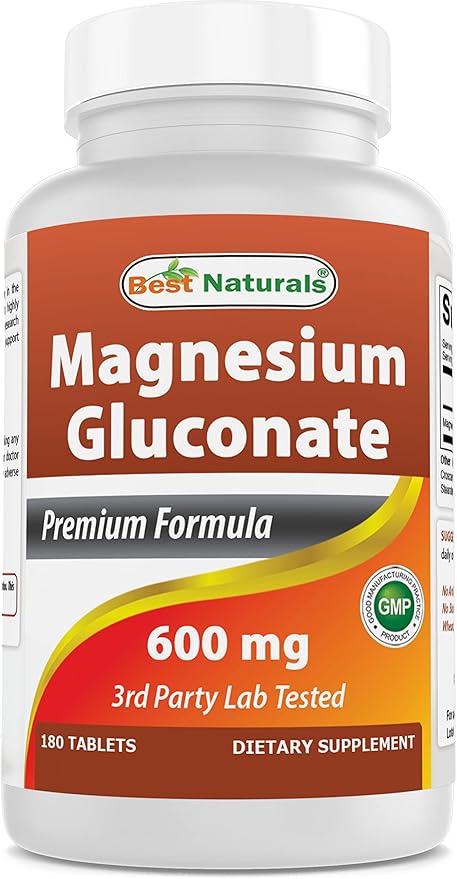
1. Best Naturals Magnesium Gluconate 500mg – 100 Tablets
Key Features
- Delivers 500 mg of magnesium gluconate per tablet (which equals ~27 mg elemental magnesium)
- Third-party lab tested for purity
- Non-GMO, gluten-free, made in the USA
What Makes It Stand Out
This one punches above its price. Best Naturals doesn’t fuss with shiny packaging, but the real strength lies in its no-nonsense formulation and independent testing. Each tablet gives you a consistent, gentle dose — enough to complement dietary gaps without sending you running to the bathroom. That’s a win in the magnesium world.
Compared to higher-dose alternatives that cram in 400+ mg elemental magnesium (often as oxide), this gluconate form is kinder to your gut and less likely to cause side effects.
Also, worth noting: this brand actually discloses their elemental magnesium content, which a surprising number don’t.
How It Helps Your Goal
Whether you’re dealing with muscle cramps, premenstrual irritability, or stubborn sleep issues, this supplement offers support without the gastric distress that comes with other forms like magnesium citrate or oxide. It’s especially handy for middle-aged and older adults, whose absorption efficiency drops with age.
How to Use
Take 1 tablet daily, preferably with meals. If you’re taking multiple supplements, try spacing them out to avoid mineral absorption clashes, particularly with calcium and iron.
Pros & Cons
Pros:
- Simple, clean formula
- Excellent for daily magnesium maintenance
- Great price-to-value ratio
Cons:
- Lower elemental magnesium per tablet (common with gluconate form)
- Tablets are on the larger side
2. Windmill Magnesium Gluconate 500mg – 90 Tablets

Key Features
- 500 mg of magnesium gluconate per serving
- Manufactured by Windmill, a company with 50+ years in the supplement space
- Tablet form, easy to split if you want a smaller dose
What Makes It Stand Out
This is a pharmacy-grade product with strong U.S. manufacturing oversight. Windmill is not one of those fly-by-night brands — you’ll often see it stocked at local drugstores. That’s a good sign. It means compliance, traceability, and tested formulations.
What gives this supplement extra points is how well it tolerates long-term use. Multiple users with GI issues reported no bloating, cramping, or laxative effects — something oxide and citrate forms often trigger.
How It Helps Your Goal
It’s a go-to choice if you’re managing chronic low magnesium, especially for people with kidney-friendly diets or on medications like PPIs (which deplete magnesium). It’s also a good buffer for stress-induced tension and late-night leg cramps.
How to Use
Take one tablet once or twice daily based on your needs. If you’re getting cramps at night, take it with dinner. Those who sweat a lot or are physically active might benefit from a twice-a-day regimen.
Pros & Cons
Pros:
- Backed by a well-known brand
- Safe for long-term use
- Non-irritating formula
Cons:
- Slightly fewer tablets per bottle (90 vs. 100)
- Doesn’t specify elemental magnesium content
3. CYPRESS PHARMA Mag-G Tablets Magnesium Gluconate – 100 Tablets

Key Features
- Delivers 500 mg of magnesium gluconate per tablet
- A product of Cypress Pharmaceutical, known for pharma-grade formulations
- Tablet format, suitable for split-dosing
What Makes It Stand Out
If your doctor ever scribbled “Mag-G” on a prescription pad, this is probably what they meant. This supplement is often recommended in clinical settings and long-term care facilities, especially for patients recovering from illness or dealing with nutrient-depleting medications.
The company’s pharmaceutical background shows — there’s a clear focus on safety, consistency, and quality control. This isn’t a flashy product, but it does what it says and doesn’t play games with fillers or unpronounceable additives.
How It Helps Your Goal
It’s particularly suitable for seniors, people on heart meds like diuretics, or anyone managing chronic magnesium loss due to digestive disorders. If you’re looking to restore levels slowly and steadily, Mag-G makes a solid case.
How to Use
Take 1 tablet daily, with or after food. Those who experience muscle twitching or insomnia can try dividing the dose, one in the morning and one at night.
Pros & Cons
Pros:
- Doctor-trusted and clinically used
- Minimal ingredients
- Reliable for people with medical conditions
Cons:
- Plain packaging, zero branding effort
- May not appeal to supplement-savvy younger users
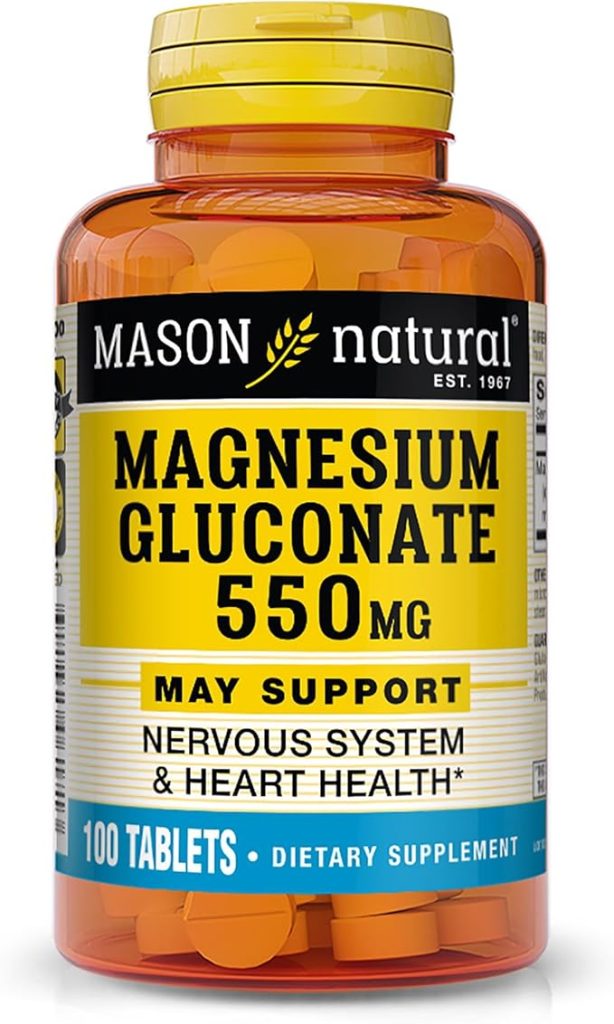
4. Mason Natural Magnesium Gluconate 550mg – 100 Tablets
Key Features
- Provides 550 mg magnesium gluconate per tablet (~29 mg elemental magnesium)
- Supports nerve health, heart rhythm, and muscle relaxation
- Lab-tested, with 100-day supply per bottle
What Makes It Stand Out
This one’s for those who like quiet reliability. Mason Natural doesn’t try to reinvent magnesium — and that’s precisely why it works. The company’s been around since 1967, and this product reflects that old-school, pharmacy-trusted philosophy.
What’s different? The slightly higher gluconate dose compared to others. Plus, the formula has a better tablet coating, making it easier to swallow than many cheaper alternatives.
Customers with restless legs and erratic sleep patterns consistently vouch for its effectiveness — without the “magnesium runs” you’d get from citrate or oxide. It’s also gentle enough for daily use among folks 60+ with sensitive digestion.
How It Helps Your Goal
This is one of the better choices if you’re targeting cardiovascular wellness or stress regulation, particularly if you’ve been told you’re borderline deficient. With age, magnesium intake needs to rise, and this supplement fills that niche without making you feel like you’re taking “another pill.”
How to Use
Take 1 tablet daily, preferably with a meal. If you’re combining it with other mineral supplements, schedule it apart from iron or calcium for better absorption.
Pros & Cons
Pros:
- Long-standing brand with good track record
- Coated tablets are easier to handle
- Helps calm nerves and promote heart health
Cons:
- Not vegan (gelatin-based coating)
- Doesn’t break down exact elemental magnesium on label
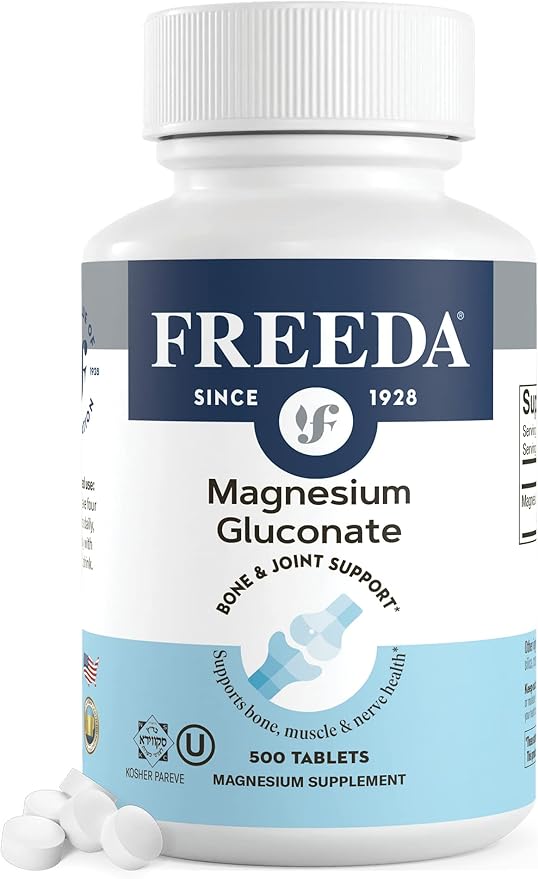
5. Freeda Magnesium Gluconate – 500 Tablets
Key Features
- Each tablet contains 500 mg of magnesium gluconate
- Vegan-friendly, hypoallergenic, kosher-certified
- Manufactured in a cGMP-certified U.S. facility
What Makes It Stand Out
Let’s be real — 500 tablets per bottle is outrageous. This is the Costco warehouse of magnesium, and we’re not mad about it. Freeda’s formula doesn’t just focus on quantity, though. It shines because of its purity and minimalism.
It’s one of the few magnesium gluconate options that’s certified vegan, free from dairy, gluten, corn, soy, artificial colors — basically everything your allergist warned you about.
The brand has built a loyal following among people with autoimmune conditions, chronic fatigue, fibromyalgia, and other sensitivities. If you’re tired of wading through products full of random “natural flavors,” this one gives you a clean break.
How It Helps Your Goal
Whether you’re battling migraines, chronic tension, or fatigue, low magnesium can make everything worse. Freeda gives you a consistent, non-reactive source to help restore levels over time — especially if your system doesn’t play nice with most supplements.
It’s also great for vegan adults, a group statistically more likely to fall short on magnesium1.
How to Use
Start with 1 tablet daily, with meals. You can work up to 2 per day based on your lab values or symptoms. Because the bottle is so large, it’s also great for family use.
Pros & Cons
Pros:
- One of the cleanest formulations available
- Long-lasting bottle (500 count!)
- Hypoallergenic, vegan, and kosher
Cons:
- Slightly more expensive upfront
- Tablets are dry-pressed, so some may find them chalky
6. Evlution Nutrition Magnesium Gluconate – 60 Capsules

Key Features
- Magnesium gluconate formulation designed to support muscle, nerve, and heart health
- 60 capsules per bottle, providing a 2-month supply
- Vegan, non-GMO, and gluten-free
What Makes It Stand Out
Evlution Nutrition’s magnesium gluconate supplement is tailored for active individuals seeking to support muscle recovery and overall wellness. The capsule form ensures easy swallowing, and the product’s vegan and non-GMOcertifications align with various dietary preferences.
How It Helps Your Goal
This supplement supports muscle function, nerve transmission, and cardiovascular health, making it suitable for those with active lifestyles or individuals experiencing muscle cramps or fatigue.
How to Use
Take one capsule daily, preferably with food. Consistent daily intake is recommended to maintain optimal magnesium levels.
Pros & Cons
Pros:
- Capsule form for easy ingestion
- Vegan, non-GMO, and gluten-free
- Supports muscle, nerve, and heart health
Cons:
- Elemental magnesium content per capsule not specified
- Higher price point compared to some alternatives
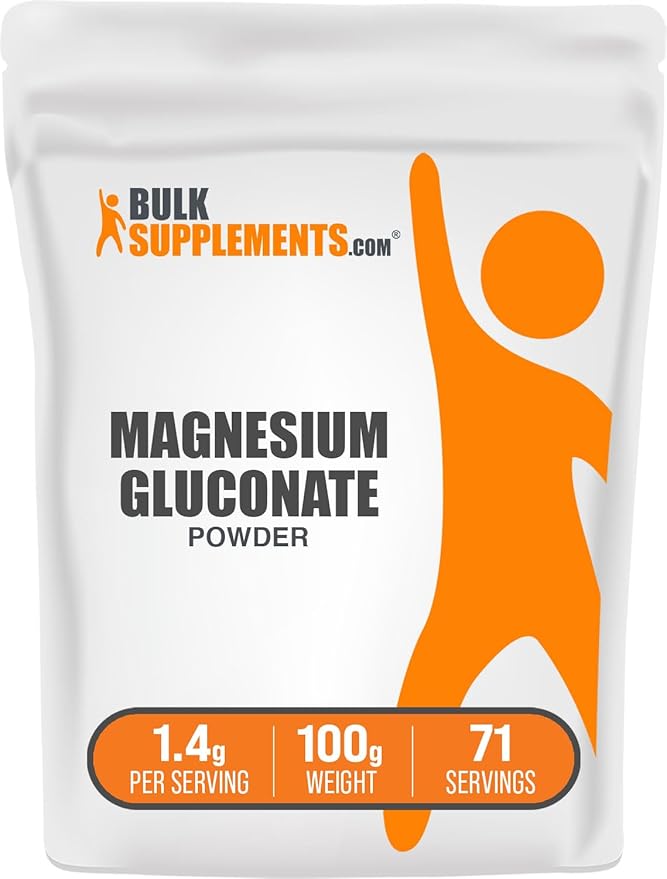
7. BulkSupplements.com Magnesium Gluconate Powder
Key Features
- Pure magnesium gluconate powder—no excipients, flavors, or sweeteners
- 1.4 g scoop delivers roughly 75 mg elemental magnesium
- Lab-verified, gluten-free, and packaged in a foil-lined, resealable pouch
What Makes It Stand Out
Capsules aren’t for everyone. BulkSupplements hands you pharma-grade powder that dissolves like a charm in water, smoothies, or an evening chamomile. With zero tablet binders, you get full dosing control—raise or lower milligrams on the fly.
How It Helps Your Goal
Perfect for athletes counting macros, bariatric patients who struggle with big pills, and anyone chasing rapid mix-and-sip electrolyte support after a sweaty workout.
How to Use
Start with ½ scoop (≈700 mg powder) in 8 oz of liquid; that yields ~37 mg elemental magnesium. Titrate weekly until tight muscles ease and sleep deepens.
Pros & Cons
Pros:
- Customizable dose, zero additives
- Cost per mg beats most tablets
- Powder absorbs faster than compacted tabs
Cons:
- Plain mineral taste—mask it with juice if you’re taste-sensitive
- Requires a scale or the supplied scoop for accuracy
Magnesium Gluconate vs. Other Forms: Which Is Best?
There’s a reason you don’t want to just grab any magnesium bottle off the shelf. The form matters — a lot.
| Magnesium Type | Elemental Mg (%) | Absorption | Best For | Drawbacks |
|---|---|---|---|---|
| Magnesium Gluconate | ~5–6% | Good | General daily use, sensitive stomachs | Lower elemental dose per tablet |
| Magnesium Oxide | ~60% | Poor | Constipation, bulk supplements | Harsh on the gut, bloating |
| Magnesium Citrate | ~16% | Very good | Sleep, cramps, digestion | Can cause diarrhea at higher doses |
| Magnesium Glycinate | ~14% | Excellent | Anxiety, PMS, muscle pain | Often pricier |
| Magnesium L-Threonate | ~8% | Excellent to brain | Cognitive enhancement, memory | Expensive, newer research needed |
Gluconate hits the sweet spot: it’s safe, mild, and ideal for gradual correction of chronic deficiency. Think of it as the dependable sedan in the supplement parking lot — not flashy, but always gets you there comfortably.
Signs You May Be Magnesium Deficient
Magnesium isn’t one of those nutrients where deficiency jumps out screaming. It’s sneaky — like a ninja with a cramp stick.
Watch for these subtle symptoms:
- Twitching eyelids or facial muscles
- Unexplained anxiety or irritability
- Waking up at 2 or 3 AM with racing thoughts
- Muscle cramps, especially in the calves
- Tingling or numbness in hands and feet
- PMS that’s… let’s say, “next-level”
- Constipation that doesn’t respond to fiber
- Fatigue that feels like you’ve been hit by a freight train, despite “sleeping fine”
Several studies, including one published in BMJ Open[^5], show that subclinical magnesium deficiency is common even in seemingly healthy individuals — especially older adults.
If you’re nodding along to any of these, a gluconate supplement might help fill that low-level drain without flooding your system.
How Long Does It Take for Magnesium Gluconate to Work?
Here’s the good news: some benefits are noticeable within days. People report sleeping deeper, feeling more relaxed, and getting fewer nighttime leg cramps after just a week.
But for true deficiency correction, you’re looking at 4–6 weeks of consistent supplementation. That’s because your body has to rebuild intracellular stores, not just spike blood levels.
If you’re using magnesium for sleep, menstrual support, or stress, expect a mild cumulative effect, not a one-pill-wonder. In other words: let the turtle win the race.
Can You Take Too Much Magnesium Gluconate?
Yes, though it’s much less risky than other forms. Because gluconate contains a lower percentage of elemental magnesium, you’d have to take several grams daily to risk serious overdose.
Still, here’s what to watch for:
- Loose stools or diarrhea
- Nausea
- Abdominal cramping
- In extreme cases, irregular heartbeat or low blood pressure
Pro tip: If you feel “off” after increasing your dose, scale back. Start with one tablet daily, and work up gradually — especially if combining it with high-magnesium foods like leafy greens, legumes, or nuts.
Best Time to Take Magnesium for Sleep and Relaxation
Magnesium isn’t a sleeping pill, but it nudges your brain into chill mode by regulating GABA, the neurotransmitter that puts the brakes on neural excitement.
For maximum benefit:
- Take magnesium 30–60 minutes before bed
- Pair it with glycine, L-theanine, or magnesium glycinate if you want deeper sleep
- Avoid caffeine after 2 PM — or you’ll cancel out magnesium’s calming effect
Many people also find that taking magnesium with a complex carb-rich dinner (like sweet potatoes or brown rice) improves its absorption and sleep-promoting effect.
Final Verdict: Which Magnesium Gluconate Should You Choose?
If you want the cleanest vegan option with a mega supply, Freeda is the standout.
For those who need pharmacy-trusted, clinically relevant dosing, go with CYPRESS PHARMA’s Mag-G.
And if you want value without compromising on quality, the Best Naturals version wins the price-performance race.
But in truth? All 7 of these magnesium gluconate supplements will do the job if chosen based on your lifestyle, digestion, budget, and long-term goals. Just match the product to your body’s real needs — and you’re set.
FAQs About Magnesium Gluconate
1. What’s the best time to take magnesium gluconate?
Take it with meals to minimize any stomach upset and to enhance absorption.
2. Can I take magnesium gluconate with other supplements?
Yes — but try not to pair it with iron or calcium at the same time. They can compete for absorption.
3. What’s the recommended dosage?
Most adults need 300–400 mg of elemental magnesium daily. Magnesium gluconate typically provides 5–6% elemental magnesium by weight, so dosage often starts at 500 mg gluconate = ~27 mg elemental magnesium.
4. Are there side effects?
It’s gentler than other forms. Side effects are rare but may include mild bloating or diarrhea if overdosed.
5. Is it safe for seniors or kids?
Yes — but always consult with your healthcare provider for specific dosing, especially if you’re on medications.
6. Does magnesium gluconate help with sleep or anxiety?
Studies suggest magnesium supports GABA activity in the brain3, helping with relaxation and sleep quality. Gluconate form is mild and suitable for those sensitive to other types.
Citations and References
Would you like me to create a custom blogpost feature image for this piece (1980×1020, webp format) with an engaging, supplement-relevant design?
Footnotes
Abbasi B et al. The effect of magnesium supplementation on primary insomnia in elderly: A double-blind placebo-controlled clinical trial. J Res Med Sci. 2012;17(12):1161–1169. ↩
Craig WJ. Health effects of vegan diets. Am J Clin Nutr. 2009;89(5):1627S–1633S. https://doi.org/10.3945/ajcn.2009.26736N ↩
Firoz M, Graber M. Bioavailability of US commercial magnesium preparations. Magnesium Research. https://pubmed.ncbi.nlm.nih.gov/9112182/ ↩