
We only recommend products we love and that we think you will, too. We may receive a portion of sales from products purchased from this article.

Medically reviewed by Dr. A.S.M. Masum Billah, MBBS

Looking for the best magnesium chloride supplements in 2025? You’re in the right place. Magnesium is one of the most important minerals in the body, yet surveys show nearly 50% of adults don’t get enough from diet alone. While magnesium glycinate and citrate often get the spotlight, magnesium chloride deserves attention for its high solubility, reliable absorption, and versatile use in capsules, powders, liquids, and even bath flakes.
Best Magnesium Glycinate Supplements
In this guide, I’ll break down the top 10 magnesium chloride supplements, explain how each formula works, and help you pick the right option based on your budget, lifestyle, and health goals.
Why Magnesium Chloride?
Magnesium comes in many forms, and each behaves differently in the body. Magnesium chloride stands out because:
- It’s highly soluble in water, which improves absorption compared to magnesium oxide.
- It provides a moderate dose of elemental magnesium (~12% by weight), making it easier to titrate without overwhelming digestion.
- It can be used both orally and topically (as flakes or “magnesium oil”), giving flexibility in how you supplement.
Research comparing oxide and chloride consistently shows better uptake from chloride, meaning you often need smaller doses to get results.
Best Magnesium L-threonate Supplements
Key Benefits of Magnesium Chloride
- Supports healthy muscles and nerves – helps reduce cramps, spasms, and twitches.
- Promotes relaxation and better sleep – magnesium plays a role in calming the nervous system.
- Bone and cardiovascular support – works with calcium and potassium for heart and bone health.
- Skin & self-care benefits (topical use) – bath flakes may soothe sore muscles and hydrate skin.
Dosage & Safety Guidelines
- RDA: ~400–420 mg/day (men), 310–320 mg/day (women).
- Supplemental range: 100–300 mg/day elemental magnesium is common.
- Start low: Begin with 100 mg/day and adjust upward if tolerated.
- Safety notes:
- Avoid in kidney disease unless cleared by a doctor.
- Space from antibiotics and osteoporosis drugs by at least 2–3 hours.
- GI upset (loose stools) is the most common side effect — usually fixed by lowering the dose or splitting it across the day.
Best Magnesium Citrate Supplements
How to Use Magnesium Chloride
- Capsules: Take with meals for better tolerance.
- Powders/Crystals: Dissolve in water or juice, split into 2–3 daily doses.
- Liquids: Mix drops/teaspoons into a large glass of water; dilute well to avoid nausea.
- Bath flakes: Add 1–2 cups to warm water, soak for 20–30 minutes.
How to personalize your choice (quick cheat sheet)
- Want the easiest routine? Double Wood Capsules. One capsule ≈ ~120 mg elemental. Build from there.
- Need budget + control? Heiltropfen or Nutricost bulk powders. Use a scale; split doses.
- Prefer sipping? NutriCology or Trace Minerals liquids. Start small to dodge GI blowback.
- Bath ritual lover? NOW Flakes for weekly soaks (external use).
Top 10 Best Magnesium Chloride Supplements of 2025
1. Double Wood Magnesium Chloride Capsules

If you’re tired of scooping powders and fussing with bitter drinks, Double Wood’s Magnesium Chloride Capsules are a lifesaver. They bring convenience, clean formulation, and dependable dosing in one neat package.
Key Ingredients & Dosage
- Magnesium Chloride (1,000mg) – delivers roughly 120mg elemental magnesium per capsule (since MgCl₂ is ~12% elemental).
- Other ingredients: gelatin capsule, rice flour (used as filler, harmless).
- No GMO ingredients, gluten-free, manufactured and tested in the USA.
What Makes It Stand Out
Most bulk powders leave you guessing about dosage. Double Wood solves that by putting magnesium chloride into easy-to-swallow capsules. Each pill gives a consistent ~120mg elemental magnesium — right in line with what clinical studies suggest for daily supplementation. And with 180 capsules per bottle, you’ve got a six-month supply if you stick to one per day.
How It Supports Your Goal
Whether it’s calming muscle cramps, supporting better sleep, or filling nutritional gaps, this formula does the job. Research published in the Journal of the American College of Nutrition shows that daily magnesium intake of 100–150mg can meaningfully improve serum levels in deficient adults. This bottle hits that sweet spot without overloading your system.
Safety & Side Effects
- Some users mention mild digestive upset if taken on an empty stomach.
- As with all magnesium supplements, avoid if you have kidney impairment unless cleared by a physician.
- Magnesium may reduce absorption of certain antibiotics — so spacing by a few hours is wise.
How to Take It
Take 1 capsule daily with food. If you’re aiming for higher intake, you can split 2 capsules into morning and evening doses — smoother absorption, less GI stress.
Pros & Cons
Pros
- Convenient capsule form
- Clear, consistent dosage (~120mg elemental Mg)
- Large 180-count bottle = long supply
- Non-GMO, gluten-free, US-tested
Cons
- Lower elemental magnesium per capsule than some glycinate or citrate forms
- Not ideal if you prefer powder for flexible dosing
2. Nutricost Magnesium Chloride Powder (2 lbs Bulk)

Nutricost offers a bulk 2-pound bag of magnesium chloride powder that’s perfect if you like control over your dosage and want long-term value.
Key Ingredients & Dosage
- Pure magnesium chloride powder (no fillers).
- Elemental magnesium: about 12% of powder weight.
- Packaged in a resealable bag, non-GMO, gluten-free, GMP compliant.
What Makes It Stand Out
Cost efficiency. With 2 lbs of powder, you can fine-tune your daily intake for months without reordering. Some users dissolve it in water, others mix into juice to mask the taste.
How It Supports Your Goal
Because it’s powder, you can adjust dosage depending on your needs. For example, if you want just 100mg elemental magnesium, you measure about 830mg of powder. This flexibility is excellent for people who want to start low and increase gradually.
Safety & Side Effects
- High doses can cause loose stool or GI upset.
- Taste can be salty or bitter.
- Same cautions apply: kidney issues, certain drug interactions.
How to Take It
Mix a small scoop in water, split across two servings per day. Many find taking with food or citrus-flavored drinks masks the taste.
Pros & Cons
Pros
- Huge supply at low cost
- Flexible dosing
- No fillers
Cons
- Taste can be harsh
- Must calculate elemental magnesium yourself
3. Greenway Biotech Magnesium Chloride USP Grade Powder
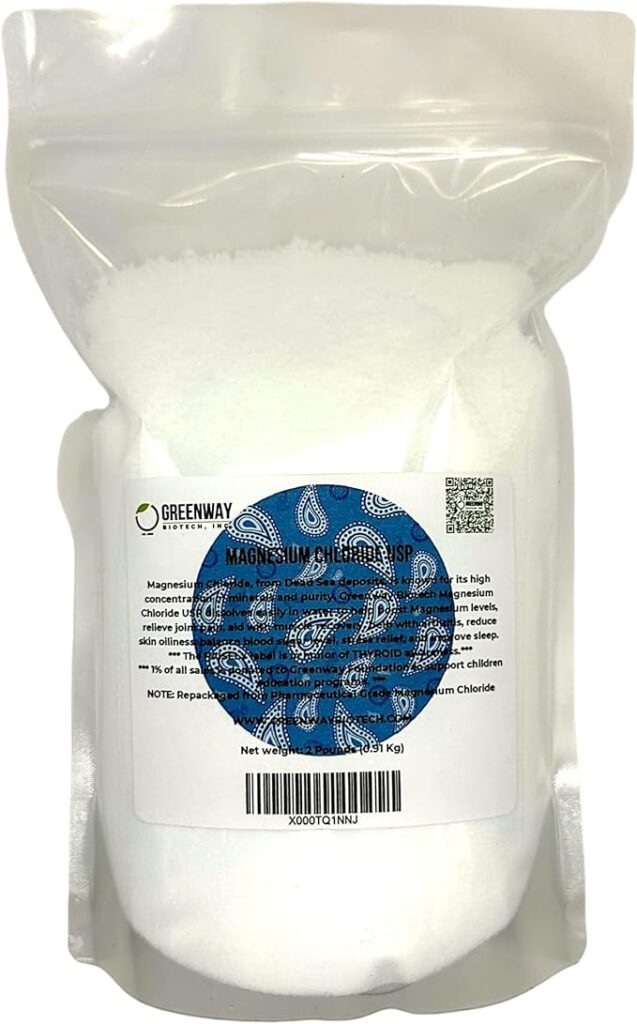
Greenway Biotech’s magnesium chloride is pharmaceutical/USP grade, which makes it popular among those who obsess over purity (guilty as charged).
Key Ingredients & Dosage
- Pure magnesium chloride powder (food grade, USP).
- Derived from Dead Sea sources.
- Free from fillers or additives.
What Makes It Stand Out
The big selling point here is pharmaceutical grade certification. That means tighter control on contaminants like heavy metals. For those who are careful about quality, this is reassuring.
How It Supports Your Goal
Excellent for correcting low magnesium intake. Since it’s food grade, you can safely add it to water, smoothies, or even DIY magnesium oil for topical use.
Safety & Side Effects
- GI side effects possible if dosing too high.
- Taste isn’t pleasant — bitter and mineral-like.
- Avoid moisture; powder clumps easily.
How to Take It
Start with a ¼ tsp dissolved in water, taken with meals. Adjust gradually.
Pros & Cons
Pros
- Food/USP grade purity
- Multi-use: oral or topical
- No additives
Cons
- Bitter taste
- Needs careful measuring
4. Dolotrex Magnesium Chloride Food Grade (300 g)
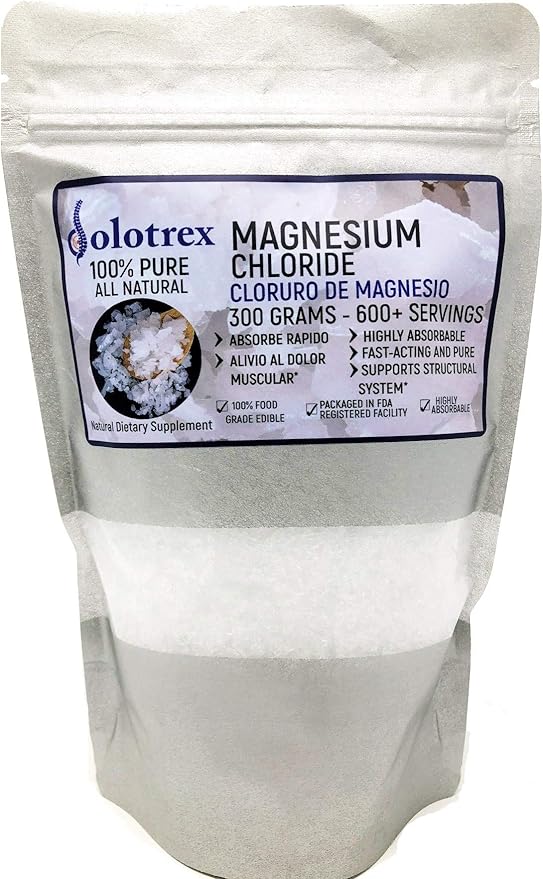
A smaller bag with the same focus on food-grade quality, Dolotrex is perfect if you’re just dipping your toes into magnesium powders.
Key Ingredients & Dosage
- Pure magnesium chloride crystals/powder.
- Food-grade.
- No additives.
What Makes It Stand Out
The 300 g bag is manageable. It won’t sit around for a year, and it doubles as an ingredient for making magnesium “oil” for topical use. That flexibility is attractive if you’re experimenting with different delivery methods.
How It Supports Your Goal
Because it’s food-grade, you can trust it for oral use. And since chloride dissolves easily, absorption is decent even at modest doses.
Safety & Side Effects
- GI tolerance varies—split doses if needed.
- Must be stored dry to prevent clumping.
How to Take It
Dissolve in water or juice. Begin with ~100 mg elemental (≈0.8 g powder).
Pros & Cons
Pros
- Mid-size bag
- Food-grade assurance
- Can be used orally or topically
Cons
- Salty taste
- Shorter supply than bulk powders
5. NOW Foods Magnesium Flakes (54 oz)
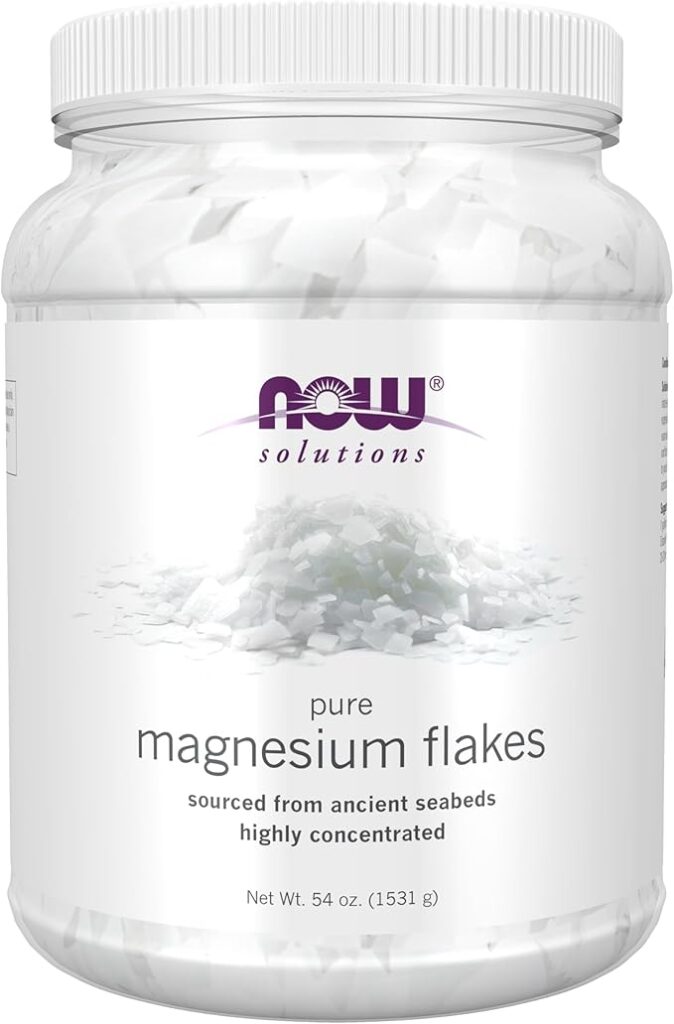
A different spin: NOW Foods Magnesium Flakes are for baths, not swallowing.
Key Ingredients & Dosage
- Magnesium chloride hexahydrate flakes.
- Pure, fragrance-free.
- Derived from Zechstein seabed.
What Makes It Stand Out
These flakes are perfect for those who love self-care rituals. While absorption through skin is still debated, most users swear by the relaxation effect. The Zechstein source also has a reputation for purity.
How It Supports Your Goal
- Relieves sore muscles after workouts.
- Calms the nervous system before bed.
- Hydrates skin during soaks.
Safety & Side Effects
- May cause stinging on cuts or sensitive skin.
- Not for oral use.
How to Take It
Add 1–2 cups to warm bath water and soak for 20–30 minutes.
Pros & Cons
Pros
- Relaxing self-care routine
- Large bag, long-lasting
- Fragrance-free
Cons
- Not a systemic replacement for oral magnesium
- Heavy to store and ship
6. Trace Minerals Mega-Mag Liquid (Magnesium Chloride Ionic Drops)
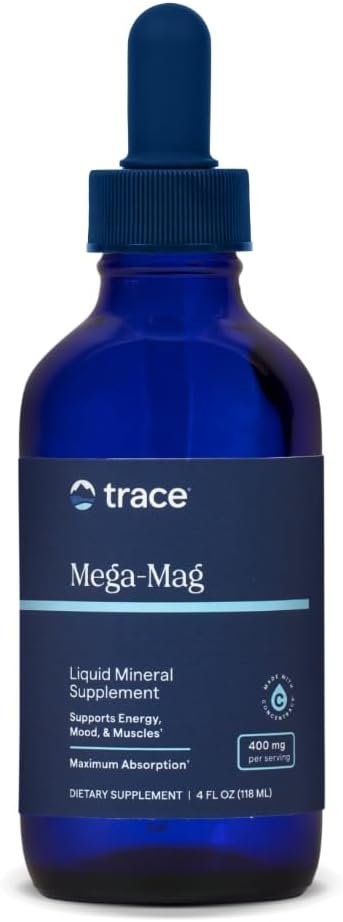
If you hate swallowing pills or fussing with scoops, Trace Minerals Mega-Mag offers a liquid solution that slides right into your water glass.
Key Ingredients & Dosage
- Magnesium Chloride (Ionic form) – per label, delivers 90 servings per 4-oz bottle, with ~400 mg magnesium chloride (≈47 mg elemental magnesium) per serving.
- Other ingredients – purified water.
- Free from sweeteners, flavors, and unnecessary additives.
What Makes It Stand Out
The biggest strength here is flexibility. Because it’s liquid and ionic, it mixes easily into water or smoothies. Each serving is modest, so you can stack multiple doses throughout the day instead of hitting your gut with a big load at once. For anyone who’s experienced the “magnesium shuffle” (yes, that means running to the bathroom), this makes a real difference.
How It Supports Your Goal
Magnesium chloride in ionic form is highly soluble. This means your body doesn’t waste as much time breaking it down. Studies comparing oxide to chloride consistently show better uptake from chloride, even at smaller elemental doses. That makes Mega-Mag a handy way to top up your daily intake without blasting your system.
Safety & Side Effects
- Mineral taste is strong; some call it “metallic,” others say “oceanic.” Diluting in a big glass of water helps.
- Too many servings in one sitting can still trigger loose stools.
- Safe for most adults, but avoid if you have kidney impairment.
How to Take It
Add the directed drops to 8–12 oz of water or juice. Many users find splitting doses AM/PM works best.
- For bath: dissolve recommended amount (often cups of flakes) in warm water; soak for 20-30 mins.
- For foot soak: use less quantity relative to volume of water.
- After soak, rinse & thoroughly dry skin.
Pros & Cons
Pros
- Easy liquid dosing
- No fillers or sweeteners
- Gentle on digestion if spread out
- Portable bottle
Cons
- Taste takes getting used to
- Lower elemental magnesium per serving
7. NutriCology (Allergy Research Group) Magnesium Chloride Liquid (8 oz)
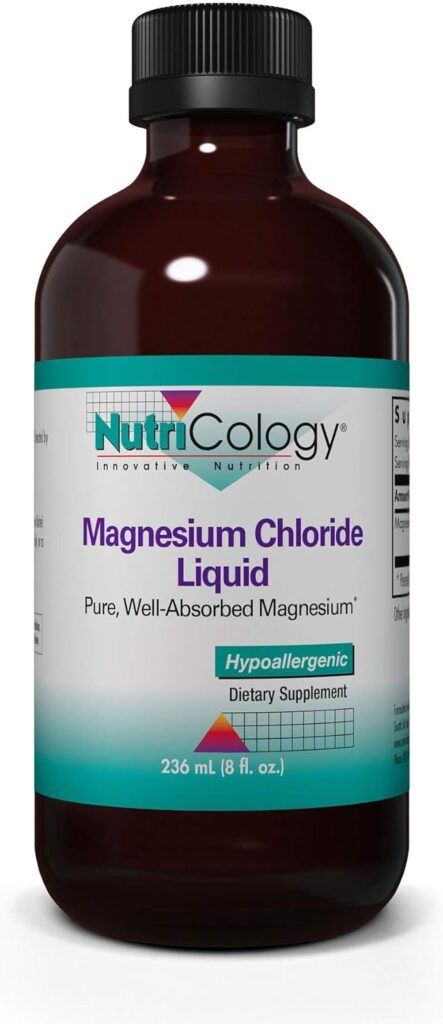
For a measured, editor-approved liquid, NutriCology’s Magnesium Chloride is a strong contender that shows up in many “best of” lists.
Key Ingredients & Dosage
- Magnesium Chloride – each ½ teaspoon delivers about 66.5 mg elemental magnesium.
- Other ingredients – deionized water.
- About 94 servings per 8-oz bottle.
What Makes It Stand Out
This product is prized for its moderate per-dose load. At just 66.5 mg per ½ tsp, it’s far gentler than powders or large capsules. That matters because tolerance often decides compliance—if a supplement makes you run to the bathroom, you’ll quit. NutriCology solves this by letting you dose small, dose often.
How It Supports Your Goal
This is an excellent option if you want to gradually build up to RDA levels. For example, two servings give you ~133 mg elemental, three servings ~200 mg. That’s in line with clinical studies that show even modest supplemental doses can correct low intake over time.
Safety & Side Effects
- Some users report the same mineral taste as Trace Minerals, though slightly milder.
- GI upset is rare due to the lower per-dose load.
- Same cautions: space from antibiotics, avoid if kidney issues.
How to Take It
Take ½ teaspoon diluted in water, 2–3 times daily. Works best with meals.
Pros & Cons
Pros
- Editor-recommended brand
- Small, manageable serving size
- Gentle on digestion
- Additive-free
Cons
- Requires multiple daily servings
- Taste may need masking
8. RnA ReSet ReMag® Liquid (Magnesium Chloride, 8.1 oz)
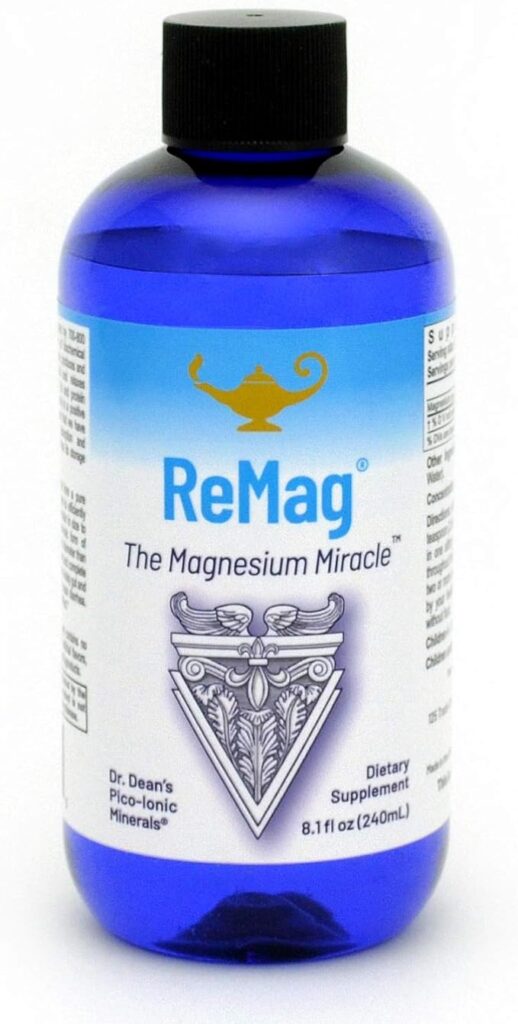
If you’ve ever been tempted by a supplement that calls itself “pico-ionic,” this is the one. ReMag by RnA ReSet is marketed as a highly concentrated, ultra-absorbable magnesium chloride liquid. While some of the branding is flashy, the core product is solid.
Key Ingredients & Dosage
- Magnesium Chloride – concentrated liquid solution.
- Serving size: 1 teaspoon (varies by label), delivering ~150 mg elemental magnesium.
- Other ingredients – none beyond purified water.
- About 48 servings per 8.1 oz bottle.
What Makes It Stand Out
The selling point here is concentration. Unlike NutriCology, which gives you 66 mg per ½ tsp, ReMag packs in about 150 mg per teaspoon. That makes it better for people who want fewer servings per day without jumping to large capsules. The “pico-ionic” label? It’s mostly marketing, but what’s real is the strong solution that saves you time and hassle.
How It Supports Your Goal
Because magnesium chloride is well absorbed, concentrated dosing works for users who want a meaningful boost without multiple doses. For instance, one serving gets you halfway to the 300–400 mg RDA range. It’s also helpful for those who dislike powders or have pill fatigue.
Safety & Side Effects
- Concentrated solutions can cause nausea if not well diluted—don’t sip straight from the cap.
- Still carries the same GI risk if you take too much too quickly.
- Safe for daily use, but those with kidney disease should avoid.
How to Take It
Mix the directed serving into at least 8–12 oz water. Many users add it to flavored drinks to mask the mineral taste. Splitting morning and evening doses helps with tolerance.
Pros & Cons
Pros
- Strong concentration (fewer servings per day)
- Clean, no fillers or flavors
- Easy liquid dosing
Cons
- Pricey compared to bulk powders
- “Pico-ionic” claim is more hype than science
- Taste can be metallic if not diluted well
9. Heiltropfen Magnesium Chloride Hexahydrate Crystals (2 lbs, USP/Ph.Eur. Grade)
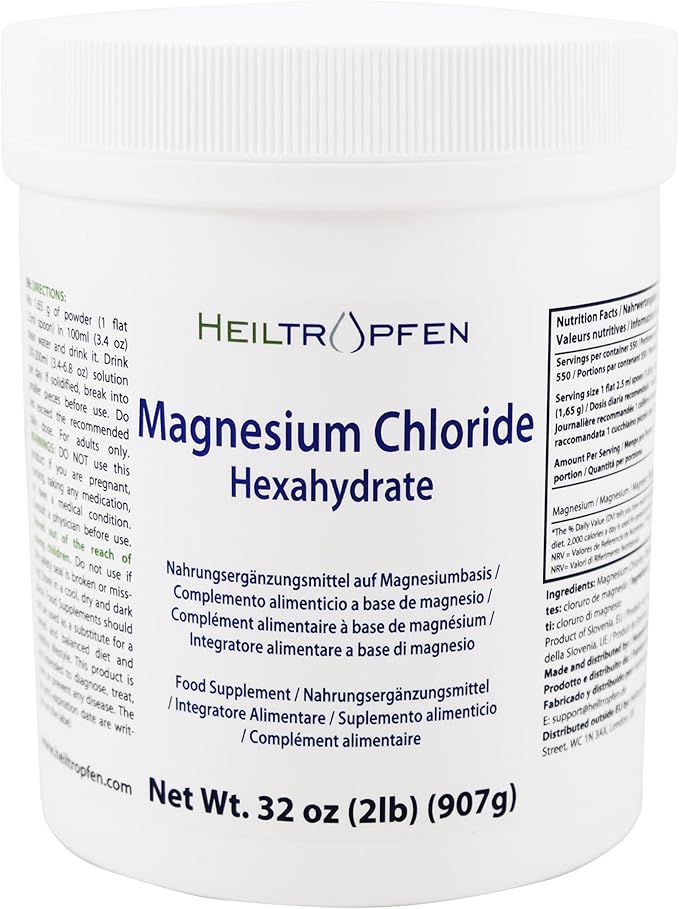
For the purist who wants bulk size plus pharma-grade purity, Heiltropfen checks both boxes. This isn’t your casual sprinkle supplement—it’s a serious 2-lb sack of crystals that’s certified to pharmacopoeia standards.
Key Ingredients & Dosage
- Magnesium Chloride Hexahydrate Crystals (USP/Ph.Eur./BP Grade).
- Roughly 12% elemental magnesium by weight.
- 2 lbs total—enough to last for months, even with daily use.
What Makes It Stand Out
Two things: bulk and certification. Most powders are just “food-grade,” which is fine, but USP/Ph.Eur. labels add an extra layer of reassurance about contaminants. If you’re picky about purity, this matters. And the 2-lb size makes it incredibly cost-efficient per serving. The tradeoff? You’ll need to measure carefully—guessing isn’t an option here.
How It Supports Your Goal
With Heiltropfen, you can customize dosage precisely. Whether you want 100 mg or 300 mg elemental magnesium per day, you’ve got room to play. Plus, crystals dissolve well in water, making it versatile for both oral use and DIY topical “magnesium oil.”
Safety & Side Effects
- Same GI caveats: loose stools if you overshoot.
- Measuring is critical—don’t eyeball it.
- As always, caution with kidney disease or interacting meds.
How to Take It
Weigh your desired portion (e.g., ~0.8 g powder ≈ 100 mg elemental magnesium). Dissolve in water or juice. Split into two smaller doses daily for best results.
Pros & Cons
Pros
- Bulk 2-lb bag = unbeatable value
- Pharma-grade purity (USP/Ph.Eur./BP)
- Flexible dosing for oral or topical use
Cons
- Requires a milligram scale for accuracy
- Strong mineral taste
- Big bag may intimidate beginners
10. RUNMAG Natural Magnesium Chloride Powder (300 g Bottle)
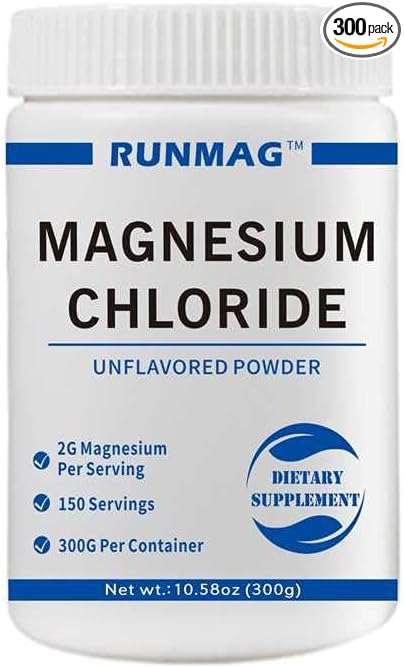
If you want a smaller, kitchen-friendly container that won’t overwhelm you, RUNMAG offers a 300 g bottle of pure food-grade magnesium chloride.
Key Ingredients & Dosage
- Magnesium Chloride Powder – food-grade, non-GMO.
- About 12% elemental magnesium by weight.
- 300 g total, packaged in a moisture-resistant hard bottle.
What Makes It Stand Out
RUNMAG shines in practical packaging. Many powders come in soft resealable pouches that clump up after a week in a humid kitchen. The solid bottle here is more hygienic and makes scooping easier. It’s also a smart “starter size”—not as intimidating as a 2-lb sack, but more substantial than tiny jars.
How It Supports Your Goal
This powder offers the same absorption benefits as other chloride forms. The bottle size makes it appealing for beginners who want to experiment with daily dosing before committing to bulk. It’s also good if you want a clean, additive-free supplement with flexible use.
Safety & Side Effects
- Same GI cautions: introduce slowly.
- Store in a cool, dry place—though the bottle helps with that.
- Avoid in kidney disease or alongside certain medications.
How to Take It
Measure out a portion that equals ~100–200 mg elemental magnesium (≈0.8–1.6 g powder). Mix into water or citrus juice for better taste. Split doses morning and evening.
Pros & Cons
Pros
- Handy 300 g bottle
- Food-grade quality
- Non-GMO, additive-free
- Beginner-friendly size
Cons
- Pricier per gram than bulk bags
- Same mineral taste issue
- Requires dosage calculation
Buyer’s Guide – How to Choose the Right Magnesium Chloride Supplement
1. Choose your form wisely
- Capsules: fuss-free, consistent dosing (best for busy routines).
- Powders/Crystals: unbeatable value, but require a scale and some math.
- Liquids: great for pill fatigue, kids, or sensitive digestion.
- Flakes: perfect for baths and relaxation, not a replacement for oral intake.
2. Match dosage to your goal
- General wellness: 100–200 mg elemental magnesium daily.
- Deficiency correction (with doctor’s guidance): 300–400 mg.
- Always count total intake (food + supplements).
3. Pay attention to additives
- If you want pure, look for USP-grade powders or capsules with minimal fillers.
- If you dislike aftertastes, choose capsules or liquids you can dilute.
4. Safety first
- Avoid in kidney disease without supervision.
- Space from antibiotics and osteoporosis drugs.
- Watch for signs of GI intolerance (reduce dose if stools loosen).
Conclusion – Which Magnesium Chloride Supplement Should You Buy?
Here’s the short answer:
- If you want simplicity, go for Double Wood Capsules.
- If you’re on a budget, Nutricost Powder or Heiltropfen Crystals give the best bang for your buck.
- If you prefer liquids, start with NutriCology for gentle dosing or ReMag if you want more concentrated servings.
- And if you’re more into bath-time therapy, the NOW Flakes turn your tub into a spa ritual.
At the end of the day, the best magnesium chloride supplement is the one you’ll actually take consistently. Whether that’s a capsule, powder, liquid, or soak—chloride gives you a versatile path to better magnesium status, calmer muscles, and steadier energy.