
We only recommend products we love and that we think you will, too. We may receive a portion of sales from products purchased from this article.

Medically reviewed by Dr. A.S.M. Masum Billah, MBBS

If you’re a man over 50 looking for the best creatine supplements, the science behind creatine may matter more for you than for the average 25-year-old at the gym.
After 50, the body loses 1–2% of skeletal muscle mass annually — a process clinicians call sarcopenia, meaning age-related muscle wasting. It doesn’t just affect how you look or workout. It slows metabolism, weakens bones, increases fall risk, and has been directly linked to accelerated cognitive decline. The muscle-brain axis does exist and low muscle mass in older men correlates with faster deterioration of working memory and executive function.
Creatine works by replenishing phosphocreatine stores in muscle and brain tissue — the rapid-energy currency your cells burn during any demanding activity, from a resistance workout to a fast-paced meeting. A 2022 narrative review in Bone by Candow and colleagues specifically positions creatine supplementation as a clinical strategy against sarcopenia, osteoporosis, and frailty in older adults. The 2017 Kreider ISSN position stand confirms long-term safety in healthy adults.
This isn’t bodybuilding. This is preservation.
Below are the 11 Best Creatine Supplements for Men Over 50 reviewed dissecting the dosage, real safety flags, no hype.
Top 11 Best Creatine Supplements for Men Over 50
1. BioTrust Ageless Muscle Builder
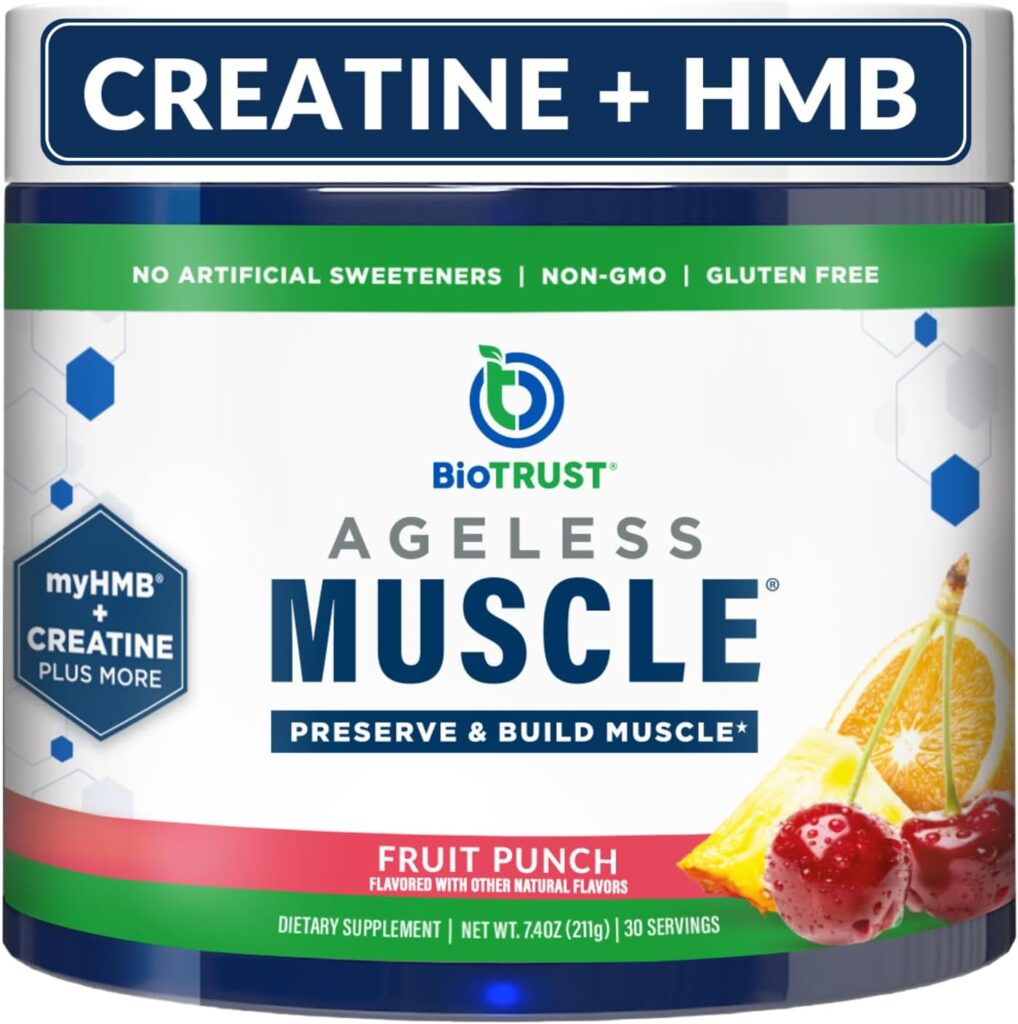
The only formula on this list built specifically around aging biology. Four ingredients, four sarcopenia mechanisms: creatine refuels ATP; myHMB® (β-hydroxy β-methylbutyrate) slows proteolysis — the accelerated muscle protein breakdown that defines sarcopenia; Vitamin D3 restores neuromuscular signaling impaired by the deficiency affecting 40%+ of men over 50; betaine anhydrous supports methylation pathways underpinning protein synthesis. The 2015 PROVIDE trial confirmed HMB + D3 preserves muscle mass in sarcopenic older adults at exactly these doses.
Read the label carefully. Directions say twice daily — one scoop morning, one evening. That’s the only way to reach clinical doses. A single scoop delivers just 2,500mg creatine — sub-clinical.
Ingredients (Twice-Daily Protocol)
| Ingredient | Daily Dose | Notes |
|---|---|---|
| Creatine Monohydrate | 5,000 mg | Clinical dose ✅ |
| myHMB® | 3,000 mg | Matches PROVIDE trial ✅ |
| Vitamin D3 | 2,000 IU | Addresses common deficiency ✅ |
| Betaine Anhydrous | 2,500 mg | Research-supported ✅ |
Cost reality: 30 servings ÷ twice daily = 15-day supply. At $33.95/tub, that’s ~$2.26/day — highest on this list. Betaine may modestly raise cholesterol; monitor at next lab draw if on statins. Manufactured in a facility processing milk, soy, fish, shellfish, and tree nuts — not suitable for severe allergies. No NSF or Informed Sport certification.
Pros
- ✅ Only multi-ingredient sarcopenia stack on this list
- ✅ All four ingredients hit research-grade clinical doses
- ✅ GMP-certified, third-party tested
Cons
- ❌ Most expensive per serving
- ❌ Betaine — monitor cholesterol if on statins
- ❌ 30-serving tub runs out quickly
2. Thorne Creatine
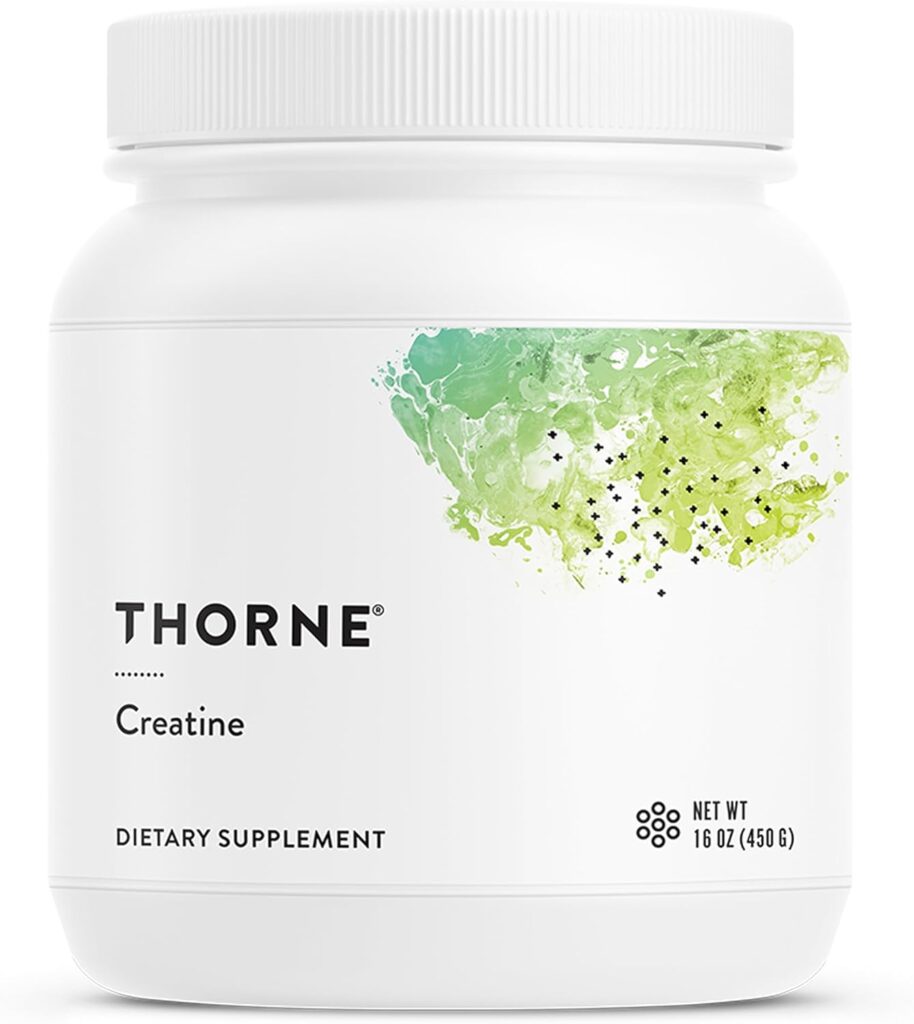
Thorne is the brand physicians recognize and trust. NSF Certified for Sport means every batch is independently tested against 290+ contaminants and banned substances — not a self-reported claim, but an externally verified fact. For men on statins, ACE inhibitors, or any prescription medication, this level of contamination verification isn’t optional. It’s protection.
Single ingredient, excellent micronization, dissolves without residue. The #1 clinical brand recommended by healthcare practitioners per the 2023 HCP Seller Survey. If you’re going to show one supplement bottle to your doctor, make it this one.
Key Ingredients
Micronized Creatine Monohydrate 5,000 mg
Pros
- ✅ NSF Certified for Sport — highest verification tier available
- ✅ #1 physician-recommended clinical brand
- ✅ Recognized and trusted in medical settings
Cons
- ❌ Premium price — you’re paying for institutional credibility
- ❌ Single ingredient only — no sarcopenia stack
3. Designs for Health Creatine Monohydrate
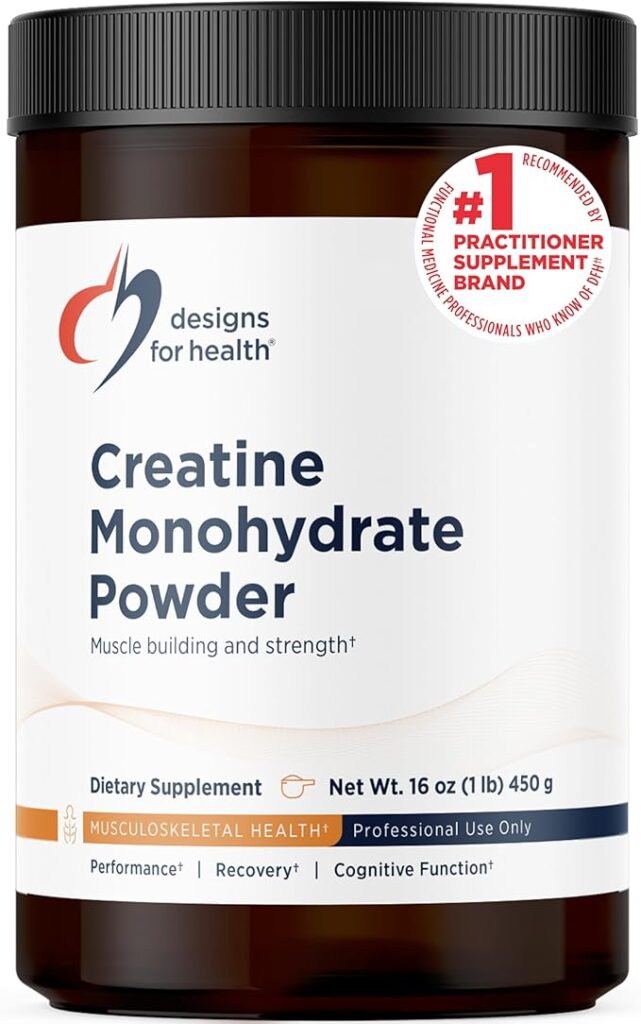
DFH is Thorne’s functional medicine equivalent — the #1 practitioner-recommended brand among functional medicine doctors per the 2023 Ipsos survey. Functionally identical product: pure 5g monohydrate, cGMP manufactured, single ingredient, allergen-free. The differentiator is the stick-pack format — pre-measured 5g packets that slip into a shirt pocket, eliminating scooping and tub-carrying entirely. For men who travel for work, this is genuinely useful.
Choose DFH over Thorne if your physician or integrative medicine practitioner works in the functional medicine space, or if the stick-pack format fits your routine.
Key Ingredients
Micronized Creatine Monohydrate 5,000 mg
Pros
- ✅ #1 functional medicine practitioner brand
- ✅ Stick-pack format for frictionless travel compliance
- ✅ Single ingredient, clean, allergen-free
Cons
- ❌ No NSF or Informed Sport batch certification
- ❌ Premium price comparable to Thorne
4. Sports Research Micronized Creatine Powder
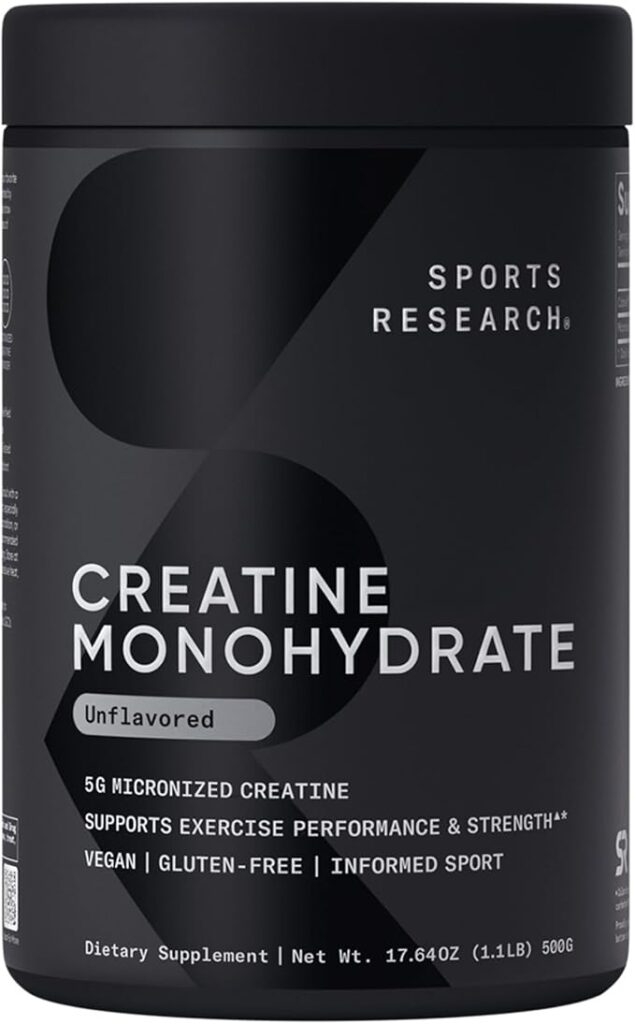
Sports Research hits a near-perfect balance of certification depth and practical accessibility. Informed Sport batch-tested, NSF Gluten-Free, Non-GMO Project Verified, Vegan Certified — and available at Costco. It dissolves completely in hot coffee or tea without altering flavor, which makes daily compliance genuinely effortless for men who won’t add a shaker bottle to their morning routine. Adherence drives results more than any other variable. The format that gets taken daily wins.
Key Ingredients
Micronized Creatine Monohydrate 5,000 mg
Pros
- ✅ Informed Sport batch certification — serious contamination protection
- ✅ Mixes cleanly in hot beverages
- ✅ Widely available, competitive price
Cons
- ❌ No flavor options
- ❌ No synergistic aging-focused ingredients
5. Momentous Creatine Chews
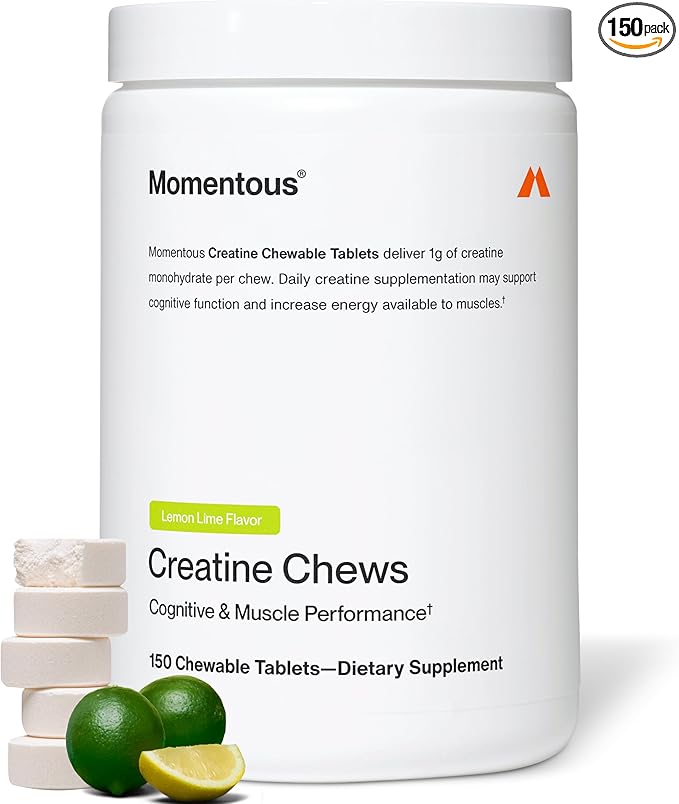
The only chewable on the market combining Creapure® German-sourced monohydrate (99.9% purity, lowest impurity profile in the category) with NSF Certified for Sport batch testing. Five chews daily = 5g clinical dose. Sweet-tart lemon lime texture, no water required, completely travel-proof.
Radically honest: At ~$1.67/serving, you’re paying a significant premium for the chewable format. The small dextrose content is clinically negligible for most men but worth flagging for strict metabolic protocols or closely managed type 2 diabetes.
Key Ingredients
Creapure® Creatine Monohydrate 1,000 mg per chew (5g per 5-chew serving)
Pros
- ✅ NSF Sport + Creapure® — dual premium credentials
- ✅ No water, no mixing — highest real-world compliance format
- ✅ Precise 1g-per-chew dosing flexibility
Cons
- ❌ Expensive — ~$1.67/day
- ❌ Dextrose content — flag for diabetic or strict keto users
- ❌ 30-serving bottle runs out fast
6. ForestLeaf Micronized Creatine Powder
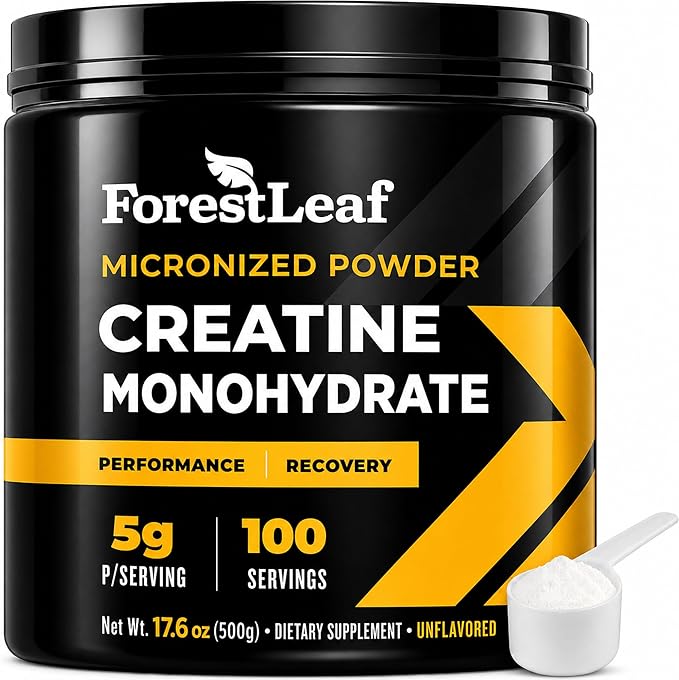
A clean, single-ingredient 5g monohydrate at strong value — 100 servings for ~$28, free from dairy, eggs, nuts, and gluten. For men managing food sensitivities, autoimmune conditions, or multiple dietary restrictions, the allergen-free profile is the primary differentiator. Tasteless, dissolves cleanly, GMP-compliant US manufacturing with independent testing.
No NSF or Informed Sport batch certification — for men on multiple prescription medications, step up to Thorne or Sports Research. For healthy men without medication concerns, ForestLeaf is a straightforward, reliable option.
Key Ingredients
Micronized Creatine Monohydrate 5,000 mg
Pros
- ✅ Strongest allergen-free profile in the value tier
- ✅ 100 servings at ~$0.28/serving
- ✅ US-made, GMP-compliant
Cons
- ❌ No third-party batch certification
- ❌ No additional longevity-focused ingredients
7. Jacked Factory Creatine Monohydrate Powder
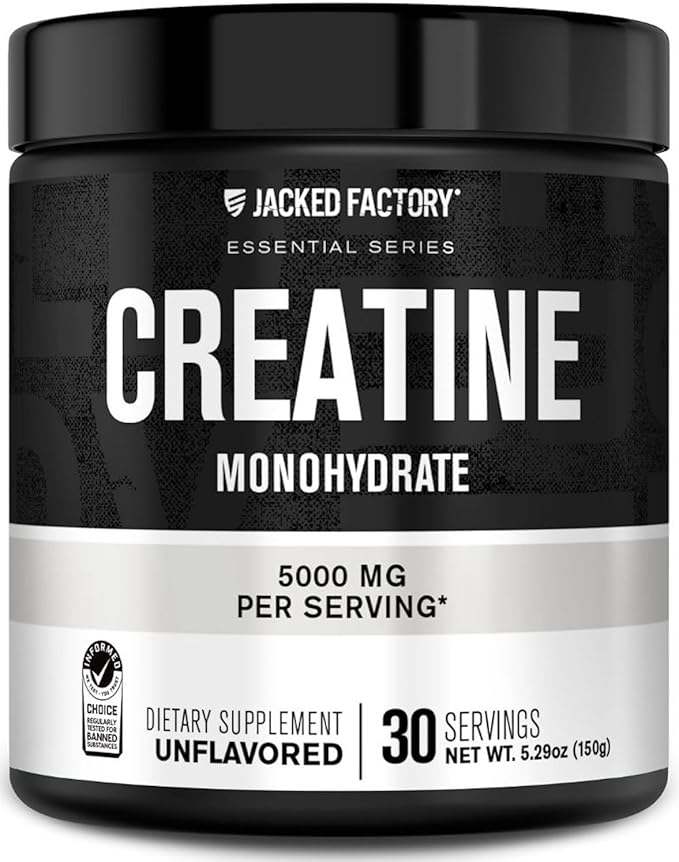
The math is simple. The 1000g tub delivers 200 servings at approximately $0.20/serving — roughly one-eighth the cost of clinical-tier options for an ingredient that is, at its core, identical monohydrate. For men committing to creatine as a permanent daily health practice (which the evidence supports), the cost differential over three to five years is substantial.
cGMP facility, third-party tested, no fillers or dyes. The trade-off: no NSF or Informed Sport batch certification. Suitable for healthy men not on prescription medications.
Key Ingredients
Creatine Monohydrate 5,000 mg
Pros
- ✅ Best bulk value — $0.20/serving at scale
- ✅ cGMP certified, third-party tested
- ✅ Multiple tub sizes for flexible commitment
Cons
- ❌ No NSF or Informed Sport certification
- ❌ Brand markets to younger demographic — aesthetics don’t match audience
8. Nutricost Creatine Monohydrate
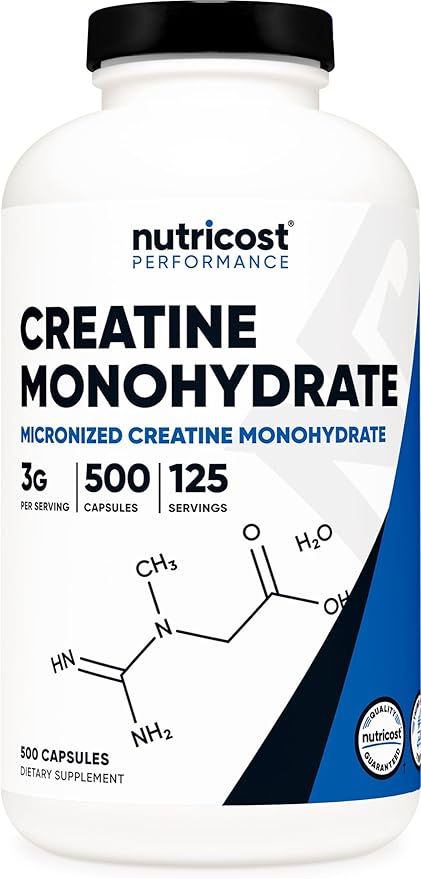
Nutricost is the market benchmark for accessible quality — the creatine most physicians encounter when patients mention a budget option. NSF-certified manufacturing facility (facility-level, not product-level), third-party lab tested, 100 servings at ~$20. The “what’s on the label is in the tub” transparency pledge is backed by publicly available certificates of analysis.
Effectively identical to Jacked Factory at a similar price point. Choose based on brand familiarity.
Key Ingredients
Micronized Creatine Monohydrate 5,000 mg
Pros
- ✅ NSF-certified manufacturing facility
- ✅ Reliable budget staple with long track record
- ✅ Transparent COA availability
Cons
- ❌ Product itself not NSF or Informed Sport batch-certified
- ❌ No synergistic ingredients
9. VitaUp Creatine Gummies
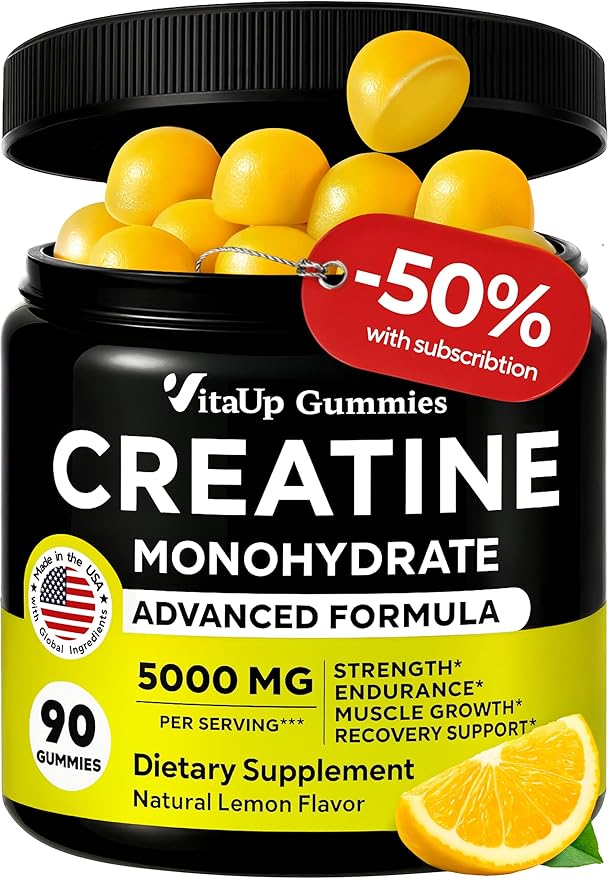
VitaUp earns its place for one reason: it is the only gummy on this list delivering a full 5g clinical dose at a reasonable price, in a clean natural lemon formulation without artificial colors or flavors. One gram per gummy, five gummies per serving — the 1g structure also allows flexible dosing (3g for smaller men, 6g for men over 200 lbs).
Be honest with yourself about the trade-offs: The gummy matrix contributes approximately 3g of carbohydrates per serving from cane sugar or tapioca syrup. No NSF or Informed Sport certification. At ~$1.67/day, the convenience premium is real.
Key Ingredients
Creatine Monohydrate 5,000 mg (1g per gummy × 5 gummies)
Pros
- ✅ Full 5g clinical dose — rare in gummy format
- ✅ Flexible 1g-per-gummy dosing
- ✅ Natural lemon flavor, no artificial dyes
Cons
- ❌ ~3g added carbohydrates per serving from gummy matrix
- ❌ No NSF or Informed Sport certification
- ❌ Expensive per serving vs. powder
10. Sports Research Creatine Monohydrate Capsules
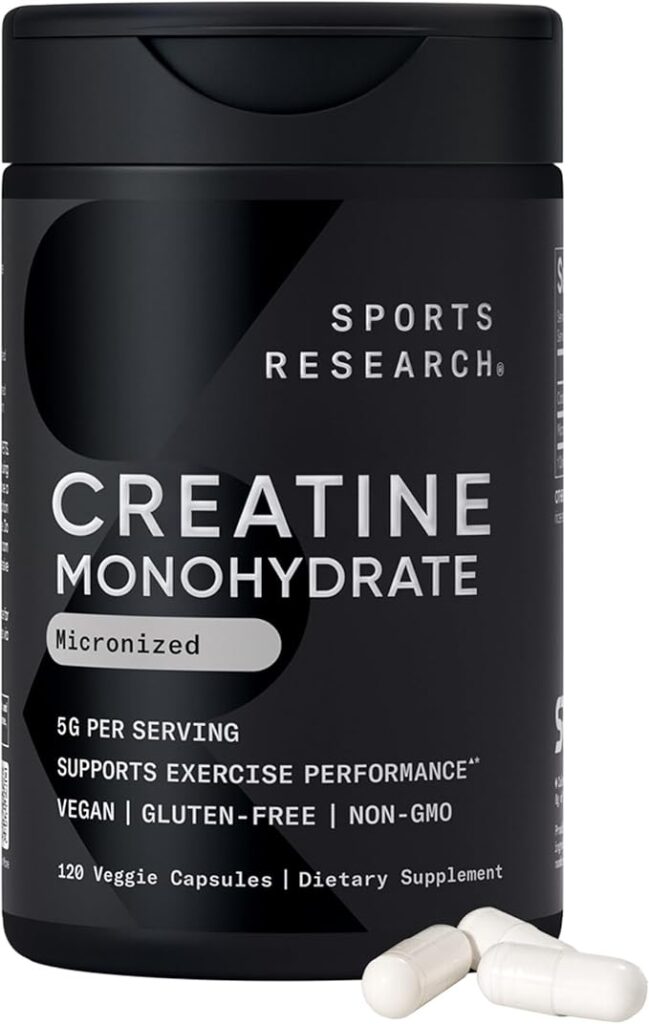
The premium capsule option. Informed Sport batch-tested, Non-GMO Verified, Vegan Certified — 5g of micronized creatine in four plant-based hypromellose capsules. No taste, no mixing, no residue.
Honest about the format: four capsules at once is a significant swallow. The practical solution — 2 capsules with breakfast, 2 with dinner — splits the dose comfortably without compromising efficacy. Creatine absorption is not meaningfully affected by splitting throughout the day.
Key Ingredients
Micronized Creatine Monohydrate 5,000 mg (4 veggie capsules)
Pros
- ✅ Informed Sport batch certification — only certified capsule option
- ✅ Zero taste, zero mixing — complete compliance simplicity
- ✅ Veggie capsule gentler on aging digestive tract than gelatin
Cons
- ❌ Four capsules per serving is a large single swallow
- ❌ Higher cost than powder (~$1.00/serving)
11. Havasu Nutrition Creatine Monohydrate Powder
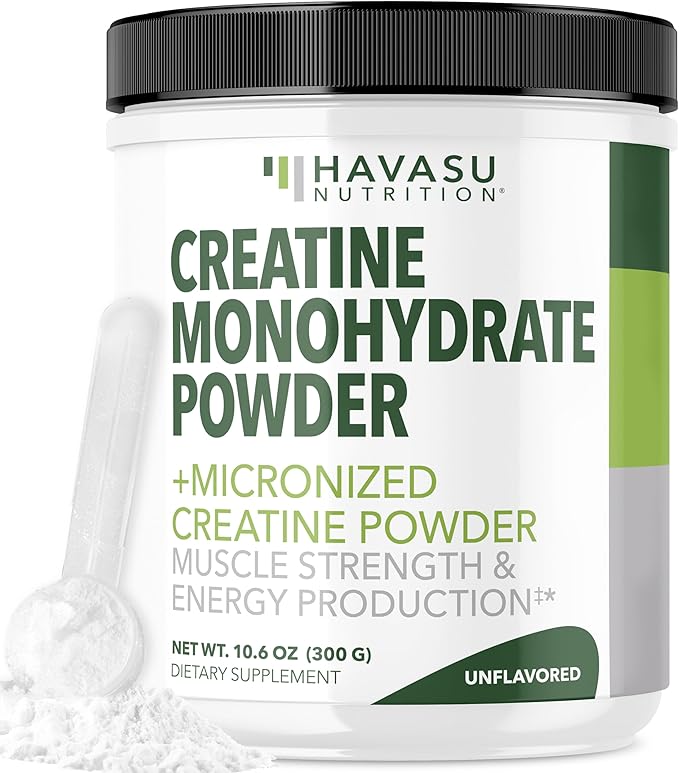
Havasu holds the strongest allergen-free credentials on this entire list — free from GMOs, gluten, dairy, eggs, wheat, soy, fish, shellfish, sesame, peanuts, and tree nuts. This level of purity matters for men with autoimmune conditions, multiple food sensitivities, or post-surgical dietary restrictions. Clean single-ingredient 5g monohydrate at an aggressive ~$0.21/serving price point.
GMP facility, independently tested. No NSF or Informed Sport batch certification. Best for healthy men prioritizing allergen safety over contamination certification.
Key Ingredients
Micronized Creatine Monohydrate 5,000 mg
Pros
- ✅ Most comprehensive allergen-free profile on this list
- ✅ Budget price — ~$0.21/serving
- ✅ Clean single ingredient, no fillers
Cons
- ❌ No NSF or Informed Sport batch certification
- ❌ No synergistic ingredients
What Creatine Does for Men Over 50
Most articles describe creatine as an energy booster. That undersells it significantly for this demographic.
Muscle preservation. Creatine increases intramuscular phosphocreatine stores, which directly fuels ATP resynthesis — the cellular energy regeneration process that becomes less efficient with age. The Chilibeck 2017 meta-analysis of 22 randomized trials confirmed creatine plus resistance training produces significantly greater lean mass gains in older adults than training alone.
Bone density protection. The Candow 2015 study demonstrated postmenopausal adults on creatine maintained hip bone density while controls lost it. The bone-creatine connection runs through the muscle-bone mechanical loading relationship — stronger muscles exert more force on bones, signaling continued bone remodeling.
Cognitive resilience. The brain uses creatine as an energy buffer the same way muscle does. Rawson et al. (2018) showed improved working memory and processing speed in adults over 60 on creatine supplementation. A 2025 systematic review in Nutrition Reviews confirmed cognitive benefits in aging populations, particularly in tasks requiring sustained attention and executive function.
Emerging cardiovascular signal. Heart muscle also relies on phosphocreatine-mediated ATP regeneration. Early research (Balestrino & Adriano 2019) suggests creatine may support cardiac energy efficiency — not yet an established clinical indication, but a relevant directional signal for the cardiovascular-conscious man over 50.
Is Creatine Safe for Men Over 50? The Honest Answers
The Kidney Question
This is the most common concern, and it deserves a direct answer.
Your physician may flag elevated serum creatinine on lab work after you start supplementing. This is not kidney damage. It reflects increased creatine breakdown into creatinine — a normal metabolic byproduct, not a sign of organ stress. The 2017 ISSN position stand, covering decades of clinical literature, explicitly states no adverse effects on kidney function in healthy adults. For further reassurance: low serum creatinine in adults over 45 actually correlates with sarcopenia and low bone density, not kidney health (Park et al., PLOS One 2015).
Who should consult a nephrologist first: men with stage 3+ CKD (eGFR < 60), history of kidney stones, or taking nephrotoxic medications long-term.
The Hair Loss Question
A single 2009 study of college rugby players during a high-dose loading phase reported a transient DHT spike. That study has been misquoted for 15 years. A 2025 twelve-week randomized controlled trial (published in the Journal of the International Society of Sports Nutrition) directly measured hair follicle health using FotoFinder imaging and Trichogram assessment in resistance-trained men. The result: no significant difference in DHT levels, testosterone, or any hair density measure between creatine and placebo groups. This is the first study to directly test the question. The hair loss concern is effectively resolved.
Medication Interactions
| Medication | Interaction Status |
|---|---|
| Statins (atorvastatin, rosuvastatin) | No known interaction — safe |
| ACE inhibitors / ARBs | Generally safe — monitor if CKD present |
| Beta-blockers | No known interaction |
| Metformin | No interaction — both may improve insulin sensitivity |
| Diuretics (loop/thiazide) | Maintain adequate hydration — creatine draws water into muscle |
| Blood thinners (warfarin) | Creatine alone is safe — avoid products containing cranberry, ginkgo, or astragalus |
When You Should Not Take Creatine
Creatine is not appropriate for everyone. Skip it — or consult your physician first — if you have:
- Stage 3+ CKD (eGFR below 60)
- Active kidney stones or recurrent nephrolithiasis
- Severe hepatic impairment
- Long-term nephrotoxic drug therapy (certain oncology agents, long-term lithium)
Creatine is not a contraindication for most common over-50 medications, but if you carry any of the above conditions, the 5g/day maintenance dose and physician clearance are non-negotiable.
How to Take Creatine at 50+
Dose: 3–5g daily. A 165–180 lb man does well at 5g. Larger men (over 210 lbs) may benefit from 6–7g due to greater skeletal muscle mass. Smaller or sedentary men can start at 3g and build.
No loading phase. The 20g/day loading protocol accelerates muscle saturation by approximately one week. For men over 50, the GI distress, water-weight spike, and kidney load during loading are not justified by that marginal time saving. Steady 5g/day reaches full saturation in 3–4 weeks. Stay there permanently.
Timing: Irrelevant. Consistency is everything. Take it when you’ll remember — morning coffee, breakfast, post-workout. Daily intake builds and maintains muscle creatine stores regardless of clock timing.
Stacking: Creatine pairs well with the following:
- Protein (20–40g post-workout): Synergistic for muscle protein synthesis
- Vitamin D3 (2,000–4,000 IU): Additive for sarcopenia prevention
- Omega-3 (2g EPA/DHA): Complementary anti-inflammatory recovery support
- Caffeine: Historically debated; current evidence shows no meaningful negative interaction at normal coffee doses
Frequently Asked Questions
1. Will creatine make me look bulky?
No. Creatine causes intracellular water retention — water drawn insidemuscle cells, which is physiologically positive (it signals protein synthesis). This is not subcutaneous bloating. You may gain 1–2 lbs in the first 2–3 weeks as muscle cells hydrate. After that, weight stabilizes. In older men, the net effect is preserved lean mass, not added bulk.
2. Can I take creatine if I’m on TRT (testosterone replacement therapy)?
Yes, and the combination may be additive. Creatine does not affect endogenous testosterone production or interfere with exogenous testosterone. For men on TRT, creatine enhances the strength and muscle response to normalized testosterone levels by addressing the downstream ATP-availability bottleneck that androgen optimization alone doesn’t resolve. No known pharmacological interaction.
3. My doctor said creatine damages kidneys. What do I say?
Share the Kreider 2017 ISSN position stand (freely available in J Int Soc Sports Nutr) and the Park et al. 2015 PLOS One study showing low serum creatinine correlates with sarcopenia, not kidney health. The elevated serum creatinine your physician may see on labs reflects increased creatine turnover — not organ stress — in the absence of pre-existing kidney disease.
4. How long before I notice a difference?
Workout energy and recovery: 7–14 days. Measurable strength and lean mass changes: 4–8 weeks with consistent resistance training. Cognitive clarity improvements: variable — some men report mental sharpness changes within 2 weeks, others need a full month. Bone density changes require 6–12 months and are measured on DEXA scan, not felt subjectively.
5. Do I need to cycle creatine — take breaks periodically?
No. There is no research supporting creatine cycling, and the mechanism doesn’t require it. Creatine maintains muscle saturation only with consistent daily intake. Stopping for extended periods simply depletes stores and eliminates the benefit. The longest published safety study followed daily users for five years with no adverse findings.
6. What’s the difference between cheap creatine and expensive creatine?
The ingredient — creatine monohydrate — is identical across price tiers. What you pay for at the premium end is: (a) Creapure® German-source purity (lowest impurity profile), (b) third-party batch certification (NSF Sport or Informed Sport), and (c) synergistic ingredients (HMB, D3, betaine). For healthy men not on medications, budget options like Nutricost and Jacked Factory are genuinely effective. For men on prescriptions or in drug-tested sport contexts, the certification premium is justified.
Last Words
Creatine is not a supplement that adds something artificial. It replenishes something your body makes less of as you age — and the cost of that deficit, compounded over years, is measured in lost muscle, lost bone, lost cognitive sharpness, and lost independence.
The research is not preliminary. The ISSN has declared creatine monohydrate safe and effective for long-term use. Three separate meta-analyses confirm its benefit in older adults specifically. The hair loss myth is clinically resolved. The kidney concern, for healthy men, is a misreading of lab values.
For clinical credibility: Thorne or Designs for Health. For sarcopenia prevention: BioTrust Ageless Muscle Builder. For certified travel convenience: Momentous Chews. For long-term budget compliance: Jacked Factory or Nutricost. For capsule simplicity: Sports Research.
The best creatine is the one you take every day for the next decade. Pick the format that removes every obstacle between you and that habit.