Medically reviewed by Dr. A.S.M. Masum Billah, MBBS
Psyllium husk is the fiber that actually earns its hype. It smooths out digestion, nudges cholesterol and blood sugar in the right direction, and quietly keeps hunger in check.
But psyllium doesn’t come in a single shape. You can spoon it, swallow it, sip it, or tuck a stick pack in your bag. Each psyllium husk supplement format suits a different person and a different day.
So here are the ten best psyllium husk supplements across every variation, plus a plain-English breakdown of which format fits you. One honest heads-up first: those popular “fiber gummies”? Most aren’t psyllium at all. We’ll get to that.
Disclosure: This guide contains affiliate links. If you buy through them, we may earn a small commission at no cost to you. We only recommend products we would feel comfortable discussing in a clinical education context.
Same fiber, very different experiences. Here’s how the variations stack up:
Powder. The most fiber per serving and the best value. Ideal for cholesterol goals and baking. The trade-off is the gritty gel you have to mix and drink fast.
Capsules. Tasteless, tidy, travel-friendly. The catch: you usually need about five capsules to match one spoon of powder, so they cost more per gram of fiber.
Whole husk. Coarser flakes rather than fine powder. Some people prefer the texture for pure regularity, and bakers love it as a binder.
Flavored drink mixes. Far easier to enjoy daily, which helps consistency. In exchange you get sweeteners and a bit less fiber per scoop.
Single-serve sticks. Pre-measured and perfect for travel or the office. You pay a little extra for the convenience.
Gummies? Here’s the honest part: most mainstream fiber gummies are not psyllium-based. Popular “fiber gummies,” including Metamucil’s, often use inulin or corn fiber, not psyllium — and they skip psyllium’s gel-forming benefits for cholesterol and stool bulk. If you want psyllium’s payoff, skip the gummy aisle.
Choose the format you’ll actually stick with. The most effective psyllium is the one that stays in your routine.
What the Science Says About Psyllium
Psyllium comes from the seed husks of Plantago ovata, and roughly 85% of the world’s supply is grown in India. In water it swells into a viscous gel — the engine behind nearly all its benefits.
Blood sugar, weight, and regularity. Pooled trials summarized in a peer-reviewed review credit psyllium with better glycemic control, modest weight and waist reductions, and softer, more regular stool. It’s one of the few isolated fibers doctors recommend for both constipation and IBS.
The effects are real but gradual — psyllium rewards consistency. The FDA even allows a heart-health claim for products supplying 7 g of soluble psyllium fiber per day within a low-fat diet.
How to Choose Your Psyllium Supplement
Match the dose across formats. Roughly one teaspoon of powder equals about five capsules. Don’t assume a single capsule does much on its own.
Mind purity and lead. Psyllium naturally draws trace lead from soil, so every product carries a California Prop 65 notice. Favor third-party-tested and organic options to keep exposure low.
Keep it clean. The best psyllium is 100% psyllium. Skip added sugar and dyes unless you specifically want a flavored drink.
Pick for your life. Powder for value and baking, capsules for travel, sticks for the office, flavored mixes if taste is what keeps you consistent.
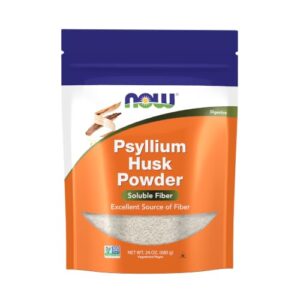
The dependable workhorse. If you want proven quality without paying a premium, this is where most people should start.
Key Ingredients & Dosage
Pure psyllium husk with a hefty 6 g of soluble fiber per tablespoon — one spoon covers most of the daily heart-health target.
What Sets It Apart
Non-GMO Project Verified and made under NPA A-rated GMP by a family-run company operating since 1968. The key differentiator is dose efficiency: one tablespoon supplies about 6 g of soluble fiber, so it delivers a meaningful psyllium serving without relying on flavoring, sweeteners, or capsule volume.
What to notice: this is the most balanced “plain powder” profile in the list — strong fiber yield, broad availability, and credible manufacturing controls. Its limitation is texture, not formula quality.
Safety & Side Effects
High fiber per scoop means you should ramp up slowly. Mix vigorously and drink before it gels.
How to Take It
1 level Tbsp in 12 oz of water, once daily, with extra fluid through the day.
✔ Pros High fiber per serving; A-rated GMP; strong value.
✘ Cons Standard tub isn’t organic; coarser feel.
Best For / Skip If
Choose this if you want the safest all-around starting point: high soluble fiber, no flavoring, and a familiar brand at a fair price.
Customer Feedback
Most buyers use it for daily regularity or cholesterol-focused fiber support. The positive pattern is value and effectiveness; the common complaint is texture, because it thickens fast and feels grittier than flavored mixes.
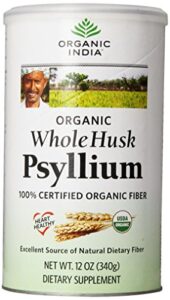
Organic psyllium done properly, and the benchmark I keep coming back to for clean sourcing.
Key Ingredients & Dosage
100% organic whole-husk psyllium. One tablespoon (5 g) delivers about 3 g of soluble fiber.
What Sets It Apart
USDA Organic, Non-GMO, and Certified B Corp status give this product a stronger sourcing story than most basic psyllium tubs. In a crop-based fiber category, that matters because shoppers are not only comparing grams of fiber; they are also comparing agricultural standards, pesticide concerns, and brand transparency.
What to notice: the whole-husk format keeps the product closer to its original texture. That makes it feel more like a real-food fiber, but less smooth than fine powder or flavored mixes.
Safety & Side Effects
Start low to avoid early gas. Carries the standard Prop 65 lead notice common to all psyllium.
How to Take It
1 Tbsp in 10+ oz of water once daily, an hour away from medications.
✘ Cons Coarser texture; smaller tub for the price.
Best For / Skip If
Choose this if organic sourcing matters more than the smoothest drink texture. It is especially good for shoppers who want clean-label fiber and do not mind a coarser whole-husk feel.
Customer Feedback
Buyers tend to praise the clean ingredient profile and gentle regularity support. The main tradeoff is mouthfeel: whole husk is bulkier and less smooth than finely milled powder.
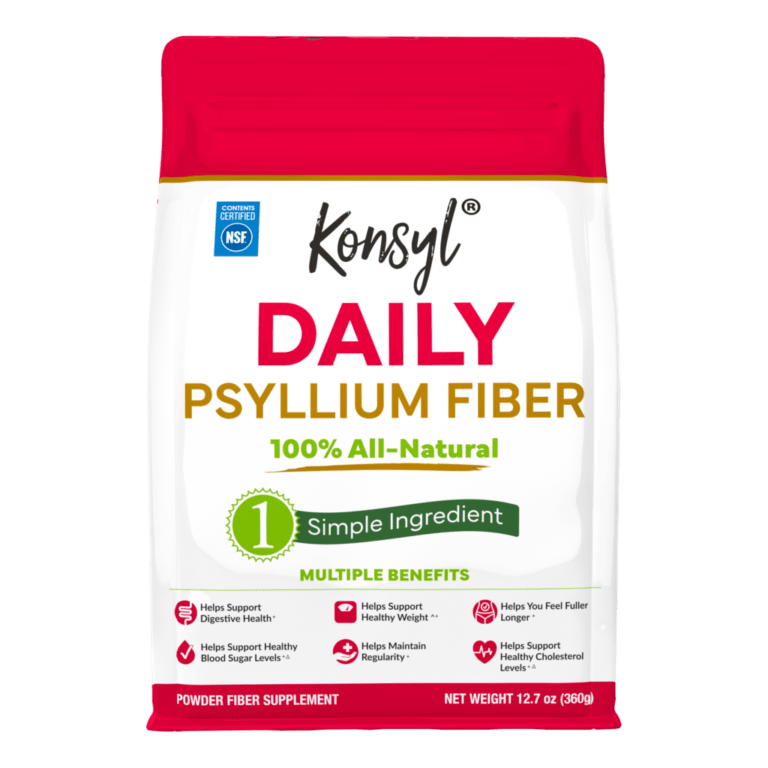
The pharmacist’s pick. When you want the most fiber from the smallest spoon, this concentrated classic delivers.
Key Ingredients & Dosage
One teaspoon carries a dense 6 g of pure psyllium with no additives — among the most concentrated doses on the shelf.
What Sets It Apart
Konsyl stands apart by being aggressively simple: 100% psyllium, no sugar, no sweeteners, and no flavor system. Compared with organic premium picks, its edge is not farming credentials; it is a clean, pharmacy-style formula from a long-running fiber brand.
What to notice: this product removes the usual additive questions. The only real variable left is whether the reader can tolerate plain psyllium texture and the fast-thickening gel.
Safety & Side Effects
Potent, so ease in — a full teaspoon out of the gate can bloat a new user. Always take with a generous glass of water.
How to Take It
Start with ½ tsp in 8 oz water, one to three times daily, rising as tolerated.
Choose this if you want a simple, potent psyllium powder from a long-running fiber brand. Skip it if you need a sweet, flavored drink or dislike fast-thickening powders.
Customer Feedback
Customer feedback usually centers on reliability: people like that it is plain, strong, and predictable. New users most often complain about bloating when they start too aggressively.
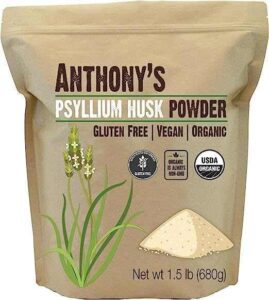
The keto baker’s secret weapon — the tub that turns sad gluten-free loaves into something you’d serve guests.
Key Ingredients & Dosage
Finely ground organic psyllium, nothing else. Use 1–2 tsp per glass, or a spoonful folded into dough as a stretchy binder.
What Sets It Apart
Anthony’s combines USDA Organic sourcing with batch-tested gluten-free verification, which is unusually useful for a psyllium powder that often ends up in food. The fine grind is the real technical difference: it disperses more easily and gives low-carb or gluten-free baking better structure than coarse whole husk.
What to notice: this is the most recipe-friendly powder in the lineup. Its value is not just daily fiber; it is texture control in smoothies, keto bread, wraps, and gluten-free baking.
Safety & Side Effects
The usual fiber caveats. Don’t let a mixed drink sit, or you’ll be spooning gel.
How to Take It
1–2 tsp in a full glass of water; or swap in for eggs and gluten in low-carb baking.
✔ Pros Organic + gluten-tested; superb for baking.
✘ Cons Can tint baked goods purple; drink fast once mixed.
Best For / Skip If
Choose this if you bake keto or gluten-free bread and also want a drinkable fiber powder. It is less ideal if you only want capsules or a flavored daily drink.
Customer Feedback
Bakers often like the binding power and fine grind. The recurring warning is that psyllium can turn some baked goods slightly purple, especially in certain low-carb recipes.
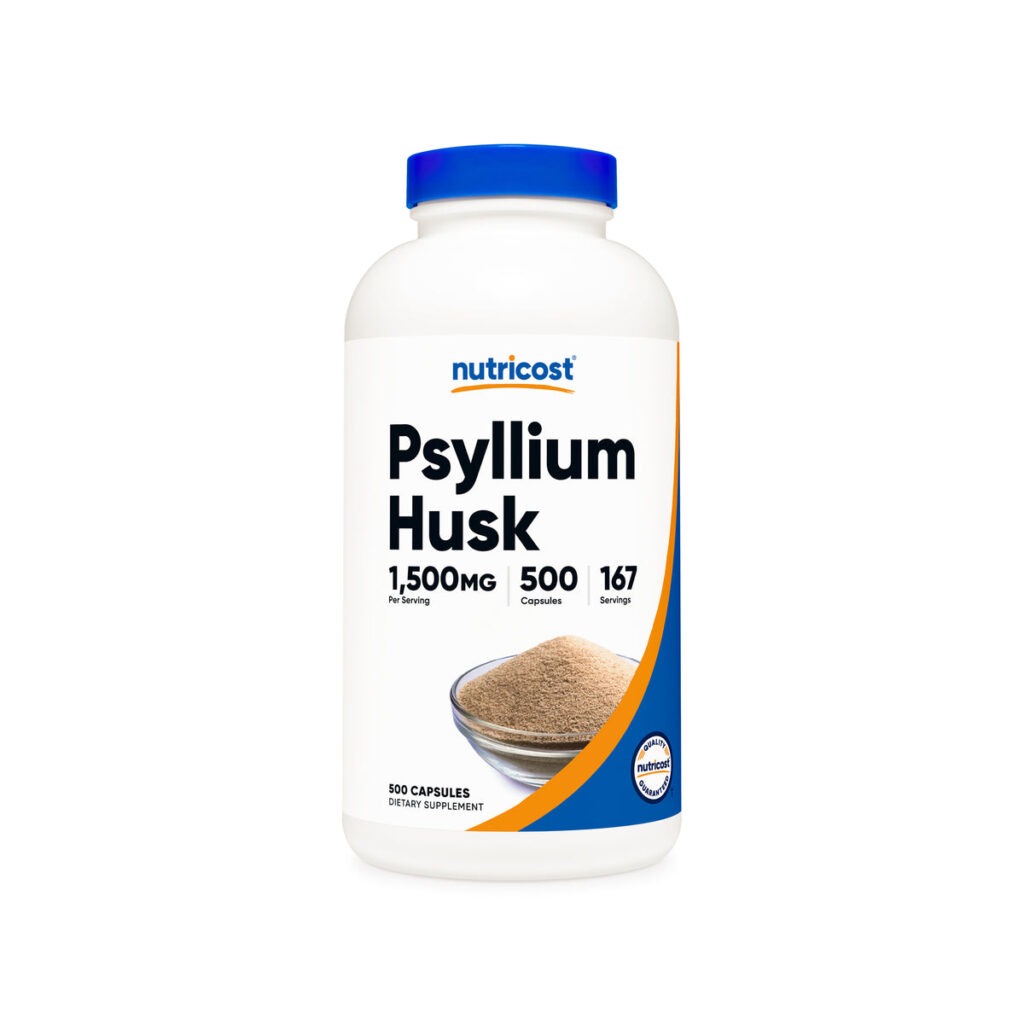
Skip the slurry. If mixing powder is your dealbreaker, this is the most economical way into capsules.
Key Ingredients & Dosage
Three capsules deliver 1,500 mg of psyllium husk. A 500-count bottle lasts ages, and the price per capsule is hard to beat.
What Sets It Apart
Nutricost separates itself through capsule economics: 500 mg per capsule, a large-count bottle, non-GMO/gluten-free positioning, and third-party testing claims. That makes the bottle look strong on value, but the dose math is important because capsules deliver psyllium in smaller increments than powder.
What to notice: the standout is convenience at scale, not maximum fiber density. It is a capsule solution for consistency, while powders remain stronger for quickly reaching higher psyllium servings.
Safety & Side Effects
To match a real fiber dose you’ll swallow several capsules, each with a full glass of water. Contains a small amount of rice flour and silica.
How to Take It
3 capsules with 8–12 oz of water daily, building up as needed.
✔ Pros Great price; no mixing; huge count.
✘ Cons Several caps per dose; minor added ingredients.
Best For / Skip If
Choose this if price per capsule and convenience matter most. Skip it if you want to hit a large fiber dose without swallowing several capsules.
Customer Feedback
Buyers like the huge bottle and simple routine. The predictable complaint is capsule count: capsules are easy, but they are never as fiber-dense as a spoon of powder.
The purist’s capsule. Yerba Prima has quietly made fiber since 1980, and it shows in the label.
Key Ingredients & Dosage
Each capsule holds 625 mg of psyllium — 25% more than the usual 500 mg cap. Five capsules give roughly 1.8 g soluble plus 0.4 g insoluble fiber.
What Sets It Apart
Yerba Prima’s differentiator is the capsule build: vegan cellulose capsules, NSF-certified GMP manufacturing, and no binders, fillers, magnesium stearate, rice, or corn. That makes the label cleaner than many capsule products that solve texture but introduce extra excipients.
What to notice: this is the cleaner-label capsule pick. The tradeoff is the same as most psyllium capsules: less fiber per swallow compared with a powder serving.
Safety & Side Effects
Swallow one at a time with plenty of water. Avoid within one to two hours of medications.
How to Take It
4–5 capsules, one to three times daily, each with a full glass of water.
✔ Pros Vegan; higher mg per cap; zero fillers.
✘ Cons Many caps per serving; not organic.
Best For / Skip If
Choose this if you want a cleaner capsule with no unnecessary fillers. It suits people who dislike powder but still care about label simplicity.
Customer Feedback
Feedback is strongest around purity and tolerability. The main friction is dose size, because meaningful psyllium intake can require multiple capsules with plenty of water.
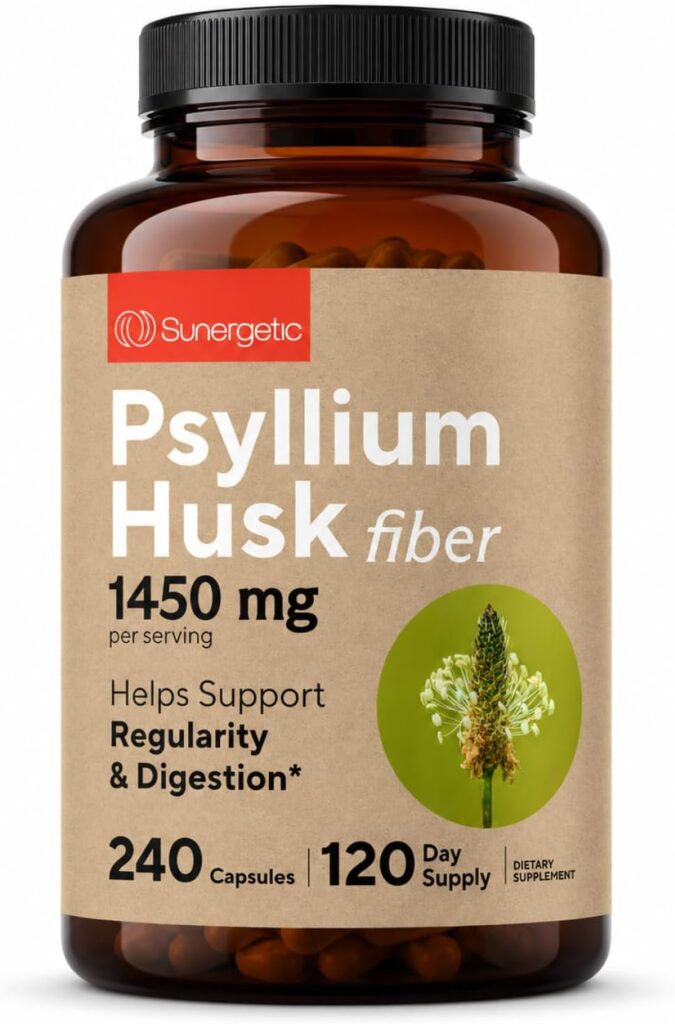
Fiber without the fuss. If you travel often or simply hate the gritty gel, capsules like these keep you consistent.
Key Ingredients & Dosage
Each capsule holds 725 mg of psyllium; two make a 1,450 mg serving. Simple, single-ingredient, no mixing.
What Sets It Apart
Sunergetic stands apart less on ingredient novelty and more on purchase confidence: FDA-registered GMP facility positioning plus a 365-day guarantee. That lowers the perceived risk for a shopper testing capsule psyllium for the first time.
What to notice: the product’s edge is habit friction. It removes measuring, mixing, and gel texture, but it does not beat powders on cost per gram or fiber density.
Safety & Side Effects
For a fuller fiber dose you’ll take four capsules, so it’s less efficient than powder. Always follow with a full glass of water.
How to Take It
2–4 capsules twice daily with plenty of water.
✔ Pros Convenient; tasteless; travel-friendly.
✘ Cons Lower fiber per capsule; not organic.
Best For / Skip If
Choose this if you want an easy no-mix capsule and a smaller daily routine. Skip it if you want organic sourcing or the lowest cost per gram of fiber.
Customer Feedback
Users like the no-taste convenience and easy routine. The main drawback is value: you pay more per gram of fiber compared with bulk powder.
8 Best Flavored Drink Mix
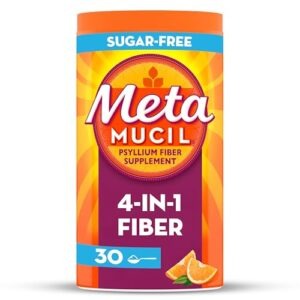
Metamucil 4-in-1 Psyllium Fiber (Sugar-Free)
★★★★★ 4.6 / 5 · Our rating
FLAVORED MIX Orange Sugar-free 2.4 g soluble / serving
The household name, done cleanly. Choose the sugar-free version and it earns its spot; the sugary orange tub does not.
Key Ingredients & Dosage
Genuine psyllium husk delivering 2.4 g of soluble fiber per serving toward digestive, cholesterol, and blood-sugar support.
What Sets It Apart
Metamucil’s advantage is adherence. The familiar orange flavor, wide availability, and sugar-free version make psyllium feel more like a drink routine than a supplement chore. That is a meaningful differentiator because plain psyllium often fails from taste and texture fatigue, not lack of evidence.
What to notice: this is the compliance pick, not the purity pick. Also check the format carefully: Metamucil powders and capsules use psyllium, while many fiber gummies on the market rely on other fibers instead.
Safety & Side Effects
Contains flavoring and a non-sugar sweetener, so it’s not a pure single-ingredient powder. Standard hydration and ramp-up rules apply.
How to Take It
Stir 1 rounded tsp into 8 oz of water, up to three times daily, ideally before meals.
✔ Pros Palatable; trusted; easy to stay consistent.
✘ Cons Added flavor/sweetener; less fiber per spoon.
Best For / Skip If
Choose this if taste is the reason you have failed with plain psyllium before. It is best for consistency, not purity.
Customer Feedback
Customers tend to stick with it because it tastes familiar and mixes into a daily habit. The tradeoff is added flavoring and sweetener, so clean-label shoppers may prefer plain powder.
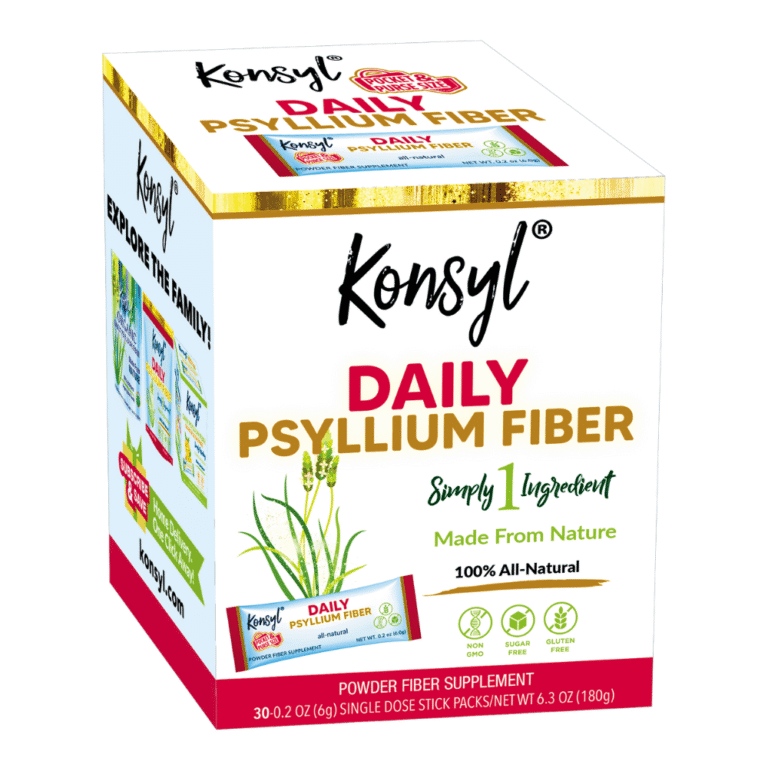
Fiber that fits in your pocket. These single-serve sticks take the guesswork and the tub out of your day.
Key Ingredients & Dosage
Each stick pours out a pre-measured 5 g of psyllium fiber — no scooping, no spills.
What Sets It Apart
The sticks stand apart by solving the dosing and portability problem. Each packet is pre-portioned, sugar-free, vegan, non-GMO, and built around one simple ingredient, so the user does not have to carry a tub or guess the scoop size.
What to notice: the differentiator is routine control. Packets cost more per serving than tubs, but they reduce missed doses, messy measuring, and travel friction.
Safety & Side Effects
Same psyllium precautions apply; the cost per serving runs higher than a bulk tub. Mix and drink promptly.
How to Take It
Empty one stick into 8+ oz of water, stir, and drink right away.
✔ Pros Pre-measured; travel-ready; tasteless.
✘ Cons Priciest per serving; more packaging.
Best For / Skip If
Choose this if you travel, work outside the home, or hate measuring powder. Skip it if you want the cheapest long-term fiber routine.
Customer Feedback
Buyers like the pre-measured packets for travel and office use. The downside is obvious but real: convenience costs more and creates extra packaging.
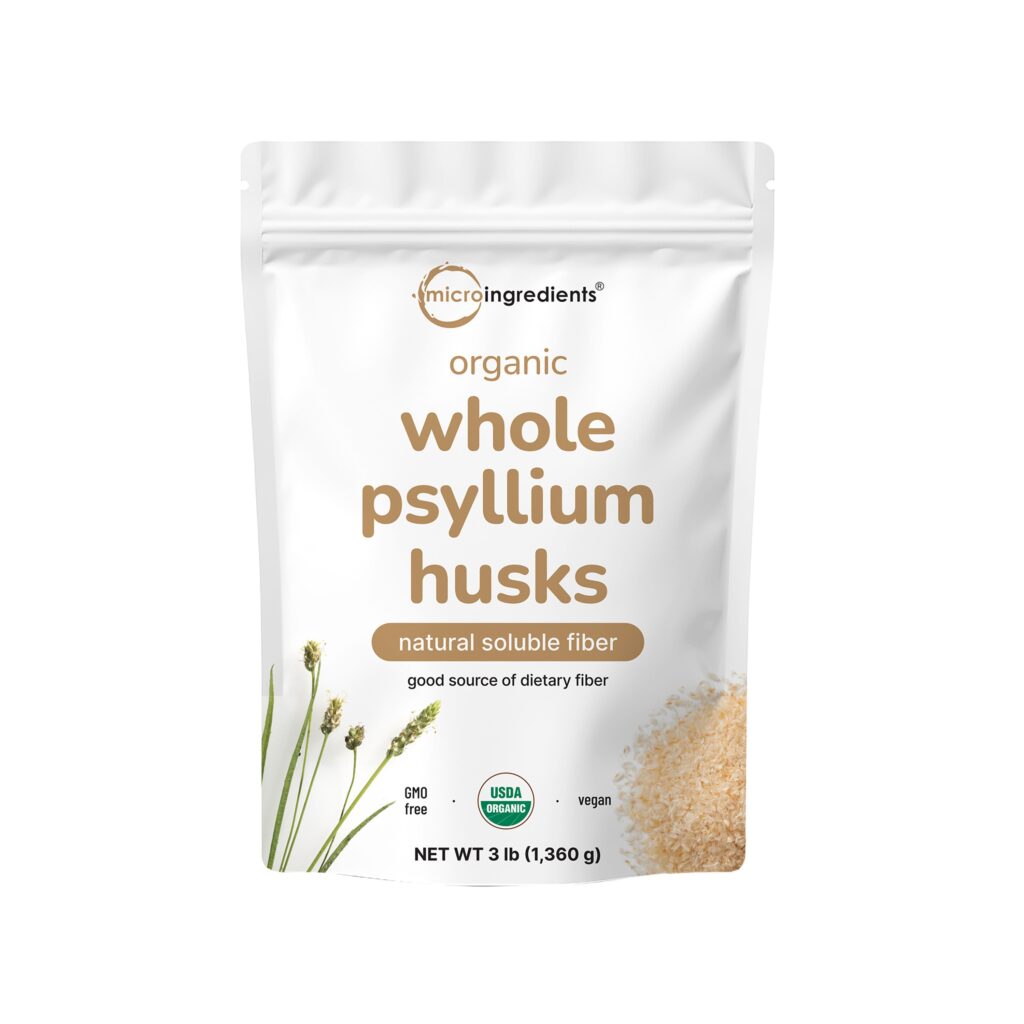
For the whole-husk loyalists. If you like the coarser flake and buy in volume, this organic tub is the pantry restock.
Key Ingredients & Dosage
Single-ingredient organic whole psyllium husks, India-sourced. A ~5 g serving stirs into water, oatmeal, or coffee.
What Sets It Apart
Micro Ingredients stands apart through bulk organic value: a 3 lb USDA Organic, vegan whole-husk pouch positioned as a simple single-ingredient fiber source. It is built more like a pantry staple than a small supplement bottle.
What to notice: the value is long-term supply and whole-husk texture. The tradeoff is storage size, higher upfront commitment, and less beginner-friendly convenience than sticks, capsules, or smaller tubs.
Safety & Side Effects
Coarser than milled powder, so it feels grittier in liquid. Standard psyllium precautions and generous water apply.
How to Take It
1 Tbsp in 10 oz of liquid daily; store the big tub sealed and cool.
✔ Pros Organic at bulk value; clean single ingredient.
✘ Cons Gritty whole-husk texture; large tub to store.
Best For / Skip If
Choose this if you want organic whole husk in bulk and use psyllium often. It is less ideal for small kitchens or people sensitive to gritty texture.
Customer Feedback
Bulk buyers like the value and clean single-ingredient format. The most common friction is storage size and the coarser whole-husk texture in drinks.
Final Verdict: Which Psyllium Husk Supplement Should You Choose?
Choose NOW Foods if you want the best overall balance of dose, price, and clean daily use.
Choose Organic India or Micro Ingredients if organic sourcing matters most and you do not mind a coarser whole-husk texture.
Choose Nutricost, Yerba Prima, or Sunergetic if you hate mixing powder and prefer capsules.
Choose Metamucil sugar-free if taste and routine consistency are your biggest obstacles.
Choose Konsyl sticks if travel, office use, or pre-measured servings matter more than lowest cost.
How to Take Psyllium Husk Safely
Whatever format you choose, two rules keep psyllium gentle: go slow and drink up.
Start small. Begin with a half dose and build over one to two weeks to sidestep gas and bloating.
Water is non-negotiable. Take each serving with at least 8–10 oz of liquid and drink it before it gels. Taken dry, psyllium can swell and pose a choking risk.
Separate from medications. Its gel can slow drug absorption, so take psyllium about an hour before or after other medicines.
Skip it if you have trouble swallowing. Anyone with esophageal narrowing should avoid psyllium capsules and powders alike.
Psyllium Husk Supplement FAQ
Are there real psyllium gummies?
Most mainstream fiber gummies are not psyllium-based. Many use inulin or corn fiber rather than psyllium, so they do not offer the same gel-forming stool-bulking and cholesterol-supporting mechanism. For psyllium specifically, choose a powder, capsule, or drink mix.
Powder or capsules — which is better?
Powder gives more fiber per serving and costs less; capsules win on convenience and taste. Expect to swallow around five capsules to match one teaspoon of powder.
Can I take psyllium every day?
Yes. Psyllium is well tolerated for daily long-term use in most healthy adults, and consistency is how the cholesterol and blood-sugar benefits build. Stay hydrated and check with your doctor if you take regular medication.
Which format is best for weight and appetite?
Any works, but a powder or flavored mix taken before meals is easiest to time for appetite control, since the gel expands in your stomach to blunt hunger.
Is the Prop 65 lead warning a dealbreaker?
Usually not. Psyllium naturally absorbs trace lead from soil, so nearly every product carries the notice at trace amounts that vary by source and batch. If this matters to you, favor brands with clearer testing standards and avoid exceeding the label dose.
What Didn’t Make Our List
We left off “psyllium” gummies for one simple reason: they don’t contain psyllium. The popular fiber gummies rely on inulin or corn fiber, which behave very differently in the body.
We also passed over heavily sweetened, dye-loaded drink mixes. The winners above earned their spots on purity, testing, honest labeling, and how well each format holds up in real life.
Medically reviewed by Dr. A.S.M. Masum Billah, MBBS.
About the medical reviewer
Dr. Masum Billah, MBBS, is a practicing physician and medical educator with over six years of experience evaluating the science behind dietary and nutritional supplements. He brings firsthand clinical insight to every review on Dietary Habit — cross-checking manufacturer claims against peer-reviewed research so readers get guidance that’s evidence-based, safe, and genuinely useful.
This article is for general education and isn’t a substitute for personal medical advice. Psyllium can interact with medications and isn’t right for everyone. Talk to your doctor before starting any new fiber supplement, especially if you’re pregnant, managing a health condition, or taking prescription medicine.
Author Bio
Dr. Masum Billah, MBBS, is a practicing physician and medical educator with over six years of experience evaluating the science behind dietary and nutritional supplements. He brings firsthand clinical insight to every review on Dietary Habit — cross-checking manufacturer claims against peer-reviewed research so readers get guidance that’s evidence-based, safe, and genuinely useful.