
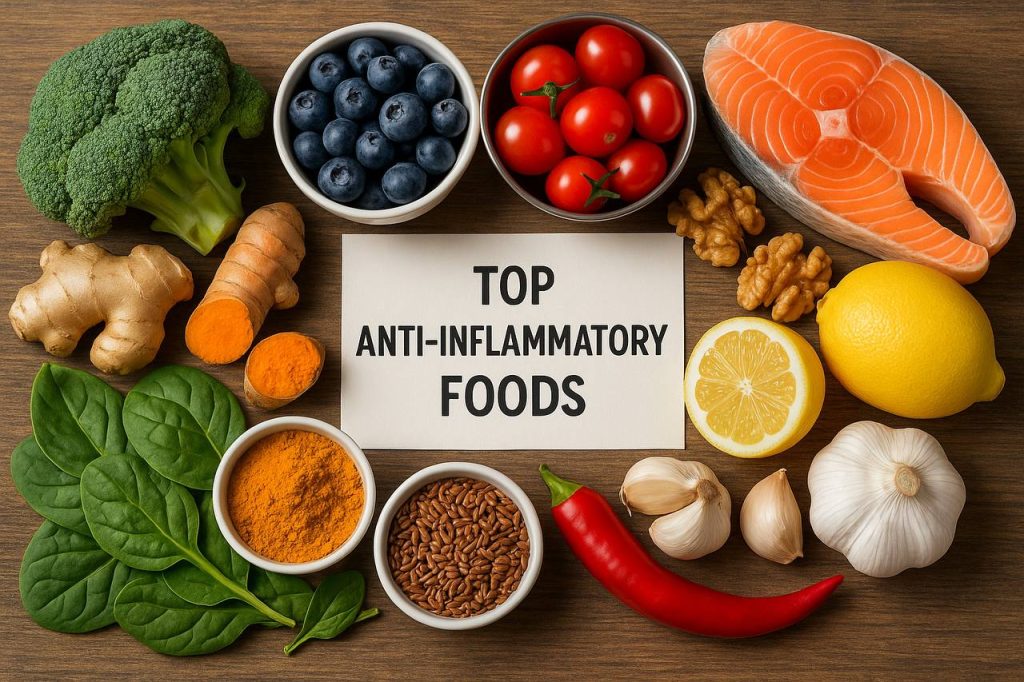
Let’s get real. Inflammation sounds like something that only happens when you twist an ankle or catch a fever. But chronic inflammation? That sneaky little fire inside your body? It’s tied to everything from bloating to heart disease to brain fog—and that’s not a vibe anyone wants.
Here’s the good news: You don’t need a pharmacy’s worth of pills. Nature already handed us a cheat sheet: anti-inflammatory foods. Adding the right ones to your plate can seriously reduce inflammation naturally and even turn back the clock on chronic issues.
Best Multivitamins to Boost Immunity
Top 15 Anti-Inflammatory Foods to Add to Your Diet
1. Turmeric
Why Turmeric Deserves the Crown
If anti-inflammatory foods were a royal family, turmeric would be the queen in a golden robe. The secret lies in curcumin, a compound that’s been spotlighted in hundreds of scientific studies. According to research published in the Journal of Medicinal Food, curcumin is proven to significantly lower inflammatory markers in the body (source).
But here’s the kicker: Most turmeric powders only contain about 3% curcumin by weight. So unless you’re scarfing down the entire spice aisle, you need black pepper alongside turmeric. Piperine, a compound in black pepper, boosts curcumin absorption by up to 2000%.
Pro Tip:
- Use: Add a teaspoon to smoothies, eggs, or homemade salad dressings.
- Adjust: Always mix with a dash of pepper (and a little fat like olive oil) to make it work harder.
Real User Feedback:
“After two weeks of turmeric tea, my knees felt less stiff getting up from my desk. It’s like a WD-40 for joints!” — Samantha, 42, desk worker.
2. Blueberries
Nature’s Tiny Titans Against Inflammation
Who knew fighting inflammation could be so sweet? Blueberries aren’t just Instagrammable; they’re loaded with anthocyanins—the pigments that give them their blue hue and their anti-inflammatory superpowers.
A landmark study from Advances in Nutrition found that daily blueberry consumption lowered oxidative stress and inflammatory biomarkers in adults (source).
Why it matters:
- Anthocyanins neutralize free radicals.
- They boost the body’s own production of anti-inflammatory compounds.
- They even support brain health while they’re at it.
Easy Way to Add:
Toss a handful into your oatmeal, or whip up a 5-minute anti-inflammatory smoothie with spinach and avocado.
What Fans Say:
“I started eating a cup of blueberries every morning, and no joke, my post-run soreness cut in half!” — Marco, 29, marathoner.
3. Leafy Greens (Spinach, Kale)
Mother Nature’s Anti-Inflammatory Powerhouses
Popeye was onto something. Spinach and kale pack a cocktail of antioxidants like vitamin C, vitamin E, and polyphenols. Researchers at Harvard agree—more green on your plate = less inflammation (source).
Fun Science Bite:
Spinach also delivers alpha-lipoic acid, a compound that helps regenerate other antioxidants. Kale, meanwhile, boasts quercetin, known to lower inflammatory cytokines in the blood.
To Eat Them Right:
- Lightly sauté to boost absorption of fat-soluble nutrients.
- Pair with olive oil and lemon for a powerhouse side.
Real Life Win:
“Switching from iceberg lettuce to kale salads made my skin way less inflamed. Even my dermatologist noticed.” — Neha, 35, skincare fanatic.
4. Salmon
The OG Anti-Inflammatory Fish
Salmon isn’t just trendy on poke bowls; it’s clinically one of the best anti-inflammatory foods. Thanks to its high levels of omega-3 fatty acids (EPA and DHA), it fights the production of inflammatory eicosanoids and cytokines.
One robust meta-analysis in Nutrients confirmed that omega-3 supplementation reduces systemic inflammation(source).
But a heads up:
- Farmed salmon tends to have fewer omega-3s compared to wild-caught.
- Watch out for sneaky mercury levels in some farmed varieties.
Eating Tip:
Aim for two 6-ounce servings per week. Not into fish? You can still get EPA and DHA via high-quality algae oil supplements.
Customer Perspective:
“Eating more salmon helped me ditch my ibuprofen crutch for back pain. Plus, my hair got shinier. Win-win.” — Thomas, 47, teacher.
5. Broccoli
Tiny Trees, Big Results
Broccoli isn’t just your mom’s guilt trip at dinner. It’s packed with sulforaphane, a molecule that essentially flips a switch in your cells to turn on natural anti-inflammatory defenses.
A study published in Clinical Immunology demonstrated that sulforaphane reduces key inflammatory pathwaysassociated with diseases like arthritis and type 2 diabetes (source).
How to Maximize It:
- Lightly steam to preserve the good stuff.
- Avoid boiling into mush—goodbye nutrients, hello sadness.
User Experience:
“Adding steamed broccoli to my lunches helped cut my migraines by half. Totally unexpected bonus.” — Julia, 38, graphic designer.
6. Avocado
Creamy, Dreamy, and Anti-Inflammatory
Avocados aren’t just for brunch influencers. These green beauties are rich in monounsaturated fats—the good kind that tame inflammatory responses in the body. Plus, they bring in a hearty dose of vitamin E, an antioxidant specifically linked to lower levels of inflammatory markers.
In a clinical study from the Journal of Nutrition, people who ate avocados daily showed reduced inflammatory biomarkers like CRP (C-reactive protein) (source).
A Few Pro Tips:
- Half an avocado per day is a smart goal for heart health and inflammation.
- Avocados are calorie-dense, so if weight management is a priority, portion matters.
Real Talk from Real People:
“Avocado toast is basic? Whatever. My joints feel 10 years younger since I made it part of breakfast.” — Clara, 31, marketing strategist.
7. Green Tea
Sip Your Way to Less Inflammation
You thought green tea was just good for calm mornings? It’s also packed with epigallocatechin gallate (EGCG)—a superstar polyphenol shown to lower inflammation at the cellular level.
According to research from the International Journal of Molecular Sciences, EGCG inhibits the production of inflammatory cytokines and protects against oxidative damage (source).
How to Brew It Best:
- Aim for 2-3 cups daily.
- Don’t add dairy—it can reduce the antioxidant activity.
From a Fellow Sipper:
“Green tea in the afternoon instead of coffee totally helped my bloating and random body aches.” — Leo, 26, tech support.
8. Ginger
The Zinger for Inflammation
Ginger’s warming spice doesn’t just punch up food; it punches down inflammation too. The magic compounds here are gingerols and shogaols, known for blocking several genes related to chronic inflammation.
A double-blind study in Arthritis & Rheumatism found that ginger supplements significantly reduced pain and stiffness in knee osteoarthritis patients (source).
Practical Wisdom:
- Fresh ginger trumps powdered for medicinal benefits.
- Grate it into soups, smoothies, or hot tea.
What People Are Saying:
“Grated ginger in my smoothie felt weird at first, but my sore wrists from typing all day stopped bugging me. Worth it.” — Jordan, 34, freelance writer.
9. Chia Seeds
Tiny Seeds, Huge Anti-Inflammatory Impact
Chia seeds are the food equivalent of that quiet kid in class who ends up being a genius. They’re rich in alpha-linolenic acid (ALA), a plant-based omega-3 fatty acid with serious anti-inflammatory chops.
Research from Nutrients indicates that ALA reduces inflammatory markers, particularly in people with metabolic syndrome (source).
How to Work Them In:
- Two tablespoons a day is a sweet spot.
- Soak them first—chia pudding, anyone?
Real Chatter:
“My blood sugar swings chilled out once I started a chia pudding breakfast rotation. No more 3 PM crashes!” — Rachel, 40, accountant.
10. Walnuts
Crunch Your Way to Healthier Joints
Walnuts bring a hefty payload of omega-3s, polyphenols, and magnesium—all natural inflammation suppressors. Unlike some “healthy” snacks that hide sugars or processed oils, walnuts keep it simple and serious.
A clinical trial in the Journal of the American College of Nutrition found that a daily handful of walnuts lowered CRP levels and improved vascular function (source).
Important Detail:
- Choose raw or dry-roasted, unsalted.
- About 1 ounce (14 halves) daily is a good benchmark.
Snackers’ Voices:
“Switching to walnuts as my work snack cut down my random headaches and brain fog way more than I expected.” — Isaac, 45, project manager.
11. Olive Oil
Liquid Gold Against Inflammation
Not all oils are created equal, and extra virgin olive oil (EVOO) is the MVP of anti-inflammatory diets. Packed with oleocanthal, it acts similarly to ibuprofen—without the harsh side effects.
A study published in Current Pharmaceutical Design noted that regular EVOO consumption reduced inflammatory gene expression (source).
Expert Tip:
- Look for “cold-pressed” and “early harvest” labels for the strongest polyphenol content.
- Use it raw when possible—high heat kills the benefits.
A Customer Confession:
“Switching from canola to good olive oil made my salads addictive. Bonus: I feel less stiff in the mornings.” — Mia, 36, yoga instructor.
12. Tomatoes
Juicy Bombs of Lycopene
Tomatoes bring more to the table than just being pizza’s BFF. They’re loaded with lycopene, an antioxidant that specializes in fighting systemic inflammation.
The American Journal of Clinical Nutrition published evidence that higher lycopene intake leads to lower inflammatory markers, particularly IL-6 (source).
Optimal Advice:
- Cook tomatoes to boost lycopene absorption.
- Pair with olive oil for best results.
Fan Testimony:
“After adding roasted tomatoes and EVOO to my lunch routine, my digestion got smoother and my skin started glowing. Not mad at it.” — Olivia, 29, content creator.
13. Beets
Bright, Bold, and Inflammation-Fighting
That deep purple color? It’s no coincidence. Beets are rich in betalains, natural pigments that reduce inflammation and support detox pathways.
In a study from Nutrients, beetroot supplementation improved inflammatory status and oxidative stress in healthy adults (source).
Beet It Like This:
- Roast or juice them.
- Great with goat cheese, walnuts, and arugula.
Personal Win Story:
“Beet smoothies every morning for a month got rid of my constant bloating. Plus, my workouts felt easier!” — Finn, 32, amateur boxer.
14. Garlic
The Pungent Fighter You Need
Garlic might murder your social life if overdone, but it’s your best friend when fighting inflammation. Rich in sulfur compounds like allicin, it boosts immune function and blocks inflammatory pathways.
Clinical studies like one from Food and Chemical Toxicology highlight that garlic extract significantly lowered pro-inflammatory enzymes (source).
Use It Well:
- Chop, then let it sit 10 minutes before cooking to maximize benefits.
Everyday Experiences:
“Since adding fresh garlic to my stir-fries, I swear my seasonal allergies have eased up. Coincidence? I think not.” — Amanda, 27, student.
15. Dark Chocolate
Yes, Chocolate is on This List (You’re Welcome)
Good-quality dark chocolate (over 70% cocoa) is rich in flavanols, which have been shown to lower inflammation and improve vascular health.
According to a meta-analysis in Frontiers in Immunology, moderate dark chocolate intake decreased inflammatory markers (source).
Chocolate Smart:
- Stick to 1–2 small squares per day.
- Look for low-sugar, ethically sourced brands.
A Sweet Success:
“Dark chocolate after dinner actually helped curb my cravings and reduced my random tension headaches. Win!” — Derek, 41, software engineer.
Easy Anti-Inflammatory Recipes You’ll Actually Want to Eat
Finding healthy anti-inflammatory meals that don’t taste like cardboard? It’s a real quest. But guess what? I’m loading you up with simple, delicious options that make fighting inflammation feel like a feast, not a chore.
1. Golden Turmeric Smoothie
What You’ll Need:
- 1 cup almond milk
- 1 frozen banana
- 1 tsp turmeric
- 1/4 tsp black pepper
- 1/2 tsp cinnamon
- 1 tbsp chia seeds
- 1 tsp honey (optional)
Instructions:
Blend until creamy. Sip your way to smoother joints and a sharper mind.
Why It Works:
Turmeric (with black pepper) + chia = a powerhouse punch against chronic inflammation. Plus, bananas offer prebiotic fiber that feeds your good gut bugs — an indirect win against inflammation.
2. Omega-3 Loaded Salmon Bowls
Ingredients:
- 1 wild-caught salmon fillet
- 1 cup quinoa
- 1/2 avocado, sliced
- 1 handful baby spinach
- 1 tbsp olive oil
- Lemon wedge
Instructions:
Bake salmon at 375°F for 15 minutes. Assemble your bowl: quinoa base, top with salmon, avocado, spinach. Drizzle with olive oil and a squeeze of lemon.
Why It Works:
You’re hitting best anti-inflammatory foods on all fronts: omega-3s, monounsaturated fats, and leafy greens, all in one glorious bowl.
3. Beet and Blueberry Anti-Inflammatory Smoothie
You’ll Need:
- 1/2 cup cooked beets
- 1/2 cup blueberries
- 1/2 banana
- 1/2 cup coconut water
- Handful of kale
Instructions:
Blend it all together. Optional: add a scoop of collagen peptides for bonus joint support.
Why It Works:
Blueberries and beets double-team oxidative stress, while coconut water offers natural electrolytes that support a less inflamed, better-hydrated system.
4. Quick Garlic and Broccoli Stir-Fry
Ingredients:
- 2 cups broccoli florets
- 2 cloves garlic, minced
- 1 tbsp olive oil
- Pinch of sea salt
- Red pepper flakes (optional)
Instructions:
Sauté garlic in olive oil for 30 seconds. Toss in broccoli. Cook for about 5 minutes until vibrant green but still crisp. Sprinkle with salt and red pepper.
Why It Works:
Garlic activates your body’s natural detox processes, and broccoli brings in the sulforaphane magic. A super-fast side dish that actually tastes amazing.
How to Build a Sustainable Anti-Inflammatory Diet
Eating one turmeric latte isn’t going to cancel out a weekend pizza bender.
The key to a real anti-inflammatory lifestyle? Consistency over complexity.
Start with Simple Swaps
- Olive oil instead of vegetable oil
- Berries instead of sugary desserts
- Salmon twice a week instead of processed meats
- Nuts instead of chips
Tiny changes compound. Think of it like investing… but tastier.
Aim for a Rainbow Plate
More colors = more phytochemicals = better inflammation control. Harvard’s School of Public Health even stresses the importance of color diversity in anti-inflammatory diets (source).
A boring beige diet won’t cut it if you’re serious about reducing inflammation naturally.
Hydrate Smarter
Swap sodas and fancy coffees for green tea, herbal infusions, or simple lemon water.
Dehydration silently triggers inflammation faster than you can say “ouch.”
Watch the Sugar
Added sugars sneak into everything—ketchup, “healthy” granola bars, even salad dressings.
Stay sharp. Go for 100% whole foods whenever possible.
According to a clinical report by the American Journal of Clinical Nutrition, high sugar intake significantly increases inflammatory biomarkers (source).
Expert Tips on Reducing Inflammation Naturally
Don’t just take my word for it. Here’s what real experts have to say:
“Chronic inflammation is at the root of most modern diseases. Controlling it through diet is one of the most powerful preventative strategies available.”
— Dr. Frank Hu, Professor of Nutrition, Harvard T.H. Chan School of Public Health“The body is self-healing by design. Anti-inflammatory foods supply the raw materials it needs to repair itself at the cellular level.”
— Dr. Josh Axe, DNM, DC, CNS, Author of Eat Dirt
And there’s real, heavy-hitting research to back it up:
- A 2020 study from Frontiers in Immunology showed that diets high in anti-inflammatory foods cut the risk of mortality from chronic illnesses by up to 30% (source).
- Another systematic review in Nutrients confirmed that plant-based diets rich in antioxidants consistently lowered inflammatory markers across all age groups (source).
Conclusion: Your Next Bite Could Be Your Best Move Yet
Here’s the bottom line:
If you’re tired of feeling tired, stiff, bloated, or just plain “off,” your food might be talking—and it’s saying “help me.”
Adding more anti-inflammatory foods to your plate isn’t a restrictive punishment. It’s an upgrade. It’s fuel for sharper brains, better moods, faster recoveries, and longer, stronger lives.
Start simple. Pick 3 foods from this list today.
Work them into your meals. Notice the difference. Then thank yourself later.
Because honestly, you deserve to feel awesome. And if you can get there with blueberries, chocolate, and garlic butter broccoli? That’s not just health. That’s winning.